Beyond 90 Days: A Critical Analysis of NZ’s 2025 Fuel Security Study

By Matt Boyd & Nick Wilson

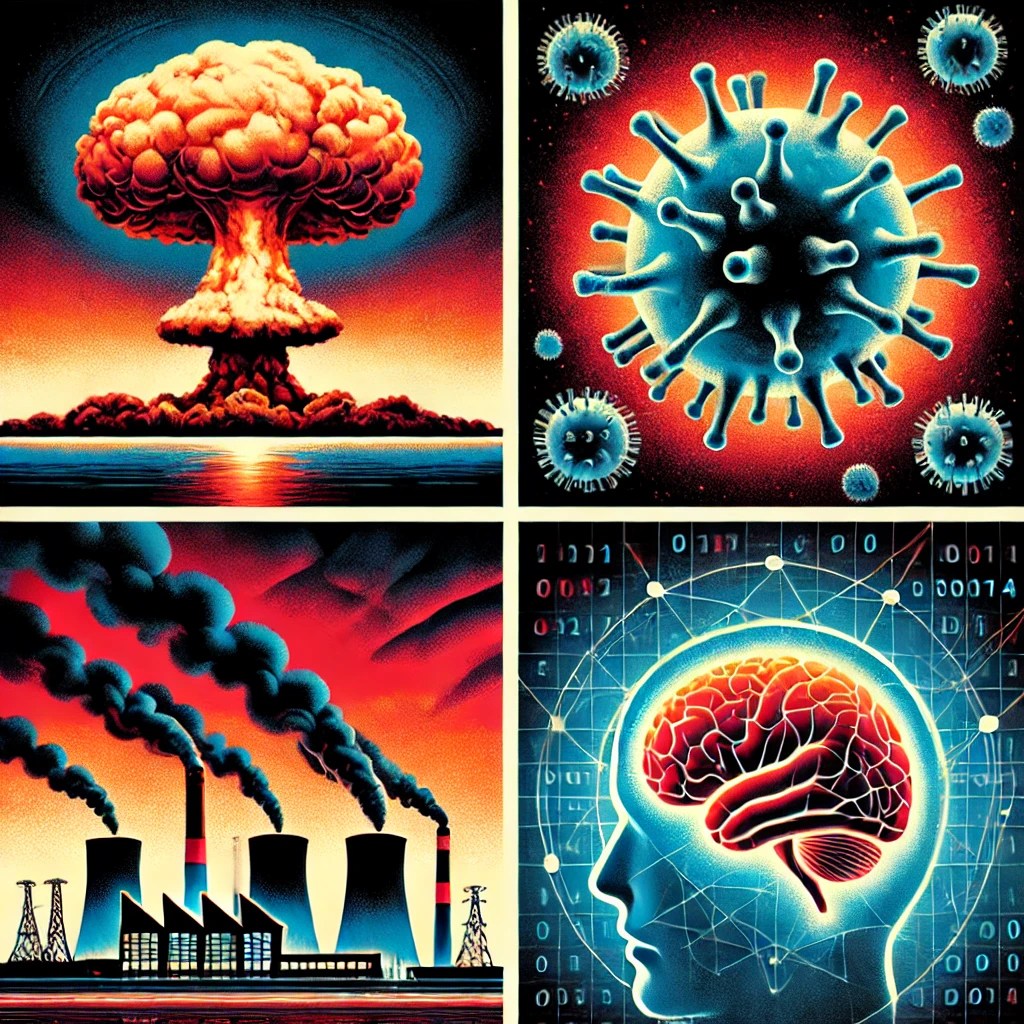
Image credit: DALL-E via Chat-GPT

TLDR/Summary

  • The just published 2025 NZ Fuel Security Study recommends increasing storage capacity, trucking logistics, considering biofuel development and accelerating zero-emission vehicles over reopening Marsden Point oil refinery (estimated at $4.9-7.3 billion).
  • While the Study models a complete 90-day fuel import cessation (a substantial improvement over previous analyses), it fails to examine longer timeframes or identify when systems would break down.
  • The Study’s “severe disruption” scenario avoids naming specific global catastrophic risks like the effects of nuclear winter or solar storms that could cause prolonged or permanent disruptions to global trade.
  • The Study evaluates biofuel options based on a single large tallow refinery rather than considering distributed smaller-scale seed oil solutions that almost certainly would provide better resilience in a catastrophe.
  • To maintain minimal functioning during long-term disruptions, we estimate NZ would need to produce at least 200 million litres of biofuel annually, yet the Study doesn’t analyse how this minimum could be achieved sustainably, instead only examining a single larger (expensive) solution.
  • The Study misses the opportunity to examine how fuel security connects to NZ’s National Risk Register, public information, or NZ’s potential role as a global food producer and possible refuge during worldwide catastrophes.
  • Our own extension of the analysis estimates that essential services would require approximately 17% of normal diesel consumption (5% for lifeline utilities, 5-15% for critical transport, 0.6-2.8% for minimal agricultural production), meaning current stockholdings would only last about 160 days in a catastrophe.
  • This ‘point of breakdown’ is not at all apparent from the 90-day calculations in the NZ Fuel Security Study – highlighting the need for further research in this critical domain.

What is the NZ Fuel Security Study?

The NZ Ministry of Business, Innovation and Employment (MBIE) recently published its commissioned NZ Fuel Security Study, developed in response to growing concerns about the nation’s vulnerability to disruptions in global fuel supply chains.

As a remote island nation that imports essentially all of its refined fuels, NZ faces a range of challenges and vulnerabilities in ensuring fuel security.

The Study aimed to map NZ’s fuel consumption trends, investigate reopening the Marsden Point oil refinery, assess the risks of extended fuel shortages, and evaluate potential mitigation options.

This work is intended to inform a forthcoming Fuel Security Plan that will guide national strategy for building resilience in the medium to long term.

Given that a secure and resilient fuel supply is not just critical to NZ’s economy but potentially to NZ’s survival as a functioning society post-catastrophe, the government’s initiative is timely and necessary. Indeed, we previously blogged about what the Study would need to do to fully inform resilience measures against global catastrophic risks.

As we’ll explore in the present blog, the Study’s approach to catastrophic risks does not provide the information necessary to fully inform decisions around preparing for the most severe scenarios that could threaten NZ in an increasingly unstable world.

Main Findings of the Study

The Fuel Security Study, conducted by Envisory and Castalia, was delivered in two parts. The first focused specifically on investigating the feasibility of reopening the Marsden Point oil refinery. This analysis concluded that reestablishing the refinery would be prohibitively expensive, with capital costs estimated between NZ$4.9-7.3 billion, a construction timeline of at least six years, and significant ongoing operational costs.

The report determined that a reopened refinery would unlikely be economically viable without substantial government support and would contribute only modestly to fuel security while increasing NZ’s greenhouse gas emissions.

The main Study mapped NZ’s international and domestic fuel supply chains, projected future demand trends through 2035, and modelled various disruption scenarios to evaluate economic impacts and potential mitigation options. The analysis assessed both international supply disruptions (including a severe 90-day cessation of all fuel imports) and domestic logistics disruptions affecting critical infrastructure. The Study recommended a portfolio of mitigation measures including:

  • Increasing diesel storage capacity by approximately seven days of national demand
  • Expanding jet fuel storage capacity, especially at or near Auckland Airport
  • Establishing additional trucking capacity for emergency distribution
  • Supporting biofuel development, particularly for jet fuel and potentially for diesel applications
  • Accelerating the transition to zero-emission vehicles (especially for light vehicles)
  • Continuing to develop international arrangements to protect supply chains

The Report concluded that reopening the Marsden Point refinery or developing a small refinery for indigenous crude would be among the least effective options compared to the other measures.

Following the Study, Resources Minister Shane Jones admitted the Crown cannot afford the reopening option. Instead, he has proposed a special economic zone around the former refinery site to enable alternative fuel manufacturing like biofuels, with the aim of protecting NZ’s fuel security while preventing development from being blocked by “Nimbyism.”

Global Catastrophic Risks: The Missing Dimension

Photo by Sara Farshchi on Unsplash

What the Study Got Right

The 2025 Fuel Security Study makes important strides in considering severe disruption scenarios beyond previous analyses, which focused mainly on modest 10% supply reductions. Most notably, the Study models a “severe disruption” where NZ experiences a complete cessation of fuel imports for 90 days. This represents a significant evolution in thinking about fuel security, acknowledging that extreme scenarios are possible and warrant planning. The Study also correctly identifies that such a severe disruption would likely be part of a broader economic and societal crisis, noting that “the whole NZ economy would be impacted for reasons unrelated to fuel supply” (p.31). This concurs with our own research work examining NZ’s vulnerability and resilience to scenarios such as Northern Hemisphere nuclear war.

Additionally, the Study provides a useful baseline by comparing potential fuel availability during severe disruptions with Covid-19 Level 4 lockdown consumption patterns. This offers a real-world reference point for dramatically reduced fuel demand during a crisis (albeit during Covid-19 lockdowns the entire export industry was effectively still operating) and therefore projections of how long stockholdings might last.

The Study also acknowledges that essential services and critical government functions would require only a small fraction of normal fuel demand—approximately 5% for diesel and 3% for petrol for lifeline utilities and potentially another 5–15% demand for critical transport, eg, food distribution and essential workers (p.33). There is no estimate of off-road liquid fuel consumption by agricultural processes for food production (despite these being essential for feeding New Zealanders).

Methodological Shortcomings

Despite these advances, the Study falls significantly short in its approach to global catastrophic risks (GCRs). Most conspicuously, the “severe” disruption scenario (pp. 31-33) avoids naming any specific catastrophic events that might cause such disruptions. The report states, “We do not speculate on the cause of such an event,” which deprives readers—and more importantly, decision-makers—of the concrete contexts needed to fully grasp the implications.

References to “major global war” or “major sustained global banking failure” appear briefly but are not developed. The absence of explicit discussion of solar storms, nuclear conflicts, extreme pandemics, global cyberattacks, or Major Power wars makes the scenarios abstract and difficult to conceptualise, potentially undermining the urgency of preparedness measures.

A fundamental methodological weakness is the Study’s reliance on point estimates rather than trends or ranges in its “severe” scenario. The 90-day timeframe for the severe disruption scenario appears arbitrarily selected without justification for why this particular duration was chosen. This approach fails to show how resilience measures would perform across different timeframes—what if the disruption lasted 180 days, one year, or became the new normal? The analysis doesn’t show at what point NZ would transition from “muddling through” to being unable to maintain essential services (see below for our own details on this).

This limitation is particularly problematic given what we know from analogous fields. For instance, research by Simon Blouin and colleagues on food security during catastrophic electricity outages has shown that the United States could weather a food supply shock of a month or two if there was 10-days’ household stored food. Whereas consuming these stockpiles makes little difference in a one-year disruption. Similar trend analysis for fuel scenarios would provide critical insights into when different mitigation measures become insufficient.

Comparison of Mitigation Options: Apples and oranges

The comparison of mitigation options (pp. 72-79) suffers from methodological inconsistencies that make meaningful evaluation difficult. The Study employs a “volume usefulness” metric that combines the amount of fuel an option could provide with its scenario usefulness. However, this approach leads to comparing fundamentally different scales of intervention.

For example, the biofuel option is evaluated based on a single large refinery of a specific size. This creates a situation where biofuels appear “effective but expensive,” even though they oversupply compared to some other solutions. A more consistent approach would be to compare all options at equivalent volumes (eg, analysing the cost and feasibility of each option providing, say 100 million litres of diesel fuel equivalent annually).

The analysis also fails to provide a clear comparison of how different options would perform under scenarios such as: (A) maintaining only critical government functions, lifeline utilities, essential transport, and minimal agriculture to feed the population during a one-year or five-year catastrophe; (B) sustaining 50% of business-as-usual (BAU) operations; and (C) maintaining BAU levels. A tiered approach like this to the zero imports scenario would offer much clearer guidance for decision-makers about which solutions best address different severity levels and durations of catastrophic disruption. Furthermore, arguably government interventions ought to focus primarily on ensuring supply of basic needs under catastrophe scenarios, rather than supporting business-as-usual during lesser shocks.

Biofuels: More depth required

The treatment of biofuels (pp. 63-64) is notably superficial given their potential importance in a global catastrophe scenario. The Report’s preference for “used oils and animal fats” (p.64) over vegetable or seed oils focuses on lifecycle emissions rather than security or cost-effectiveness considerations. In a true catastrophe, seed oil production might be more readily maintained than the operation of freezing works, which depend on export markets and complex supply chains. Tallow, highlighted in the Report, is merely a byproduct of meat processing facilities that might not operate in a severe global disruption.

The analysis doesn’t consider important existing infrastructure such as Canterbury’s PureOil NZ canola food oil plant, which would be relevant to understanding NZ’s current capabilities and the potential for distributed smaller scale biofuel plants, rather than potential dependence on a single central producer and the vulnerabilities inherent in that arrangement. Indeed, this refinery used to produce biodiesel (before food oil became more profitable).

Looking Beyond the 90-day Horizon

Perhaps most fundamentally, the Study’s 90-day severe disruption scenario falls well short of the timeframes necessary for genuine global catastrophic risk planning. Events like nuclear winter (up to a decade in length), volcanic winter (several years), extreme solar storms with cascading infrastructure failures, or a conflict that permanently disrupts global shipping (eg, through destruction of vessels and/or refineries) could all create disruptions or global fuel trade reconfigurations lasting years or even decades. Existing modelling of food trade networks shows that this concern is important and could leave some trade network nodes without supply following global catastrophe.

A truly robust Fuel Security Plan will need to address how NZ could maintain minimal critical functions for extended periods (see our analysis below)—potentially transitioning to a fundamentally different energy system over time. This horizon is largely absent from the current analysis, potentially creating a blind spot in national resilience planning.

The issue is particularly salient given the views of major energy corporates such as Z Energy, who have provided a somewhat complacent ‘House View’ on matters. In un-dated sponsored content on Business Desk, Z Energy expressed confidence in NZ’s fuel supply chain resilience for handling conventional disruptions. But their analysis fundamentally overlooks the unique challenges posed by global catastrophic risks. Z’s “worst case” scenarios still assume functioning international markets and temporary disruptions, rather than considering truly existential threats like nuclear winter, global infrastructure collapse from solar storms, or prolonged geopolitical realignment that could sever trade networks for years or decades. Z Energy’s “55 to 90 day stockpile” strategy provides a buffer for “replumbing the system” but offers no solution for scenarios where there simply is no system to replumb. Concerning is the absence of any discussion about developing local production capacity that could operate independently of global supply chains during a prolonged catastrophe—precisely when such capability would be most vital for national survival. We note of course that any development of local production or incentivised transition from BAU would likely directly compete with Z Energy’s business, so their position must be taken with a grain of salt and in general national resilience planning must not be beholden to the preferences of existing energy suppliers.

Truly Resilient Solutions

The Study is right to note that fuel security planning may need to look beyond ‘lifeline utilities’ with the fuel demands of additional essential services to be quantified in Civil Defence and Emergency Management (CDEM) plans.

However, while agriculture is acknowledged as a diesel consumer, the Fuel Security Study doesn’t provide the detailed analysis of agricultural fuel requirements that would be needed for planning food security during prolonged catastrophes.

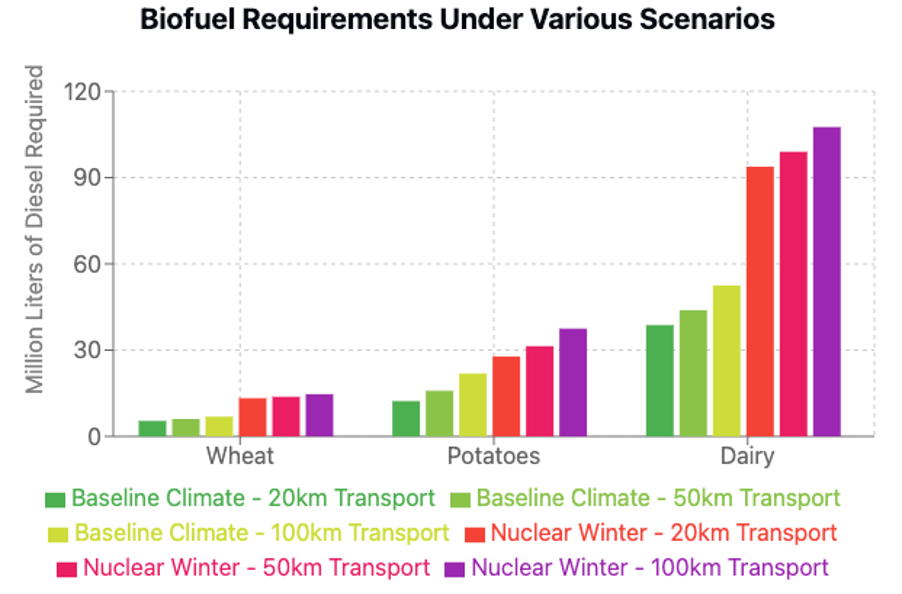
We have previously modelled the ‘bare minimum’ liquid fuel requirements for off-road agricultural production to produce minimal food supply for just the NZ population. This sums to less than 22 million litres of diesel (with optimised grain and vegetable cropping under unchanged climate conditions [0.6% total annual diesel consumption], or up to 107 million litres for dairy production in a nuclear winter scenario (ie, 2.8% of diesel consumption). However, realistic off-road consumption to produce just enough food would likely be greater, given the highly optimised assumptions in our analysis.

We can therefore sum the diesel fuel needs of 5% for lifeline utilities, up to 5–15% for critical transport, and 0.6–2.8% for off-road agriculture, resulting in up to 11–23% of BAU diesel consumption as a bare minimum. Taking the mid-point (17%) this equates to 1.8 million litres per day.

This result means that without onshore liquid fuel production, no matter how many trucks NZ has for distributing fuel, all stockholdings are exhausted by 166 days, even assuming that the relevant restrictions and prioritisations were implemented without delay when catastrophe struck.

None of this information is conveyed by analysing a single 90-day fuel supply shock, without projecting processes and trends across time.

The critical question is not, ‘Can we muddle through an arbitrary 90-day shock’, it is surely, ‘Under such circumstances when will we run out?’ The latter is, for completely unknown reasons, not directly addressed in this ‘Fuel Security Study’.

The obvious next question is then, ‘How much local production of replacement fuels needs to be available?’ The answer is, at a minimum, for diesel (as above), 11% of daily consumption, or ~430 million litres per year – or about half of this in the first year if we are judicious with the 166 day minimal buffer supply.

How could ~200 million litres be sourced locally. One answer is in the Report: biofuels. Unfortunately the Report mostly estimates costs for a single refinery, tallow-type hydrogenated biodiesel solution. Which the report finds to be expensive, reporting throughput of 200,000 tonnes per year creating up to 220 million litres of renewable diesel, at a capital cost of $530 million+ (p.64), or 537 million litres at an annual cost of $257 million (Figure 24, also p.78).

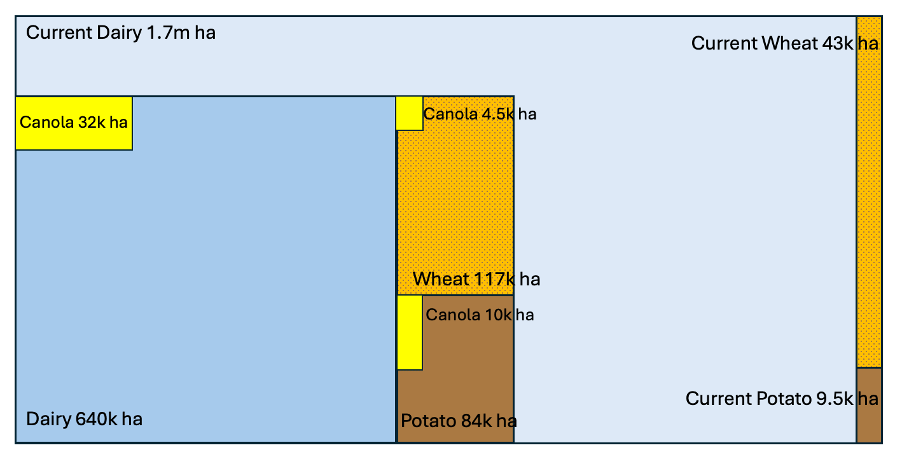
It does not attempt to cost, for example, a solution with 4 or 5 regionally distributed seed oil biodiesel refineries providing say up to 40 million litres each (indeed small seed oil biodiesel refineries have existed in NZ producing in the order of 10-20 million litres per annum). Such refineries could perhaps produce food oil commercially in normal times (for local use and export), but be configured to be able to pivot to biodiesel in catastrophe times. With anticipatory expansion of feedstock such as canola, perhaps on a standard rotation with wheat (with perhaps some substituting for dairy, resulting in net increased food energy production) such solutions might be commercially viable in normal times as well as providing much more sustainable resilience than ‘more storage’ or ‘more trucks’. These kinds of solutions should be analysed.

Beyond this we should also be contemplating the interdependencies among essential utilities and considering how, for example, to supply liquid fuel in contexts of protracted electrical system failure. This is another story, but interested readers can look to our blog on catastrophic electricity loss, and our in-depth webinar and expert panel discussion on the same topic.

Conclusions

The NZ Fuel Security Study provides a valuable starting point, but a more comprehensive approach to global catastrophic risks such as nuclear war, extreme pandemics, massive cyberattacks, and solar storms would require clearer scenario definitions, clear, consistent and relevant comparison of mitigation options, and planning horizons that extend beyond 90 days to explore the point of system break-down. Scenario exercises should push systems to the point of breaking and even beyond to truly understand the threats we’re faced with and mitigation options available.

The economic analysis would benefit from focusing not just on GDP impacts but on societal resilience more broadly, accounting for the expected value of rare but devastating global catastrophes in cost-effectiveness calculations.

For a truly comprehensive approach to fuel security in the context of potential global catastrophes, an expanded study would need significant expansion to address long-term (1+ year) scenarios, detailed sector-by-sector minimum requirements, and integration with broader national resilience planning. While the current Study represents an improvement over previous analyses, it continues to approach fuel security primarily as an economic and supply chain issue rather than as a potential existential threat requiring whole-of-society resilience planning.

These issues are particularly salient to NZ because there are strong reasons to overengineer resilience in island nations. It is not only to protect domestic populations. NZ can potentially feed eight times its population number through food exports if these can be sustained through catastrophe. NZ is also often cited as a potential ‘refuge’ for humanity, a place where societal complexity might persist through a truly global catastrophe. Securing fuel supply for essential functions in a sustainable way, across time, alongside accelerating electrification, is central to this.

Learn more about our work, or donate to support further analysis, at https://www.islandfutures.earth/

Managing the Risk of Catastrophic Electricity Loss: Webinar and Panel Discussion 26 Feb 2025

Photo by Khashayar Kouchpeydeh on Unsplash

Direct link to watch the full webinar recording here.

TLDR/Summary

  • The threat: A catastrophic electricity loss (affecting 5%+ of global population for over a month) could be triggered by solar storms, cyberattacks, or high-altitude nuclear explosions—with minimal planning in place for such scenarios.
  • The danger: These events would cripple supply chains, food production, and financial systems simultaneously, potentially halving food supplies even in resource-rich countries.
  • Solutions exist: Resilient electrical systems can be built through system hardening, geographical distribution, micro-grids, and regulatory reforms—but require deliberate planning and investment.
  • Basic resilience helps: Household stockpiles (2+ weeks of supplies) and social cohesion are critical for surviving medium-term outages, especially in urban areas.
  • Public support: Survey evidence shows citizens want catastrophe planning and resilience investments; community exercises could generate widely-supported policies.
  • Action needed now: 2025 is marking an age of increasing geopolitical instability and risk requiring urgent focus on things like infrastructure interdependencies, near-urban agriculture, and comprehensive resilience planning.
  • Cross-cutting benefits: Preparing for one catastrophic scenario effectively prepares us for many others, creating multiple resilience benefits.
  • Get involved: Multiple leverage points exist for action and input. In the Aotearoa New Zealand context this includes: DPMC’s Long-term Insights Briefing, the Infrastructure Commission’s Priorities Programme, various sector security strategies, and emergency planning processes (by NEMA).

Watch the full webinar video

What was the background and context to the webinar?

In 2023 our group published a report on Aotearoa New Zealand’s (NZ’s) vulnerability and resilience to a Northern Hemisphere nuclear war scenario. NZ is on the one hand a remote island nation with abundant resources, and in a sense resilient. But on the other hand, critical societal functions are very vulnerable to interruptions to trade and supply. 

Many islands share this double-edged sword, and it is worth investing significant efforts in resilience to ensure not just the wellbeing of their populations, but the ability to export food excess in times of crisis, and to sustain hubs of functioning society should a terrible catastrophe strike the world. 

With the aim of furthering deliberation and planning around these issues, we convened a webinar on Catastrophic Electricity Loss, potentially caused by a massive solar storm, cyberattack, or worryingly, a high-altitude nuclear explosion with an electromagnetic pulse (EMP). 

In such scenarios there may be no external aid, for a long period, with crippled electrical supply affecting the flow of all goods and services. 

NZ has little planning for such scenarios, although to its credit, the National Emergency Management Agency (NEMA), has recently published a Space Weather Response Plan, and a Catastrophic Event Handbook

However, these plans, by design, do not look beyond the early recovery phase, and do not address options for national investments in resilience upstream of any catastrophe. They also assume there is a functioning port and airport, and that international aid will come. These assumptions may not hold, and in fact need to be ensured through prior actions. 

Existing international studies of catastrophic electricity loss detail a quick descent into national crisis, and the potential for a halving in food supply, even in highly food productive countries such as the US. 

The dense interdependencies among utility systems mean that electricity could be hard to restore, and existing redundancies could be simultaneously impacted by actual hazards. There is plenty of scope for critical system redesign. 

Existing vulnerability assessments are incomplete, with a focus on short-term needs like hospitals, rather than ‘slow’ processes affected by long-term outages, such as food production and processing, or shipping freight logistics. In some cases, analysis of payment systems has been left for future work. 

2025 is no longer business as usual, we are entering an age of increased geopolitical instability and risk. 

Survey evidence (eg, from the NZ and the UK) shows that the public wants catastrophe plans, and investments in national resilience. It is time to engage society more widely on these issues, provide options, and implement solutions. 

What is catastrophic electricity loss?

Catastrophic electricity loss can be loosely defined as 5 percent or more of the world’s population not having electricity for more than a month. This could result from the causes listed above. Dr Simon Blouin, lead author of a study of food supply in the US following electricity failure explains in the interview below (see 1:20 for definition of catastrophic electricity loss). 

Who was on our webinar Panel? 

Our webinar on Catastrophic Electricity Loss (26 Feb 2025) saw a great line up of experts on the panel:

Image credit: SamRag^ai CC BY 4.0

What did the Panellists say?

The following briefly summarises selected key points made by our panellists during the event. Watch the YouTube video to see their comments in full and in-context. 

Dr David Korowicz 

  • Catastrophic electricity loss is such a huge concern due to its impact on supply chains and the flow of goods and services. 
  • This impact is common to a range of risks (including events affecting liquid fuel supply for example). This means that if you prepare for one of these scenarios you have substantively prepared for all of them. 
  • This kind of event has critical implications for the financial system, and how people perceive money. This is because money has value based on our expectations of future production. If the future is highly uncertain, then the money system can collapse. 
  • Community exercises that walk-through catastrophe scenarios are both engaging to people, and useful for planning. Governments don’t have to be afraid of talking to people about these issues. 
  • The psychological notion of ‘scarcity’ is a big driver of behaviour. We need to work towards a mindset of ‘how can I help?’
  • Other panellists concurred that policy that emerges from citizen assemblies and similar exercises is more likely to be widely supported. 

Associate Professor Caroline Orchiston

  • Both resilience and sustainability are important. Basic resilience at household and individual level can play a big role. We now recognise the importance of two weeks or more of personal emergency supplies.
  • There are a range of people-focused solutions, and we should enable, support, and resource these resilience efforts at various levels of society.
  • Inter-regional emergency management projects are showing great value in preparing for large-scale catastrophe and more resourcing of these would be useful.
  • Caroline noted that there will be locations in NZ that are probably equipped to ride out even long disruptions or periods of isolation, where population density is low and there are many productive resources, but that urban areas will face different and more significant challenges. 
  • A general improvement in risk literacy would benefit NZ’s resilience. 
  • She also supported the need for the Department of the Prime Minister and Cabinet (DPMC) and similar entities to be examining these catastrophic scenarios.

David Keat

  • Drawing on his many years of experience as an engineer and executive in the energy sector David stated bluntly that electricity loss means energy loss. 
  • The supply of liquid fuel depends on electrical systems, and has cascading consequences, which he considered NZ possibly doesn’t fully understand. 
  • Failure scenarios are exercised in the commercial energy sector regularly to learn and understand what can go wrong and how to manage it. Regular catastrophe exercises are likely to be useful for governments and communities too. 
  • Furthermore, we can build resilient electrical systems, but this requires a conscious assessment of the scenarios of interest, hardening of systems, with redundancies, wide geographical distribution of key infrastructure, heterogeneous supply systems, and regulatory reform to encourage micro-grids and local electricity sharing. We need to avoid, mitigate, and ensure rapid recovery is possible. 
  • Wind, solar, and geothermal-based electrical systems north of Taupo are important. Diverse systems like this, with functional islanding, will be more resilient to catastrophic events. 
  • Additionally, if prevention of damage fails, then we need ways of doing things that don’t require electricity. David agreed this might include the capacity for hand pumping of liquid fuel, or generator-ready essential services. 

Dr Florian Ulrich Jehn

  • Described the findings of a German Government study, which painted a grim picture of extended electrical failure. 
  • Key lessons included the need for integrated decision-making, given the many firms and organisations controlling infrastructure. Additionally, stockpiling of supplies such as food shouldn’t be in single large storage facilities, because distribution is likely to be impaired. There is an important role for micro-grids, which could be repaired or restarted independently from national systems. 
  • Other countries, like NZ, should produce their own reports on this kind of scenario, accounting for contextual factors, for example Germany has a system of public wells for water supply resilience, and NZ could investigate similar facilities. 
  • Florian detailed the risk of large reductions in agricultural yields if conditions of electricity failure persist. This is due to reduction in production and supply of inputs such as fertiliser, irrigation, and liquid fuel for machinery. 
  • Alternative and supplementary food sources do exist though, for example seaweed production can be scaled up in low tech ways. 
  • The first step is to begin to think about these scenarios. 

Dr Matt Boyd

  • Suggested that any government or community exercises around electricity loss should include a pathway for their findings to inform infrastructure and resource investment decisions. 
  • He also noted the potential for near-urban agriculture to supply cities when transport systems have failed, but this kind of long-term solution requires land zoning changes and incentives for near-urban farms to grow optimal crops for providing dietary needs. 
  • Risk governance of potential global catastrophes needs to be made explicit in NZ, potentially through a national Chief Risk Officer, unconstrained by the legislative scope limitations of various agencies and with the ability to see ‘gaps’ in the risk and resilience system. 
  • The public needs a voice and should be offered options, do you want to invest in these resilience measures, or do you want these other efficiency measures?  

Audience engagement with the webinar

The audience posed questions to the Panel. These included questions around the role of finance and money post catastrophe, and how to get action on these issues. 

Matt Boyd suggested that there are several leverage points for action, which include, but are certainly not limited to:

  • People making submissions on DPMC’s forthcoming Long-term Insights Briefing, which looks set to cover global risks.
  • The Infrastructure Commission’s Priorities Programme, which is accepting submissions – there is scope for community exercises to feed into this kind of process. 
  • NEMA looks set to iterate its Space Weather and Catastrophic Event plans, and feedback could help shape these. 
  • A National Fuel Security Study has just been completed, and there is an opportunity to provide input to any potential National Fuel Security Strategy.
  • There is the opportunity to progress high priority research through the new Natural Hazards and Resilience Platform – Caroline Orchiston provided some details of this. 

What did NEMA have to say on these issues?

In addition to hosting the live webinar, we also submitted some provocative questions on these issues to NEMA. These questions focused on 10 issues of NZ’s preparedness for extended power outages, addressing:

  • Critical infrastructure interdependencies
  • Emergency power generation and fuel distribution capabilities
  • Supply chain vulnerabilities during extended outages
  • Emergency communication systems
  • Household preparedness requirements
  • Power restoration priorities
  • Space Weather Plan development and testing
  • Grid resilience against various threats
  • Infrastructure strategy given global supply chain challenges
  • Pre-event resilience building for critical infrastructure

In response NEMA highlighted several ongoing initiatives to address extended power outage risks:

  1. Infrastructure Interdependency Mapping: Collaboration with the New Zealand Lifelines Council to produce and update the National Vulnerability Assessment, providing “a unique strategic perspective of all infrastructure services as they act in combination.”
  2. Emergency Communications: Multiple redundant systems including satellite communications, the National Warning System, radio communications, and Emergency Mobile Alerts.
  3. Household Preparedness: Current guidance recommends “3 days or more days of supplies, a week if you can,” though NEMA acknowledges some situations may require several weeks of supplies.
  4. Space Weather Planning: Development of the National Space Weather Response Plan, tested through a national-level tabletop exercise involving approximately 50 organisations.
  5. Supply Chain Resilience: Active work with the Fast-Moving Consumer Goods Sector and development of “a fuel database, including the status of generators, to identify vulnerabilities.”

Examples of some direct responses from NEMA: 

“NEMA collaborates with, and invests in, the New Zealand Lifelines Council to produce and update the National Vulnerability Assessment. The report provides a unique strategic perspective of all infrastructure services as they act in combination to support the wellbeing of New Zealanders.”

“NEMA’s Catastrophic Planning Programme prioritised the logistics workstreams and established a National Logistics Working Group to better define this critical risk, educate and influence, and progress response arrangements.”

“From NEMA’s perspective, space weather preparations have been useful for collaboratively developing procedures and coordination arrangements, training and exercising, and broadening our understanding of cascading disruptions from power outages. The consequences of which will be managed by the hazard-agnostic Catastrophic Event Handbook, which considers severe and sustained electricity disruption.”

Who comprised the audience for this webinar?

Attendees were mostly based in NZ, but also Australia, the US, Ireland, and elsewhere. The audience consisted of individuals associated with the following: 

  • Government departments: including the Ministry of Primary Industries (MPI), Maritime NZ, Fire and Emergency NZ (FENZ), NEMA, and DPMC
  • Regional councils
  • Public health sector
  • Consulting firms
  • Researchers
  • Individuals

Where can I find the reports/sources mentioned in this webinar?

How can I continue to engage with this work?

Reach out to us: https://www.islandfutures.earth/

Beyond the Blast: Professor Alan Robock on How 100 Nuclear Weapons Could Trigger Global Agricultural Collapse

This is a link post for my blog about Professor Alan Robock’s 10 Feb 2025 talk at Victoria University of Wellington.

Professor Robock of Rutgers University has studied the climate effects of nuclear war for 40 years.

I wrote the blog for Islands for the Future of Humanity and the post includes an animation of nuclear winter, and link to Prof Robock’s 2022 TED talk.

Catastrophic Electricity Loss: Famine and Food Security

Matt Boyd with Dr Simon Blouin

On 26 February 2025 Islands for the Future of Humanity will host a Webinar and international panel discussion on Managing the Risk of Catastrophic Electricity Failure in New Zealand.

Ahead of this event Matt Boyd talks with Dr Simon Blouin about his research on catastrophic electricity loss, supply chain, and food security.

  • 0:00 Intro
  • 0:42 Interview begins
  • 1:20 Definition of catastrophic electricity loss
  • 4:05 Causes of catastrophic electricity loss
  • 9:57 Description of the analytic model
  • 12:56 Validation of the model
  • 15:08 Findings of the modelling
  • 19:07 Factors that determine severity of food shortage
  • 20:46 Solutions & risk mitigation

Dr Blouin’s research with the Alliance to Feed the Earth in Disasters (ALLFED) probes the question of what happens if a coordinated cyberattack or high altitude nuclear detonation with electromagnetic pulse disrupts the US electrical grid.

How does food flow from farm to fork, and how long might recovery take?

Key takeaways from the discussion include:

  • Multiple hazards could plausibly take down a national electricity grid for an extended time
  • New Zealand is not immune
  • Food consumption critically depends on a complex and electricity-dependent production, processing and supply chain
  • Famine is possible, even in developed and food rich countries
  • Home food stockpiles play a key role in mitigating shorter (weeks) disruptions
  • Stockpiles of grid components can mitigate longer-term outages (reducing outage time, the critical factor)
  • Scenario planning and exercises are critical
  • Nations should develop National Food Security Strategies for low probability but catastrophic impact events
  • Ensuring equitable distribution of limited food supplies would be important

You can read Dr Blouin’s paper here (International Journal of Disaster Risk Science) to learn more about the technical details of his team’s open source analytic model.

If you enjoy the video, then join our webinar and panel discussion on 26 Feb 2025 (7.30pm NZ time). Click here to register.

When the Lights Go Out: Understanding the Risk of Catastrophic Electrical Failure

Matt Boyd & Islands for the Future of Humanity

Image credit: SamRag^ai CC BY 4.0

Summary/TLDR

  • Modern society’s critical dependence on electricity creates severe vulnerabilities to catastrophic electrical system failures. 
  • The 2024 Cuban blackouts demonstrated how quickly electrical failures can trigger cascading societal disruptions, from failed water systems to nationwide protests. 
  • More severe scenarios like electromagnetic pulse (EMP) attacks or major solar storms could disable electrical infrastructure for months or years. 
  • A German study and research relating to the US (2024) indicates an extended power outage could lead to a myriad of serious problems in high-income countries, including severe food shortages.
  • Understanding and preparing for these systemic risks is crucial for maintaining NZ’s national resilience in an increasingly electrified world.
  • This blog provides background information ahead of a webinar with expert panel discussion scheduled for 7.30pm Wednesday 26 February 2025 (NZ time).
  • Register for the webinar here. Or join at the scheduled time using this link.

Introduction

The reliable supply of electricity underpins virtually every aspect of modern society, from communications and transportation to healthcare and food distribution. While this electrical infrastructure provides immense benefits, our deep dependence on it creates serious vulnerabilities if the system fails. 

In October 2024 Cuba lost power to the entire nation, but what if an electrical failure affected not just a single nation, but an entire continent? What if recovery took not days or weeks, but months or years? These aren’t just theoretical questions – they’re scenarios some governments and researchers are actively studying and preparing for.

The following blog provides introductory reading ahead of our Islands for the Future of Humanity webinar and panel discussion scheduled for 7.30pm NZ time, Wednesday 26 February 2025 (webinar registration).

You can view our previous webinar the ‘Kōrero on Catastrophe’ on the risks of nuclear war from the perspective of NZ.

Catastrophic Electrical Failure as a Risk

The 2024 Cuban blackouts provide a sobering case study. Throughout 2024, Cuba experienced multiple nationwide power outages, with the most severe occurring in October when the failure of a single power plant triggered a total nationwide blackout. The outages led to widespread disruption – water systems failed as pumps lost power, food spoiled in non-functioning refrigerators, and essential services like healthcare were severely impacted. The crisis culminated in widespread protests and required emergency fuel shipments from Mexico to help stabilise the situation.

Image credit: SamRag^ai CC BY 4.0

While Cuba’s power grid was already stressed due to maintenance and fuel supply issues, similar vulnerabilities exist in more robust systems. Modern electrical grids are highly complex and interconnected, meaning that failures can cascade rapidly across regions. The system depends not just on functioning power plants, but on sophisticated control systems, specialised components that may be difficult to replace, and ongoing maintenance from skilled technicians. In a severe crisis, any of these elements could become a critical failure point.

Several identified threats could trigger catastrophic electrical failure:

  • Physical damage to critical infrastructure from natural disasters or deliberate attacks
  • Cyber-attacks targeting grid control systems
  • Supply chain disruptions affecting essential components and fuel
  • Loss of skilled personnel needed for operations and maintenance
  • Electromagnetic pulse (EMP) events, either from solar storms or nuclear detonations

The growing frequency of extreme weather events and increasing geopolitical tensions may elevate these risks further. Additionally, the push toward renewable energy, while essential for addressing climate change, introduces new complexities in grid management that must be carefully considered in resilience planning.

German Government Study 2010

While governments are often reluctant to publicly examine worst-case scenarios of national power failures, a notable exception exists in a 2010 study from Germany’s Office of Technology Assessment. This comprehensive analysis offered an unusually direct look at how a prolonged, widespread power outage would cascade through modern society. Some of the study’s findings were highlighted recently in the Existential Crunch blog

The Summary Report was stark. Severe impacts of catastrophic electricity failure on societal functioning included:

  • Complete breakdown of communications infrastructure within hours/days – phones, internet, and most methods of communication between authorities and the public would fail, making coordination of emergency response and public information extremely difficult. Only radio would remain viable for mass communication.
  • Collapse of food and water supply systems – Food distribution would break down within days as stores empty and cold storage fails. There would be refrigeration failures, non-functioning payment systems, and transport disruptions would empty store shelves. Even more concerning, modern livestock facilities would face a crisis as automated feeding, climate control, and milking systems failed. Water supply and sewage systems would fail without power for pumps, leading to severe hygiene and health risks. 
  • Paralysis of transportation systems – Traffic lights, rail systems, and fuel pumps would stop working. Emergency services would struggle to respond, and movement of essential supplies would be severely constrained.
  • Breakdown of healthcare services – Hospitals could only maintain limited emergency operations on backup power. Most medical facilities would have to close, medications requiring refrigeration would be lost, and medical care would become extremely limited.
  • Collapse of public order and security – The combination of failed infrastructure, scarce resources, and limited emergency response capabilities would likely lead to civil unrest (this was borne out in Cuba in 2024). The report indicates “feelings of helplessness and stress will develop if supplies are interrupted, information is unavailable, and public order begins to break down.”

The study’s ultimate conclusion was grim – after only a few days without power, it would become impossible to maintain the supply of vital goods and services across affected regions. This would mark a threshold beyond which government authorities could no longer fulfil their fundamental duty to protect citizens’ lives and wellbeing, effectively constituting a national catastrophe.

Image credit: SamRag^ai CC BY 4.0

This detailed German study raises several important questions for NZ, including:

  • Is awareness of the risk as much in its infancy in NZ as it was in Germany?
  • How do NZ central and local government decision makers coordinate, and what is the plan for national communication without electricity? (Radio on batteries? Loud speakers?)
  • Can we devise and mandate a specified minimum level of communication service in a prolonged power outage (across days, weeks, months)?
  • Is decentralised generation a solution? How much damage would distributed renewable generation suffer in various scenarios?
  • How will vehicles refuel without electrical pumps and can we move food from production to consumption? 
  • Do we need food distribution points or communal kitchen plans if people can’t cook at home? 
  • How will people pay for food?
  • How will ships be unloaded?
  • How will cows be milked?
  • How at risk is water supply or wastewater? Can a roof water collection mandate help?
  • Can NZ give more prominence to construction of systems that don’t depend on electricity (eg, gravity fed water where possible)?
  • How do we do all this across weeks or months without electricity?

Electromagnetic Pulse (EMP) Risk

While the German study provides a comprehensive overview of electrical grid failure scenarios irrespective of the triggering cause, specific threat vectors like electromagnetic pulse (EMP) attacks or solar storms (see below) warrant particular attention, in part because they could disrupt electricity supply across continents or even globally. 

Indeed the United States EMP Commission has published several reports and Congress held a hearing in 2015 on the EMP threat. An EMP event, whether from hostile action such as high altitude detonation of a nuclear weapon, or natural causes, could have devastating effects on NZ’s electrical infrastructure and modern society.

A high-altitude EMP detonation over NZ or nearby (eg, an attack on Australia) would generate three distinct waves of electromagnetic disruption. The initial E1 pulse, occurring in mere nanoseconds, would induce extreme voltage surges in electrical equipment across thousands of square kilometres. This would likely destroy unprotected electronic systems including computers, telecommunications equipment, and solid-state control systems that manage power grids. The subsequent E2 and E3 waves would then induce powerful currents in long conductors like power lines and communication cables.

Steven Starr doesn’t sugar coat it in his detailed description of an EMP attack on the US:

“Ground, air, and sea transportation systems, water and sanitation systems, telecommunication systems, and banking systems are all knocked out of service. Food and fuel distribution cease. Emergency medical services become unavailable. The multitude of electronic devices that society depends on have suddenly stopped working.”

For NZ specifically, key vulnerabilities might include:

  • NZ’s interconnected national grid system, which could experience cascading failures as protective systems are overwhelmed.
  • Telecommunications infrastructure including satellite and cellular networks and internet systems, which could fail.
  • Transportation systems, water and wastewater treatment facilities dependent on electrical pumps and control systems, banking and financial systems requiring functional computers and networks, medical equipment in hospitals and healthcare facilities, food storage and distribution systems requiring refrigeration and computerised inventory management, all at risk.

NZ’s isolated geographic position increases vulnerability as replacement equipment and expertise would largely need to be sourced from overseas, potentially resulting in extended recovery times. NZ’s relatively concentrated population centres also mean that damage to key infrastructure nodes could affect large portions of the population simultaneously.

Food supply could be critically at risk. 

A 2024 study published in the International Journal of Disaster Risk Science examined how a severe EMP attack over North America would affect US food supplies. The findings were stark: food consumption could drop by 38-65% in a scenario that takes a year to recover from – potentially pushing large populations into famine conditions. Even in a more optimistic scenario with recovery taking just two months, food consumption would still decline by 24-50%. The study highlighted how modern food supply chains’ reliance on electricity makes them particularly vulnerable to prolonged power outages, affecting everything from farm irrigation to food processing and distribution. NZ would likely share many of these problems, especially the cities and large towns.

Image credit: SamRag^ai CC BY 4.0

Solar Storm

While EMP represents a potential hostile threat, naturally occurring space weather could also pose a risk to NZ’s infrastructure. Solar storms and coronal mass ejections (CMEs) can create effects similar to EMP, but typically developing over hours rather than nanoseconds, allowing some opportunity for protective measures if adequate warning systems are in place.

NZ’s mid-latitude location means it would typically experience less severe geomagnetic effects than polar regions. However, NZ’s increasing reliance on long-distance power transmission lines and interconnected infrastructure has heightened vulnerability. The national grid stretches the length of both islands, with submarine cables crossing Cook Strait – these long conductors can act as antennas for geomagnetically induced currents (GICs) during solar storms.

Key vulnerabilities include:

  • The high-voltage transmission network, particularly extra-high voltage (EHV) transformers which are especially susceptible to damage from GICs
  • Satellite-dependent systems including GPS/GNSS navigation, critical for aviation and maritime operations
  • Communications infrastructure, especially long-distance cables and satellite links that keep NZ connected to the global internet
  • Pipeline networks carrying gas and oil can even experience accelerated corrosion from induced currents

A major solar storm comparable to the 1859 Carrington Event could cause widespread disruption lasting weeks or months. Even a more moderate event, like the 1989 Quebec storm that left millions without power for 9 hours, could damage transformers and cause regional blackouts. NZ’s geographical isolation compounds the recovery challenge – replacement transformers typically take 6-16 months to source from international suppliers, and shipping logistics (also impacted by the event) could extend this timeline further.

Image credit: SamRag^ai CC BY 4.0

The cascading effects would impact essential services, again including:

  • Food distribution networks needing pumped fuel and refrigeration
  • Water and wastewater treatment requiring electric pumps
  • Financial systems dependent on electronic transactions
  • Healthcare services relying on powered medical equipment
  • Telecommunications systems to coordinate responses or emergency services

While NZ’s smaller scale might allow faster recovery in some areas compared to larger nations, its isolation and limited domestic manufacturing capacity for critical components like large transformers makes it particularly vulnerable to extended disruption. Planning for space weather events might require monitoring of solar activity, hardening of critical infrastructure, a more modular and distributed electricity network (islanding), and development of replacement component stockpiles given our distance from major manufacturers. 

Unlike the near-instantaneous impact of EMP, space weather events typically provide some warning through solar monitoring systems. This makes preparedness and early warning systems crucial for protecting vulnerable infrastructure before the arrival of solar storms. 

Given the above, NZ’s National Emergency Management Agency (NEMA) has recently published a Space Weather Plan focused on monitoring, information gathering, communication channels, and coordination. 

NEMA’s plan is a great start, but it does not yet address options for ongoing consequence management during an extended recovery phase. It also says nothing about any infrastructure strategies for building resilience to these events, or about the infrastructure and resources that might need to exist ahead of time so there are affordances for any National Action Plan. Our organisation, Islands for the Future of Humanity, is particularly interested in fostering discussion about these prior components of resilience strategies. 

We can further ask: 

  • What consequences are expected and how could investment/action ahead of time mitigate or avoid these?
  • What resources/capital stocks would help in the recovery? 
  • How could we prevent fuel, food, water, medical supplies being used up when they may not be able to be replaced? 
  • What can we learn from other big electricity failure events (eg, Cuba, Quebec – see above) about what happens behaviourally, socially, and what might be needed?
  • What infrastructure might be destroyed and not just disrupted in these events and how do we rebuild/replace these (eg, without trade)?

Managing the Risk of Catastrophic Electricity Failure

Catastrophic nationwide or even global electrical failure is an understudied event that poses some of the largest risks to NZ. In recognition of this, we are holding a webinar and expert panel to facilitate public discussion of this risk. The webinar will take place at 7.30pm NZ time, on Wednesday 26 February 2025. The intended audience is individuals, organisations, government advisors, and decision makers. Register here, or click to join on the day.

With maximum solar activity forecast for July 2025, deteriorating global geopolitical relations raising the spectre of nuclear war, and advances in AI threatening to facilitate global cyber-attacks, the likelihood of catastrophic electrical failure is probably rising. 

Existing research in NZ has started to consider the dense interdependencies among critical systems and how these networks might be impacted by regional natural disasters. More of this analysis is needed, and with a focus on catastrophic national and global risks. This is because, as the Covid-19 pandemic showed us, the downstream effects of perturbances are not always obvious.

NZ needs to include these catastrophic global risks in its National Risk Register and make this document and the relevant mitigation plans publicly available so NZ businesses, organisations, public services and individuals can consider these risks. Recent critique of climate and security policy in Australia illustrates the need for public information, with Green and independent MPs and senators persistently asking the government how can we address risks when we are not even told what the government knows about them.

Image credit: SamRag^ai CC BY 4.0

Mitigation starts with public discussion supplemented with information from experts, key agencies and industries. Informed discussion can help influence what kinds of information, infrastructure and resilience strategies we ask of our governments. 

Debate and discussion could potentially inform strategic planning, for example via NZ’s Infrastructure Commission Priorities Programme, or facilitate feedback to the Department of the Prime Minister and Cabinet’s (DPMC’s) 2025 Long-term Insights Briefing (which looks set to address global risks), or by informing ongoing revisions to NEMA’s Space Weather Plan or CatPlan handbook, updates to NZ’s National Fuel Plan, or a range of other risk mitigation plans. 

Join us on 26 February for our webinar on catastrophic electrical system failure. The session will begin assuming attendees have read this blog, or are otherwise familiar with a broad outline of these risks, allowing us to dive straight into discussing some of the questions raised above and the question of what to do about these risks?

Learning from Covid-19: Why NZ Needs a Broader View of Catastrophic Risk

Matt Boyd & Nick Wilson

The Royal Commission of Inquiry’s Report on Covid-19 lessons learned should be expanded and applied across the set of global catastrophic risks that threaten NZ.

Summary/TLDR

The recently published Covid-19 Royal Commission’s lessons should be applied beyond pandemic preparation to address all potential global catastrophic risks (GCRs).

Aotearoa New Zealand (NZ) needs comprehensive plans for scenarios worse than Covid-19, including those involving destruction rather than just disruption of critical systems.

Key priorities include:

  • Developing robust national risk assessment methodology that includes global catastrophes.
  • Building resilience against extended trade isolation.
  • Strengthening core health security measures including investment in public health and border control capabilities.
  • Creating threat-agnostic plans for protecting critical sectors (energy, transport, food, communications).

Anticipatory governance of GCRs requires:

  • Public engagement throughout the planning process.
  • Integration of ethical frameworks.
  • Cost-effectiveness analyses across prevention and mitigation options.
  • Explicit consideration of worst-case scenarios.

Action is needed now while global stability permits meaningful preparation, as future conditions may make building resilience more difficult.

Success requires maintaining public trust, government transparency, and strong coordination across all sectors of society.

Introduction

NZ’s Royal Commission of Inquiry into Covid-19 Lessons Learned published its Phase I Report in November 2024. The Report acknowledges the successes of NZ’s Covid-19 approach, but also the harms and associated lessons. The Commission makes 39 recommendations to help mitigate future pandemics, and other risks to NZ.

The Report covers the all-of-government NZ response to Covid-19, including ‘lockdowns’, border restrictions, the health system response, economy and social impact, vaccination and mandatory measures.

It is a shame that it took a catastrophe for a suite of sensible recommendations to emerge. However, we agree with the authors that action should extend beyond mere pandemic preparation.

In this blog, we look beyond naturally occurring pandemics and applying a global catastrophic risk (GCR) lens, we discuss what the Inquiry Report means in the wider context of national risks.

The Report’s Findings

The Inquiry Report makes eight ‘big picture’ observations about the Covid-19 pandemic, which it presents as follows (p.65):

The Report then follows these observations with six important lessons for the future, which they summarise in the following graphic (p.67):

Global Catastrophic Risks

The Report is explicit that, “many findings and lessons can be usefully applied to other threats [than pandemics].” We leave readers to look at the Inquiry’s Summary Document for full details and a comprehensive list of recommendations for pandemic preparedness. What we wish to highlight are the findings and gaps relevant to a sensible approach to GCRs more generally.

Other threats on the scale of Covid-19, or greater, include more extreme pandemics, perhaps resulting from bioweapon use, or spread of bioengineered pathogens. Also, major global risks such as nuclear war, extreme climate change, volcanic eruptions causing ‘volcanic winter’, global cyberattacks, asteroid and comet impacts, solar storms, and great power conflict. RAND Corporation has detailed most of these risks for the US Government in a 2024 Report. The same thinking underpinning the Inquiry Report on Covid-19 lessons learned, should be applied to these risks as well in coordinated fashion.

Assessing and preparing now for these civilisation-threatening risks is important, because civilisation appears to be entering a period of downturn and fragmentation, as exhibited in a series of concerning megatrends, and as is typical of civilisation cycles across time. This means, however, that the ability to prepare for and mitigate these risks might become more difficult in the medium-term future.

The Report is clear that some of NZ’s Covid-19 successes were down to mere luck, singling out for example the continuation of essential trade (p.49). The importance of locally led initiatives was also critical (p.50). Both resilience to trade disruption and appropriately resourcing communities are important global risk mitigation measures.

The Inquiry Report recommends that future approaches to major catastrophes should make explicit use of ethical frameworks. We completely agree. In fact, we took steps to starting a national conversation on values frameworks and extreme risks with our 2018 paper ‘Existential Risks: New Zealand needs a method to agree on a value framework’. GCR research has become more nuanced since then, but the need for a public conversation to inform national risk strategy remains.

Health Security

It is clear in the Report that public health expertise and infrastructure played a huge role in NZ’s Covid-19 success. While ‘lockdowns’, although often effective, were very expensive and caused harm to many people.

We support the Commission’s calls for investment in public health. We also advocate cost-effectiveness analyses across the many prevention and mitigation options for GCRs. We suspect that some initiatives, such as investing strongly in public health systems and workforce, will turn out to be some of the most cost-effective investments government can make, when the iterated costs of future pandemics are accounted for.

Our own retrospective analyses of Covid-19 outcome data (still in progress and preliminary) suggests that non-island countries experienced a death rate from Covid-19 inverse to the level of development of their core health security measures. Developing capabilities and capacities like those in the Global Health Security Index will be important during pandemics if NZ chooses not to strictly control its borders.

That said, another recent analysis we’ve performed suggests that the longer time islands spent with strict border measures, the fewer Covid-19 deaths they suffered, without any associated adverse economic impact.

We emphasise the difference in the determinants of Covid-19 outcomes between islands and other jurisdictions and caution anyone making comparisons between island and non-island countries.

It is possible that some future pandemics are far worse than Covid-19. See this report by Madhav et al for an indication of how frequently more severe pandemics will strike. NZ’s preparation needs to account for the possibility of a long period of isolation as an island refuge. The cost-effectiveness analyses we advocate above need to account for these likelihoods and which impacts of severe pandemics that we could avert.

Critically, future pandemic plans need to thoroughly consider border closure thresholds, and decision rules for similar, less strict, and more strict border measures depending on the severity and characteristics of a pandemic.

Health security and border measures are important, but we also know that people’s trust in each other, and trust in government, as well as less government corruption, are all strongly associated with pandemic success. These national characteristics must be maintained and strengthened.

Anticipatory Governance

The Inquiry Report strongly recommends more and better coordinated anticipatory governance of pandemic threats. It also highlights the lack of mechanisms to anticipate and evolve response plans. Particularly problematic was a kind of all-eggs-in-one-basket assumption that vaccines would end the pandemic, without a Plan B for emerging from ‘lockdowns’ and other measures.

We agree, and underline that anticipatory governance of pandemics can’t really be separated from governance of all GCRs, given many of the common downstream impacts that GCRs would have on an island nation like NZ.

Planning for pandemics, and especially a pandemic with the characteristics of Covid-19 was undercooked in NZ. If this is true of possibly the largest threat in expectation that the country was known to face, then it is likely to be truer for other GCRs. We note that NZ has only just (Nov 2024) released its first ever plan for a space weather catastrophe. The country needs plans for other GCRs, and threat agnostic plans that mitigate harm to critical sectors such as energy, transport, food supply, and communications. We have outlined this case, and a suite of resilience options in our 2023 report, ‘Aotearoa NZ, Global Catastrophe, and Resilience Options: Overcoming Vulnerability to Nuclear War and other Extreme Risks.’

The Commission’s Report emphasises the importance of all of government readiness for a pandemic, along with the need for central oversight of integrated pandemic preparation and an effective national risk management system. We agree. Such as system needs to develop an improved national risk assessment methodology and include GCRs in their assessment (perhaps referring to the RAND Report in the US).

NZ also needs legislation underpinning and mandating these assessment and planning functions, not just legislation that enables responses. The Inquiry Report advocates a publicly facing National Risk Register, but we’d extend this call. The whole national risk assessment process needs public involvement throughout its development and analysis cycles. The use of citizen assemblies could simultaneously inform and identify concerns and could be a forum for putting options and trade-offs to the public.

We have previously described similar processes in our papers on ‘Assumptions, uncertainty, and catastrophic/existential risk assessments’ and ‘Anticipatory governance for preventing and mitigating catastrophic and existential risks’. Our 2023 Main Report includes a chapter detailing what such anticipatory governance of GCRs generally might look like in the NZ context.

The implementation of a government Chief Risk Officer is another path that could be considered. Chief Risk Officers and the ‘three lines of defence’ approach are common and effective in the private sector (including the airline industry that Prime Minister Luxon comes from). The three lines include frontline operational ownership of risk, risk oversight by a Chief Risk Officer, and independent oversight of the whole process.

Strategic Resilience

The Inquiry Report rightly underscores the importance of resilient and adaptive health, justice, education, social and economic systems during a pandemic.

As indicated above, many GCRs have common (and different from Covid-19) implications for distribution of harm across sectors. Furthermore, sectors are densely interconnected and dependent on key processes such as trade, transport, energy, communications, and food supply.

Any initiatives aimed at improving resilience to future pandemics should be integrated with a wider ranging risk assessment and a set of strategies to build resilience and redundancy across at least these key sectors. Particularly concerning for NZ is trade isolation.

Destruction not just Disruption

Although trade was able to continue during Covid-19, this cannot be guaranteed in the case of other GCRs such as nuclear war, extreme solar storm, and so on. So, we need plans for scenarios where there is destruction, not merely disruption of global trade infrastructure.

We cannot be caught preparing only for the last battle, not the next. NZ needs to develop its ability to withstand an extended period of trade isolation and develop the infrastructure and capability to trade independently with Australia, coordinating and cooperating on critical needs.

Development of such resilience infrastructure, providing a Plan B, no matter what the critical issue, be it catastrophic shipping collapse, electrical grid failure, food production collapse, communications blackout, liquid fuel shortage, requires a trade-off between efficiency and resilience.

It is this kind of protection, from large scale unpredictable harm, that governments are most suited to ensuring. The risks, resilience options, and trade-offs need to be explicitly put to the public and debated. This requires a sophisticated and detailed national risk assessment, detailing the kind of capitals (human, physical, natural, and financial) that might provide affordances and options in the face of future catastrophes.

Action for National Resilience is Needed Now

We reiterate what we stated above, the world appears to be entering a period of geopolitical, climate, and economic instability, which as it progresses will likely undermine the ability of nations to develop resilience. We should not delay investment in assessing and mitigating GCRs. The prudent move is to buy our ‘insurance’ now, before any crisis strikes. Now is not the time for cuts and austerity on critical science and protections.

The Inquiry Report states that we need to be able to deliver ‘business-as-usual’ activity (p.78) during a pandemic of extended duration. We contest that future catastrophes could be very much worse, and we need plans that focus on how to deliver basic needs such as food, energy, and minimal communications during extreme scenarios. ‘Business-as-usual’ could be a dream.

The Report evaluated, and found problematic, some of the mandatory measures during Covid-19. Future scenarios could require other kinds of far-reaching mandatory measures, such as fuel or food rationing. These considerations need to be surfaced ahead of time, and debated, with resilience options sought, so they don’t come as a surprise should other GCRs strike.

NZ will need the capacity and capability to deal with future global catastrophes, and the experience with Covid-19 showed that although we managed to muddle through with some success, this cannot be assumed for other risks, at other scales, and in future contexts.

Conclusion

The Royal Commission’s Inquiry into Covid-19 provides valuable insights not just for future pandemic preparation, but for NZ’s approach to global catastrophic risks more broadly. While NZ managed the Covid-19 pandemic relatively well, we cannot rely on luck or assume similar approaches will work for different types of catastrophes.

The time to act is now, while we still have the capacity and stability to make meaningful preparations. This means developing robust risk assessment frameworks, building redundancy into critical systems, and strengthening our ability to operate independently during extended trade disruptions. Most importantly, we need to move beyond planning for mere disruption to preparing for potential destruction of key global infrastructure and systems.

As we face an increasingly unstable global environment, NZ must take a comprehensive, forward-thinking approach to catastrophic risk management – one that ensures our resilience against the full spectrum of potential global catastrophes, not just pandemics.

Global Catastrophe Assessment: What RAND’s Landmark Report Tells Us About Civilisation’s Biggest Threats

Matt Boyd & Nick Wilson

Image credit: ChatGPT

TLDR/Summary

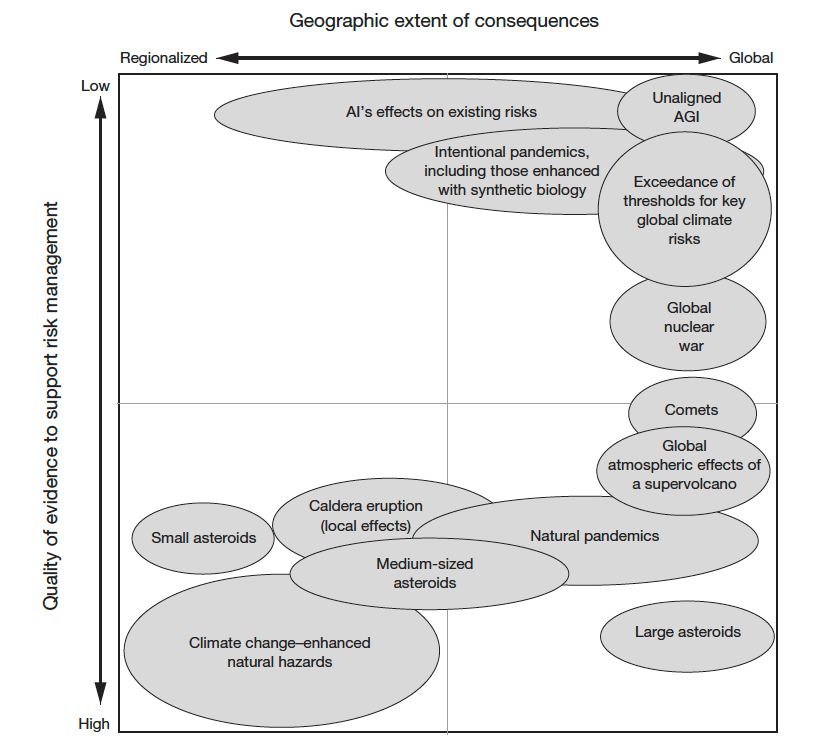
  • The US Global Catastrophic Risk Management Act (2022) mandated assessment of six major threats that could significantly harm human civilisation: pandemics, climate change, nuclear war, asteroid/comet impacts, supervolcano eruptions, and artificial intelligence (AI).
  • RAND has produced a report representing the first comprehensive US government-mandated assessment of these risks.
  • Key findings reveal that while asteroid impacts and supervolcanoes are better understood scientifically, the most pressing concerns come from human-influenced risks.
  • The report identifies the threats with increasing likelihood of occurrence as pandemics, climate change, nuclear war, and AI, with pandemic likelihood projected to double or quadruple by 2100.
  • Importantly, these risks are interconnected and can amplify each other – for instance, AI could exacerbate nuclear or pandemic risks.
  • The report’s significance extends beyond mere assessment: it provides a foundation for the development of concrete central government response strategies and testing these plans through exercises, as mandated by the Act.
  • This practical approach, combined with calls for international cooperation and expanded research, marks a crucial shift from theoretical discussion to actionable policy on catastrophic risks.
  • While the report has some inconsistencies, its existence signals growing recognition that global catastrophic risks require coordinated global action.
  • As these threats continue to evolve and interact, the findings provide a foundation for international collaboration on risk management – making this work relevant not just for the US, but for all nations concerned with humanity’s future resilience.

The US Global Catastrophic Risk Management Act

Enabled by the US Global Catastrophic Risk Management Act (2022) (US GCRMA), the Secretary of Homeland Security and the administrator of the Federal Emergency Management Agency directed RAND to produce a report on six threats and hazards considered global catastrophic risks (GCRs). The report assesses pandemics, climate change, nuclear war, asteroid/comet impacts, supervolcano eruptions, and AI.

The Act defines GCRs as ‘events or incidents consequential enough to significantly harm or set back human civilisation at the global scale’.

The Act also requires that subsequent work ensures each Federal Interagency Operational Plan be supplemented with a strategy to ensure the health, safety, and general welfare of the civilian population affected by catastrophic incidents, as well as ensuring that the strategies developed are validated through exercises.

RAND’s assessment of GCRs

RAND’s Global Catastrophic Risk Assessment analyses both natural hazards and human-created inventions and actions that could cause global catastrophe.

The report foreshadows its focus on processes and consequences (rather than a probabilistic risk assessment). Early chapters note the value of identifying causal chains to catastrophe and where these are more and less understood.

Each risk is described in terms of the likelihood of potential consequences across the categories of death, ecosystem instability, societal instability, and reduced human capabilities.

Supervolcanoes

The RAND Corporation’s report highlights the severe threat posed by supervolcanoes, which erupt approximately every 15,000 years. These events produce violent eruptions causing extensive damage through pyroclastic flows, ash clouds, and climate impacts that can span regional to global scales. The report emphasises that sulphur-containing gases entering the stratosphere could alter Earth’s climate for years, potentially threatening agriculture and billions of lives. While acknowledging these risks, RAND suggests the long-term atmospheric and climatic effects remain uncertain due to limited peer-reviewed evidence.

However, this assessment appears to underestimate the volcanic threat. While RAND focuses on supervolcanoes (Volcanic Explosivity Index [VEI] of 8+), smaller but still massive VEI 7+ eruptions, like Tambora in 1815, occur far more frequently—approximately every 625 years (see our study of the impact of Tambora). Even moderate eruptions (VEI 3-6) near major trade routes could trigger global catastrophes, if occurring at critical communication and trade hubs as documented in Nature.

This blog’s first author (MB) consulted with volcanology experts at Oxford and Cambridge Universities who revealed more extensive peer-reviewed evidence than RAND presents, particularly regarding climate and food supply impacts. The report’s projection of 1-2°C global temperature decreases over 1-2 years underplays literature showing 2-4°C drops lasting 10-20 years. RAND also appears inconsistent in emphasising massive potential casualties while downplaying climate effects.

Despite these limitations, the core message stands: even moderate volcanic eruptions could severely disrupt global society, with larger events threatening food security worldwide.

Asteroid/comet impact

Large asteroids are known as ‘world killers’ and the effects of an asteroid or comet just 300m across hitting the Earth would be felt worldwide. Impacts leading to country-sized devastation occur approximately every 100,000 years, and impactors large enough to cause global devastation strike the Earth every 10 million years.

RAND reports that work by the global planetary defence community has substantially increased our knowledge of asteroid risks, including efforts to detect existing asteroids (such as NASAs Near Earth Object Programme and Planetary Defense Coordination Office). The successful NASA DART mission tested and proved one method for deflecting objects in space.

Thankfully the infrequency of large impacts coupled with our emerging understanding of how to mitigate the risk, makes the risk of global catastrophe posed by asteroid or comet strikes very low, indeed probably the lowest of the risks identified in the RAND report.

Severe pandemics

RAND’s analysis warns that severe pandemics can inflict massive casualties and social disruption in remarkably short periods. The report highlights how human activities are amplifying pandemic risks, projecting a two to four-fold increase through 2100. While natural pandemics are becoming more frequent, the report also acknowledges the less quantifiable risks of laboratory accidents and engineered pathogens—noting historical incidents of accidental exposure and mishandled pathogens during biological research.

The report emphasises that technological advancement and improved pandemic preparedness could both reduce outbreak likelihood and minimise their impact.

However, newer research paints an even clearer picture of future risks. A 2023 study from the Center for Global Development projected Covid-19-scale pandemics every 33-50 years, with catastrophic events killing 80 million people expected every 120 years.

Preliminary findings from our own work on pandemic mitigation indicates that we largely know how to manage pandemics, but the appropriate responses vary by context. Increasing the capabilities and capacities measured by the Global Health Security Index appears to correlate with improved pandemic outcomes (in terms of excess mortality during the Covid-19 pandemic) for countries that are not islands. For island jurisdictions, tight border management appears effective, to buy time until a vaccine is available or other protections put in place.

It will be worth watching what advice emerges from the US with respect to global pandemic catastrophe, as each jurisdiction will probably need tailored advice.

Nuclear war

RAND finds that nuclear war could kill hundreds of millions of people directly and potentially billions of people indirectly through the effects of radiation, and the climate impacts of nuclear winter and famine. The indirect effects of nuclear war are less predictable than the direct impact of detonations and experts disagree on some key assumptions.

Nuclear war could wreak havoc with ecosystems, destroy government infrastructure, economies, and the function of national governments. Damages could total hundreds of trillions of dollars. Our own estimation of the impact on the small non-combatant nation of New Zealand exceeded NZ$1 trillion.

Depending as it does on human decision makers, the true probability of nuclear war is not knowable.

Regardless, RAND notes that deeply uncertain processes can have significant policy implications. The report evaluated the quality of evidence supporting estimations of the scale and severity of nuclear war impacts as below that of asteroids, pandemics, and supervolcanoes. Further research is urgently needed.

It is perhaps timely then that the United Nations (UN) delegations of Ireland and New Zealand recently introduced a resolution on the scientific study of the impacts of nuclear war. The UN First Committee on Disarmament approved the resolution on 1 Nov 2024, by a vote of 144 to 3, with 30 abstentions. If passed in December at the General Assembly, then the resolution mandates a 21-member international scientific panel to evaluate the immediate and downstream effects of nuclear war. This will be the first time the UN has done so since the 1980s.

Rapid and severe climate change

RAND states that human-induced climate change has the potential to disrupt the natural environment and ecosystems in ways that threaten the stability of society and human health and welfare. The effects of climate change will likely lead to death, disruption, and degradation of ecosystem stability, as well as slowing economic growth, and reduction of human capabilities.

The report cites UN Environment Programme probabilities across a range of global mean temperature thresholds, finding that 2-3°C rise by 2100 is most likely. However, a 1% chance of >4°C would bring catastrophic consequences.

The RAND analysis considers weak economic growth of <1% per annum for the remainder of the 21st century, a large social cost of climate change, and negative effects on poverty, consumption, and quality of life. GDP per capita could be lower than it is today, with effects worse in vulnerable countries and risks of state fragility.

Decades of scientific study mean that RAND has comparatively high confidence in their assessment of the risk of global catastrophe due to human-induced climate change.

Artificial intelligence

The RAND report acknowledges that emerging AI technologies could amplify existing risks from nuclear war, pandemics and climate change. Also, that AI systems have the potential to destabilise social, governance, critical infrastructure and economic systems. Malicious actors could employ AI, or AI systems underpinning critical systems could fail.

However, the likelihood of global catastrophe mediated by AI is highly uncertain and little empirical evidence exists for assessing either likelihood or consequences. As such the risk of AI is rated the most uncertain among the hazards examined in the report.

AI has no inherent ‘kinetic or physical effect’ and as such an AI catastrophe will manifest via some other catastrophe, affecting social, governance, economic, environment, and critical infrastructure systems, perhaps disempowering humans in decision-making.

Overall risk assessment

RAND presents their overall risk assessment in terms of the geographic extent of the global catastrophes assessed, and the quality of evidence that can support risk management, see the Figure below.

Source: RAND 2024

From the Figure we see that large asteroids, natural pandemics, and supervolcano eruptions have the potential to adversely impact the entire globe, and therefore every human on Earth. Quality evidence exists to guide management of these risks, but global cooperation is needed.

Global nuclear war, extreme climate change, and AI also have the potential to cause global catastrophe, but more evidence is needed to understand how to best mitigate these risks. There is also inherent uncertainty due to lack of any precedent.

RAND assesses that the risks associated with AI, climate change, nuclear war, and pandemics are increasing.

Additionally, the risks are interconnected, and all are influenced by the rate of technological change, the maturity of global governance and coordination, the failure to advance human development, and interactions among these hazards.

The report states that we can take technical and logistical action to mitigate risks where good evidence exists to guide action.

We can improve governance of risks where human behaviour amplifies the risk.

We can learn about risks for which there is yet insufficient evidence to recommend action.

RAND notes the need for enhanced institutions at all levels of governance (including internationally) able to implement these responses and risk management approaches.

Additionally, the report recommends a portfolio approach across these risks, collective action at all levels, the need to address deep uncertainty with scenarios and stress tests of the risk management portfolio, and working across diverse values, objectives and expectations.

Report recommendations

  • Incorporate comprehensive risk assessments into management of global catastrophic and existential risks
  • Develop a coordinated and expanded central government funded research agenda to reduce uncertainty about global catastrophic and existential risks and to improve the capability to manage such risks (analogous to a recommendation by NZ’s former Productivity Commission)
  • Develop plans and strategies when global catastrophic and existential risk assessments are supported with adequate evidence.
  • Expand international dialogue and collaboration that addresses global catastrophic and existential risks
  • Adapt planning and strategy development to address irresolvable uncertainties about global catastrophic and existential risks.

Commentary

The RAND report is to be lauded. Although it has its weaknesses and inconsistencies. For example, having rejected the primacy of probabilities in assessing many of these global catastrophic risks, detailed probabilities are presented throughout some of the chapters. Having questioned long-term utilitarian arguments for action to prevent catastrophic and existential risks in early chapters, the report then employs them in the pandemic chapter (p.72). For several hazards the risk of severe climate impacts and the failure of global agriculture is noted (eg, nuclear war/winter, supervolcanoes, asteroid impact), yet resilience measures such as ‘stockpile food and medicine’ form the basis of the sketch of mitigation measures, rather than gesturing to a diverse and resilient global food supply and food system.

It also appears some offers by leading experts to contribute peer review of the report were not taken up. This runs against our previous arguments that national risk assessments must engage a wide body of experts and the public iteratively. Such review is critical when chapters are being written by two, or even just one contributor.

However, this RAND report is just the first step mandated by the US GCRMA. When one of us (MB) wrote about the Act back in Feb 2023, it was noted that the Act requires the assessment of these risks (the current RAND report), but then subsequently:

  • A report on the adequacy of continuity of operations and continuity of government plans based on the assessed global catastrophic and existential risk.
  • An Annex in each Federal Interagency Operational Plan containing a strategy to ensure the health, safety, and general welfare of the civilian population affected by catastrophic incidents.
  • An exercise as part of the national exercise program, to test and enhance the operationalization of the strategy.

We must now await these developments in the US. But given the clear need for global coordination on these risks, other countries (including NZ) should use the RAND report to inform their own ‘interagency operational plans’ to ensure health, safety, and general welfare in the event of any, or any combination or, these six hazards, along with other potentially catastrophic scenarios such as massive solar storms or cyber-attacks.

Ongoing technological development should prioritise technologies that tend to reduce global catastrophic risk, rather than those that amplify it.

Coordinated governance of these risks should be developed in the form of agreements, treaties, collaborative knowledge seeking exercises, and investment. (See our recent arguments for such pandemic cooperation between Australia and NZ).

This action needs to start now, because there is a growing risk that these potential catastrophic processes will undermine our ability to mitigate and respond to them.

The UN has started to take global catastrophic risks seriously. Mention of these issues at the beginning of the 2024 Pact for the Future, also the abovementioned Ireland/New Zealand sponsored UN resolution are to be commended. But other risks need more work. A global pandemic treaty met serious hurdles of national and regional self-interest, and there is no collaborative global body directed against the risk of global catastrophe due to volcanoes. The world needs to lift its game, and hopefully this RAND report is a timely reminder that nations need to make wise choices now, that ensure affordances when they need to act later in the face of potential catastrophe.

The Critical Minerals That Matter: Aotearoa/NZ’s Basic Needs in a Global Catastrophe

Matt Boyd, Nick Wilson

ChatGPT imagines NZ mineral stockpiles

TLDR/Summary

  • The NZ Ministry of Business, Innovation and Employment released a Draft Critical Minerals List, for public consultation (now closed).
  • The list is based on a report by Wood MacKenzie which identified a short list of critical minerals.
  • We find that the list could pay more attention to the minerals essential to NZ in a global catastrophe scenario.
  • Therefore, we made a submission on the draft list that takes this global catastrophic risk management perspective.
  • We strongly agree that the following minerals already included should remain on the list: Potassium, Phosphate, Boron, Cobalt, Copper, Magnesium, and Selenium
  • Given changing needs following a global catastrophe, the list could additionally include Gold, Silver, Iron, Calcium (Limestone), Thermal Coal, Salt (sodium chloride), Iodine, and Geological Hydrogen (and perhaps other minerals).
  • The global catastrophic risk lens should be applied across all strategic analyses the government undertakes.

Two Tales of the Apocalypse

In the book The Knowledge Lewis Dartnell speculates on how someone might rebuild civilisation from scratch after an apocalypse. The essential minerals he mentions, in rough order of priority, include those needed for agriculture (potassium, nitrogen, and phosphorus for fertiliser), food preservation (salt), thermal energy (coal), lime/calcium carbonate (multipurpose for agriculture, hygiene, safe drinking water, smelting metal, making glass, and construction materials), the pyrite rocks (to make sulphuric acid for chemical production processes), clay and lime mortars plus sand and gravel for cement, and iron for steel.

In The End of the World is Just the Beginning Peter Zeihan examines global demographic trends and geopolitical strife, and warns of future severe disruptions to global trade, and the potential for industrial collapse in many regions. His analysis underscores the importance of access to iron ore, bauxite (aluminium), copper, cobalt, lithium, silver, gold, molybdenum, platinum, and the rare earth elements.

The overarching point of these two books is that industrial processes and the wellbeing and quality of life that depend on them, are in turn dependent on a critical set of key inputs. The critical minerals. Preserving what already exists is clearly easier than rebuilding an industrial society from scratch, so it is wise for societies to ensure continuing access to critical minerals.

Global Catastrophic Risks

Production, trade and supply of critical minerals is threatened by global catastrophic risks such as nuclear war, supervolcano eruptions, extreme pandemics, cyberattacks and solar storms. These all threaten global infrastructure and could precipitate the collapse of production or global trade (see for example our Hazard Profile on nuclear war and NZ).

A core problem for island nations is that many of them, such as Aotearoa New Zealand (NZ) are effectively the ‘last bus stop on the route’ and could suffer immense consequences in these contexts that accelerate the risk of societal collapse. Access to critical minerals is needed to secure basic needs such as clean water (eg, chlorine), food production (NPK fertilisers), and heating (eg, coal for thermal energy in case of electrical failures).

MBIE’s Draft Critical Minerals List

To its credit, the NZ Ministry of Business, Innovation and Employment (MBIE) recently released a Draft Critical Minerals List for public consultation. MBIE’s justification for creating a critical minerals list centres on ensuring economic stability, supporting technological advancement and clean energy transitions, strengthening international partnerships, and addressing potential supply chain vulnerabilities for minerals essential to NZ’s current and future needs.

The List is extracted from a report by Wood Mackenzie, which also draws on critical mineral lists of other countries. In preparing the report industry stakeholders were consulted and the process included: Definition of Critical Minerals within the NZ context, analysis of NZ mineral production, consumption and trade, data gap analysis, development of a Long List identifying minerals produced by and/or essential to NZ, and a supply risk assessment. The result is the list of minerals in Table 1:

Source: Wood MacKenzie (2024)

Not Business as Usual

We note that the Wood MacKenzie methodology appears to assume that a degree of global trade continues, as “Global Reserves” and “Global Supply” are key factors in the supply risk assessment. However, there are plausible scenarios where global trade is completely disrupted (see for example our Hazard Profile detailing the impact of a Northern Hemisphere nuclear war on NZ). In such cases even trade with Australia may take some time to re-establish at scale. We feel that the analysis does not yet adequately consider a range of global catastrophic risk scenarios.

The Wood MacKenzie Report defines critical minerals: “to be included in the draft list, a mineral must be:

  • Essential to NZ’s economy, national security, and technology needs, including renewable energy technologies and components to support our transition to a low emissions future and/or
  • In demand by NZ’s international partners, and
  • Susceptible to supply disruptions domestically and internationally.

Essential is defined as critical to maintaining the NZ’s economy today and into the future and not readily substitutable.”

This definition, and the “total mineral demand” calculation performed for the Wood MacKenzie Report, appears to omit minerals that, while not essential under business-as-usual, may attain particular significance in situations where global conditions are radically altered, such as following a global catastrophe that potentially lasts years or a decade or more (eg, nuclear winter).

We are most concerned about the class of risks that would cause the most harm to NZ (including a risk of permanent economic and social damage). To reiterate, these global catastrophic risks (GCRs) include: major volcanic eruptions at global pinch points, nuclear war (with or without nuclear winter or high-altitude electromagnetic pulse), severe pandemics (natural or engineered), major global food shock, global industry disabling solar storms, devastating global cyber-attack, catastrophe from misaligned artificial intelligence (AI), large asteroid/comet impact, etc.

Such risks have the greatest expected harm (when likelihood and impact are multiplied). We have written a detailed report about this kind of risk and how NZ might ensure resilience. Although individually such risks may have a low probability of occurring in any given year, collectively they are plausible, and some are even likely in the long term.

Critical Minerals for Basic Needs

Following a global catastrophe, it will be necessary to focus on ensuring that basic needs (water, food, shelter, energy, communications, transport) are able to be supplied and distributed.

In catastrophe circumstances minerals such as Potassium and Phosphate (which are not on our international partners’ Critical Mineral Lists) may be particularly important, as might Gold, Silver, Coal, Iron, Calcium/Lime. NZ’s critical minerals analysis needs to include a global catastrophic risk lens and contemplate the downstream context following the potential extreme catastrophes listed above.

The particulars of which minerals are “In demand by NZ’s international partners” should include analysis of scenarios where global trade has collapsed and trade operates on a restricted regional basis (eg, NZ, Australia, Indonesia), as this context may alter what is “in demand” regionally.

We made a submission to MBIE about the Draft Critical Minerals List. Our main point in making the submission was that decisions around critical minerals must be taken through a lens that includes global catastrophic risks where international trade is radically altered. There could be a completely new context, and therefore new priorities could emerge (ie, where global reserves and global supply are inaccessible).

This perspective should supplement considerations of mineral needs under business-as-usual for economy, trade, sustainability, and general security considerations.

Through the global catastrophe lens we strongly agreed with the following minerals already included on the Draft List: Potassium, Phosphate, Boron, Cobalt, Copper, Magnesium, and Selenium.

But we also recommended that the following be added to the list: Gold, Silver, Iron, Calcium (Limestone), Thermal Coal, Salt (sodium chloride), Iodine, and Geological Hydrogen.

Our reasoning was as follows:

  • Potassium and Phosphate: Critical for industrial agriculture and food security.
  • Boron, Cobalt, Copper, Magnesium, and Selenium: Essential for addressing soil deficiencies in NZ and for alloyed steel production.
  • Limestone/Calcium and Aggregate/Sand: Crucial for construction and road repairs, especially important due to NZ’s extreme dependence on road transport.
  • Iron (and Bauxite): Vital for tool-making and construction. Domestic production capability important in case of trade disruptions.
  • Thermal Coal: For heating, and potential energy source if hydroelectric generation is impaired due to climate disruptions (eg, nuclear winter or volcanic winter).
  • Salt (sodium chloride): Essential for food preservation without refrigeration and chlorine for water treatment.
  • Gold (and/or Silver): Potentially needed to base a new currency in case of economic collapse, or for purchasing critical imports from Australia and Indonesia.
  • Iodine: Important for preventing dietary deficiencies and producing disinfectants.
  • Minerals used as Catalysts for Biofuel Production: Critical for producing biofuels to run agricultural machinery, interisland ships, and other transport in post-disaster scenarios.
  • Geological Hydrogen Gas: Potential future fuel source in case of disruptions to liquid fuel imports

We are concerned that much risk mitigation activity in NZ addresses only smaller more common risks (eg, floods, earthquakes, 10% global fuel supply disruptions) and therefore leaves most of the expected future harm to New Zealanders unaddressed. In contrast we note that the US has a Global Catastrophic Risk Management Act (2022) and the first US report on how to supply ‘basic needs’ in such scenarios is imminent.

Interdependent Sectors

Finally, we note critical links between minerals, agriculture, transport, interisland shipping, liquid fuel and other industries. For example, agriculture depends on mineral inputs, which must be transported, perhaps between islands, using liquid fuel. These issues of resilience to global catastrophe cannot be addressed in isolation, and the global catastrophic risk lens should be applied across the spectrum of resilience initiatives, such as NZ’s National Fuel Security Study, solution scoping for the interisland ferry replacements, when considering coastal shipping, transport infrastructure decisions, crop choices and development and land use strategies.

Lost at Sea: Shipping in NZ through a Catastrophic Risk Lens

By Matt Boyd, Mike Hodgkinson, Nick Wilson

Listing to Port: Is this the marketplace for interisland ships NZ has been browsing? (Image credit: ChatGPT)

TLDR/Summary

  • NZ’s interisland and coastal shipping infrastructure is inadequate for global catastrophe scenarios that limit international shipping or liquid fuel supply to NZ.
  • The recent history of failures including ferries and coastal ships highlights the vulnerability of interisland connections to any loss of component supply or international expertise.
  • NZ heavily relies on road trucking (93%), which is fuel-inefficient and vulnerable to disrupted fuel supply or road damage.
  • Coastal shipping capacity is low, limiting transport options.
  • Key resilience options to protect against global catastrophic risks: Upgrade and diversify the interisland ferry fleet; Expand and modernise coastal shipping capabilities; Develop local biofuel production for shipping; Accelerate transport electrification; Improve rail infrastructure, including interisland rail capacity; Create redundancy in transport systems.
  • Benefits include: improved catastrophe resilience, reduced emissions, better preparedness for various disasters.

Introduction

Aotearoa New Zealand (NZ) is supposedly a seafaring nation, but in case of a global catastrophe our interisland and coastal shipping infrastructure is far from being up to scratch.

Global catastrophic risks such as nuclear war, supervolcano eruptions, extreme pandemics, cyberattacks and solar storms threaten global infrastructure and could precipitate the collapse of global trade (see for example our Hazard Profile on nuclear war and NZ). NZ is the ‘last bus stop on the route’ and could suffer immense consequences that accelerate the risk of societal collapse.

NZ’s transport infrastructure is extremely dependent on imported liquid fuel supplies, but also imported components for maintenance and repair. In the case of an extended period of trade isolation, the country may struggle to fuel and repair transport assets such as ships.

This is particularly concerning given NZ’s recent track record of shipping maintenance woes, poor liquid fuel security status, and NZ’s extreme dependence on road trucking for transport.

NZ needs to upgrade its shipping infrastructure and secure a minimum locally produced shipping fuel supply as a national public priority. This is to ensure food and essential commodities can be distributed around the country even in a severe global catastrophe.

For resilience, NZ would ideally use a balanced mix of transport options such as efficient locally controlled coastal shipping, electric rail, road trucking, and trans-Tasman shipping options that don’t depend on global shipping routes. However, at present NZ is 93% dependent on the least fuel-efficient option of road trucking (which can consume double the fuel per container moved than rail or shipping).

Road trucking in turn is dependent on functioning and resilient Cook Strait ferries. But these ferries have a track record of failures in recent times, and in a global catastrophe, it may not be possible to conduct repairs that depend on imported parts and international expertise.

To avoid isolating the North from South Island, the interisland ferry fleet needs to be diverse, modern, well-maintained, have high capacity and redundancy. It also needs a secure fuel supply that doesn’t depend completely on imported liquid fuels.

The Problem

The history of interisland ferry failures is worrying (see supporting links after this blog):

  • In 1999 the Aratere suffered power failures shortly after entering service.
  • In 2005, the Arahura experienced a major loss of propulsion power approaching Tory channel due to failure of a diesel generator.
  • In 2006, the Aratere developed a significant list due to shifting cargo in heavy weather, causing minor injuries.
  • In 2013, the Aratere was taken out of service after a fatigue fracture caused it to lose a propeller while crossing Cook Strait.
  • In 2021, the Kaiārahi experienced a major gear box failure during a Cook Strait crossing.
  • Throughout 2021 and 2022, there were sporadic cancellations across both Interislander and Bluebridge services due to various mechanical issues.
  • In 2023 the Kaiārahi and Connemara both faced “engineering issues” in February causing widespread cancellations.
  • In 2023, the Kaitaki lost all power due to a cooling system leak, drifting dangerously close to Wellington’s south coast, with Wellington hospital going on alert for potential mass casualties.
  • In 2023, the Kaitaki was out of service again with a gear box problem that required overseas experts to be flown in.
  • In 2024 the Aratere ran aground in the Marlborough Sounds after a steering failure.
  • In 2024 the Connemara lost power and started drifting in Cook Strait.
  • In 2024 the Strait Feronia lost power coming into Wellington Harbour.
  • There have also been multiple incidents of ferries colliding with wharves or other vessels.

These issues have resulted in frequent cancellations, delays, and stranded passengers, vehicles and freight. Plans to replace the aging ferries in the Interislander fleet with new hybrid-electric ferries failed to materialise and now the government has scrapped a planned upgrade to new vessels.

In response, KiwiRail announced increased ferry maintenance and scheduled longer periods in dry docks for serious maintenance work. Also, international experts were consulted to assess the ships’ conditions and provide recommendations. KiwiRail has considered alternative options, including extending the life of existing ferries, leasing or buying second-hand ferries, and exploring new ferry designs with reduced landside requirements. Though none of these is a comprehensive and long-term resilience solution.

KiwiRail did report 97% ship availability and 85% on-time performance in February 2024, but as noted above, a single mechanical failure, or inability to access fuel could be disastrous for NZ’s connectedness in a global catastrophe. Redundancy and the ability to troubleshoot locally are critical.

Importantly, the problems are not limited to interisland shipping. It is recognised that NZ has low coastal shipping capacity and efforts to improve coastal shipping services have also met with failures. For example, a ‘she’ll be right’ NZ attitude to fitting out a beleaguered coastal barge ended in disaster this year as it ran aground near Westport immediately after being put to service.

We note Waka Kotahi’s Freight and Supply Chain Strategy. There is a 3-year plan to analyse port connections, and a plan across 30 years to strengthen parts of the freight and supply chain system that are critical to national interest, but global catastrophe could strike at any moment. We applaud the goal of more freight being transported by rail and coastal shipping rather than road, but there is yet little evidence of sweeping improvements in resilience.

Future NZ Shipping? (Image credit: Midjourney)

Catastrophe Resilient Solutions

In 2023 we produced a report on increasing NZ’s resilience to global catastrophe. In the chapter on transport, we provided resilience options including the need to:

  • Accelerate electrification, including electric road and rail transport, short haul coastal shipping, and interisland air travel.
  • Invest in research and development of the optimal methods for producing transport fuel locally in NZ, for example biofuel feedstocks such as canola, and developing food oil factories that can convert to biodiesel production.
  • Explore how coastal shipping might employ wind assist technology to conserve fuel, be capable of running on biofuels, and quantify the minimum liquid fuel needs for shipping to move the most essential goods (eg, food) around NZ.
  • Develop principles of land transport and shipping fuel rationing based on prioritisation of population basic needs in a global catastrophe.
  • Collaborate with Australia on global catastrophe resilience to ensure that trans-Tasman trade can continue using just assets controlled by NZ and Australia.

Interisland Ferry Resilience and Redundancy

NZ needs reliable and resilient interisland shipping options, that are flexible enough to move people, freight, trucks and rail assets, and modern and reliable enough that the risk of irreparable breakdown is extremely low. There needs to be capacity and redundancy in the system.

There are concerns that any Cook Strait ferry solution will not be rail capable. Ideally interisland ferry solutions would accommodate future emphasis on electric rail. If the North and South islands are disconnected, NZ risks a less resilient rail system (as rail assets or repair workshops may be stranded on one island or the other).

Rail, especially electric rail, may be particularly important in a global catastrophe if fuel and transport options are scarce, as it allows intensive near-urban agriculture to follow a railway, as we have argued in our research paper on near urban agriculture for resilience.

Coastal Shipping Assets and Infrastructure

At present it is more cost-effective to ship Australian wheat to processing in Auckland than bring wheat from the South Island, but we cannot assume that trans-Tasman transport will be operational following a global catastrophe. Reliable and sufficient NZ bulk, liquid, and container coastal shipping assets are strategically important.

NZ needs an expanded, capable, flexible and reliable coastal shipping fleet, and associated port infrastructure, perhaps including roll-on, roll-off capability for trucks and rail at a range of ports. This would provide transport resilience, reduced emissions and fuel efficiencies. Yet there are doubts about NZ’s coastal shipping capability and capacity and a lot of ‘coastal’ transport in NZ depends on vessels plying global routes.

Liquid Fuel Supply for Shipping

Shipping is more fuel efficient than road transport in most cases and can be markedly so when a full load of containers is transported. However, shipping still requires a significant amount of liquid fuel.

We’ve previously calculated that as little as 5–15 million litres of locally produced biofuel could power agricultural equipment sufficient to produce food for the entire NZ population (if efficient crops such as wheat are grown near processing and consumption sites – with many more litres needed for producing food such as dairy products).

In contrast the annual fuel consumption of a single ship to distribute food is in the order of 10 million litres. Such a ship (eg, like the MV Moana Chief) can ply coastal routes and is trans-Tasman capable. Some ships can run on 100% biodiesel (B100), but regulatory changes and certifications would be needed to permit this. We estimate that local production would require at least 8,000 hectares of canola crop or some other biofuel feedstock for every 10 million litres of biodiesel. Such considerations need to be part of a comprehensive mixed transport resilience plan and essential quantities compiled in an improved National Fuel Plan.

These liquid fuel volumes need to be put in the context of the amount of biodiesel that previously operating refineries could produce. One refinery in NZ is capable of producing in the order of 10–20 million litres of biodiesel per annum, however it has now switched to producing food oil.

We commend a new agreement for a biofuel refinery at Marsden Point, but from a diversification and resilience perspective NZ needs to produce a wide range of fuels (for aviation, shipping, agricultural machinery etc) and the problem of interisland transportation of this fuel remains. Biofuel refineries would ideally be in both North and South islands, at least until more widespread electrification of agriculture and road transport occurs.  

One concrete possibility is to begin by pursuing the potentially low hanging fruit of marine fuel. Canola feedstock in Canterbury with the potential for wheat rotation crops (to expand production), could supply the Rolleston PureOil NZ refinery which could produce marine fuel with linkage to Lyttleton for a single NZ marine bunker. Multiple refining and bunker nodes would be ideal, and additional opportunities should be sought.

Infrastructure Commission Proposals

The NZ Infrastructure Commission is calling for submissions to its Infrastructure Priorities Programme (first round due 20 December 2024). Submissions can include ‘Stage 1’ proposals that detail major problems (of national significance) that NZ faces. We contest that resilient coastal and interisland shipping is one such priority issue and we encourage people to submit proposals for infrastructure that will enhance the resilience of NZ’s interisland and coastal shipping in the face of potential global catastrophe. Solutions might include interisland or coastal vessels, landside infrastructure, trans-Tasman trade options, and solutions for a resilient shipping fuel supply.

The country cannot assume that help, expertise and components from overseas will be easily available when needed after a global catastrophe. Distribution of food, fuel, and medicines depends on a resilient local transport system. Indeed, all industrial systems are interdependent and without reliable shipping every sector would break down in a multi-island nation. There is potential for widespread societal harms in a catastrophe that accrue well beyond the accounting in shipping industry risk processes. The right resilience incentives are lacking and this means there may be a case for government ownership of some strategically critical shipping assets.

Finally, the suggestions above would likely help provide a range of immediate benefits to the country. These include reducing greenhouse gas emissions, increase transport security, and providing resilience to a wider class of natural hazards such as extreme weather or earthquakes.

Further recent media about NZ shipping problems and solutions

[1] https://www.rnz.co.nz/news/national/502312/timeline-the-troubled-cook-strait-ferries

[2] https://www.rnz.co.nz/news/national/528514/timeline-a-recent-history-of-cook-strait-ferry-woes

[3] https://www.1news.co.nz/2024/06/22/grounded-interislander-ferrys-25-years-of-troubled-history/

[4] https://nzhistory.govt.nz/culture/cook-strait-rail-ferries/strikes-and-strandings

[5] https://en.wikipedia.org/wiki/Interislander

[6] https://www.interislander.co.nz/explore/the-history-of-the-interislander-ferry

[7] https://www.thepost.co.nz/nz-news/350319712/troubled-waters-brief-history-interislander-issues

[8] https://www.treasury.govt.nz/sites/default/files/2024-05/project-irex-4914527.pdf

[9] https://www.rnz.co.nz/news/national/511300/more-frequent-checks-for-kiwirail-s-ageing-ferry-fleet

[10] https://www.munz.org.nz/2024/09/20/connemara-failure-highlights-urgent-need-to-address-ferry-fiasco/

[11] https://www.rnz.co.nz/news/national/528525/bluebridge-ferry-maritime-union-sounds-alarm-about-health-and-safety

NZ needs to audit shipping capabilities through a global catastrophe lens (Image credit: Midjourney)

Lessons from the Cambridge Conference on Catastrophic Risk 2024

Video: Dr Matt Boyd presents highlights of NZ’s vulnerability and resilience to nuclear war and other global catastrophes. You can download a PDF version of this presentation to access all links.

Blog Summary/TLDR

  • Diverse researchers, analysts, and officials gathered at the University of Cambridge’s Centre for the Study of Existential Risk (CSER) in September 2024 to discuss global catastrophic risks and potential solutions.
  • Key topics included: emerging risks, the systemic nature of risk, resilience options, comprehensive risk governance, and partnerships for change.
  • The conference highlighted the expanding and interdependent nature of global risks, the challenges in managing them, and the need for better international cooperation and coordination in risk assessment and governance.
  • Practical solutions included: inclusion of global risks in national risk assessments, new international agreements, national chief risk officers, and on-the-ground solutions to the local manifestations of catastrophe.
  • New Zealand needs to improve its preparedness for global catastrophe and consider measures such as ensuring local fuel supply, upgrading critical infrastructure, and developing a publicly facing National Risk Register that includes global catastrophic risks.
  • Click the YouTube video above to watch Dr Matt Boyd’s conference presentation.
  • For more on these issues, you can read the NZCat Main Report about NZ’s vulnerability and resilience to nuclear war or visit Islands for the Future of Humanity.

The CSER Conference

On the 17–18th Sept 2024 I joined a diverse set of researchers and analysts converging on the University of Cambridge’s Centre for the Study of Existential Risk (CSER) to contemplate risks that could result in the collapse of civilisation.

Alongside catastrophic risk researchers and analysts from the global North and South, attendees included diplomats, representatives from the UN, think tanks, governments such as Singapore, NATO advisors, and students.

Tongue-in-cheek dinner speaker Lance Gharavi professed the merits of the comical Centre for Applied Eschatology, however most in attendance had the goal of preventing global catastrophes such as nuclear war, extreme pandemics or technological disasters, and ensuring recovery should these catastrophes ever befall us.

Keynote speaker Mami Mizutori, a former Special Representative of the UN Secretary-General for Disaster Risk Reduction, talked about four needs in the face of potential global catastrophe:

  • Comprehensive risk governance
  • Partnerships for change
  • Better synergy among global agendas
  • Courage to tackle systemic risk

But Mizutori also warned that there is a difficult path ahead with multilateralism and binding agreements being difficult to achieve in 2024.

Peter Sogaard Jorgensen spoke about the evolution of the polycrisis we now face, and the structural drivers of risk that have landed the world amid a set of ‘anthropocene traps’. Understanding the evolution of these structural incentives is key to overcoming them.

The conference heard grass-roots solutions to major risks including flood resilience in Pakistan (from Sabuhi Essa), and the importance of indigenous knowledge and rights (Elena Kavanagh). We also heard about ‘derailment risks’ (Laurie Laybourn) where solutions to catastrophes such as climate change could become unattainable as our capability to solve them is undermined by the very catastrophe process itself.

Emerging risks discussed included biological and other converging technological threats (Margaret Kosal), the risk of space wars and satellite disruption (Joanna Rozpedowski), including the blurred lines between what is a military target vs civilian asset. 

The audience heard new approaches to risk analysis and mitigation such as ‘impact webs’ (Edward Sparkes) or ‘webs of prevention’ (Catherine Rhodes), as well as the value of a potential UN convention on existential risk (Manfred Kohler).

A session on resilience to global catastrophe highlighted solutions such as fuel security for agriculture in NZ (this author: Matt Boyd), resilient foods (Juan Garcia), and the need for government plans. One success reported by Monica Ulloa of the Observatorio de Riesgos Catastróficos Globales, was the government of Argentina including abrupt sunlight reducing scenarios (such as volcanic or nuclear winter) in government risk analysis. Argentina is the first country to do this.

I had informative and stimulating conversations ranging from the importance of government Chief Risk Officers to coordinate anticipatory risk governance, through to first-hand accounts about wealthy individuals looking to identify resilient locations to build secure refuges.

It’s impossible to give full details of the 50 speakers and dozens of poster presentations here, but the overall picture was one of expanding major global risks (due to rising complexity, interconnectedness and human impacts) some which may be beginning to elude our capacity to manage them, and an international system not up to the task of coordinated risk governance.

But solutions are possible, and takeaways included the urgent need for governments to add global catastrophic risks to risk assessment and risk management processes, and perhaps more critically, to cooperate and coordinate on cross-border risks.

We have recently seen the UN Member States adopt a Pact for the Future, which explicitly calls out global catastrophic and existential risks and addresses climate, nuclear, biological, and technological risks. These ambitious statements must now be backed through action of Member States individually and collectively. 

I also had the opportunity to take part in two of Lara Mani’s (CSER) global risk workshops.

The first was a creative workshop focused on practical creation and dissemination of risk information and key messages in succinct and accessible forms.

In the second, I played the role of UK Minister for Health in a scenario-based workshop contemplating firstly an Indonesian supervolcano eruption, the cascading consequences of which spread to affect the entire world, and secondly, a scenario dealing with the catastrophic collapse of the UK power grid.

These exercises in communication and understanding of catastrophic risk were very effective and governments should undertake such exercises regularly.

Not all risk communication should be dry research reports: Communication workshop facilitated by Lara Mani (CSER) – Author’s photo

Reflections

On reflection after the conference, I can commend the government of my own country (NZ) for some of its recent initiatives:

  • National Fuel Security Study – to investigate the options for ensuring liquid fuel supply, however this study needs to contemplate global catastrophic risks explicitly.
  • Draft Critical Minerals List – for public consultation to inform strategic development of essential mineral resources (see our submission that takes a global catastrophe perspective here).
  • Draft Resolution on Nuclear War Effects and Scientific Research, announced with Ireland, that proposes an up-to-date international study on the effects of nuclear war (ideally including second order cascading effects).
  • National Emergency Management Agency ‘CatPlan’ handbook for hazard agnostic catastrophe management – not released yet. It appears this handbook will discuss catastrophes ‘requiring international support’, however some scenarios need to assume such support is not forthcoming.
  • Given the last point, NZ needs to assess its capital stocks and ensure that the available human, natural, physical, and financial capitals are sufficient to provide resilience options in the radically altered context of a true global catastrophe.

As such, the NZ Government can still learn from global examples:

  • Argentina’s inclusion of abrupt sunlight reduction scenarios in national risk assessment (ie, nuclear, volcanic, or comet/asteroid winters).
  • The Singapore Government’s attendance at the Cambridge Conference on Catastrophic Risk as part of its ongoing foresight capabilities.
  • The United Kingdom and other countries’ publicly facing National Risk Registers.
  • The United States Global Catastrophic Risk Management Act, which mandated a report on these risks that is due imminently.
  • The many global catastrophe scenario exercises being undertaken around the world to understand the needed preparation and management for risks such as: extreme pandemics, nuclear war/winter, supervolcano, asteroid/comet impact, catastrophic electrical grid or communications failure, or catastrophic global food shortage.

NZ needs to deploy a systemic approach to vulnerability and resilience using a global catastrophic risk lens. Key vulnerabilities in NZ include single failure points that must be mitigated as a priority. This includes (among other initiatives):

  • Ensuring local supply and production of liquid fuels (eg, biofuels) for critical processes such as agriculture, should fuel imports cease.
  • Ensuring reliable and future-proofed Cook Strait ferries, which are currently so critical given NZ remains over-dependent on road truck freight for distribution of food and essential goods.
  • Upgrading coastal shipping and rail assets and associated infrastructure to facilitate trade, including with Australia, in the context of a dire global catastrophe.
  • Developing a Digital Communications Continuity Plan.

NZ could develop and leverage a publicly facing National Risk Register connected to a set of solution visions, combined with the Infrastructure Commission’s Infrastructure Priorities Programme to ensure the required resilience is developed. I encourage people to submit Stage 1 proposals to the Commission highlighting key national vulnerabilities.

We have prepared a range of materials the NZ Government and other organisations can use in this mission, and interested readers can visit: