Adapt Research provides high quality evidence-based research, analysis, and writing on health, technology, and global catastrophic risks to inform strategic policy choices and reduce the risks of global catastrophe.
The UK has just published a new improved National Risk Register covering 89 major threats, including key global risks like massive (VEI7+) volcanic eruption, emerging infectious disease, and nuclear ‘miscalculation’.
NZ has just published a National Security Strategy that focuses on 12 ‘core issues’.
The comprehensive nature of the UK Risk Register highlights the siloed and disconnected nature of NZ’s risk analysis and management environment.
NZ can learn from the inclusion of critical global catastrophes in the UK National Risk Register – scenarios which potentially contain most of the actual risk
NZ could use the plans for ‘system reform’ articulated in the National Security Strategy to ensure broad, high-level, coordinated governance of national risks.
Two recent risk assessments
In this post I briefly discuss two recent government publications on risk, these are:
On 4 August the UK released its 2023 UK NRR. This document is publicly facing, though aimed at practitioners, businesses and academics, and highlights 89 threats that are detailed in the UK National Security Risk Assessment (a classified work).
The UK NRR comprehensively maps the risks to the UK, including impacts to safety, security, and critical systems at a national level. It was informed by the UK Government Resilience Framework, a House of Lords Inquiry into ‘Risk Assessment and Risk Planning Preparing for Extreme Risks’, and the 2023 UK NRR now presents a risk assessment that looks five years ahead rather than the previous two.
The 2023 version of the UK NRR is a very much improved compared with previous editions. Apparently gone are the days of keeping significant and extreme risks ‘classified’. The Government’s assessment of likelihood and potential consequences across the 89 risks is now published for all to see. This transparency can only aid prevention and resilience work.
Examples of risks contemplated include the failure of all transatlantic communications cables, disruption of global oil trade, and human pandemics.
But for the first time this year, the publicly facing UK NRR includes risks derived from the major classes of ‘global catastrophic risks’ (GCRs). These include:
VEI7+ (very major) volcanic eruption somewhere in the world – The UK NRR states that this hazard could lead to a ‘humanitarian crisis’, ‘major disruptions to supply chain’ and ‘hazardous weather.’ I agree, and my colleagues and I have previously published research detailing how the 1815 Mt Tambora eruption impacted global climate and food supply, noting particularly the impact on island nations like New Zealand.
Emerging infectious disease – A previous iteration of the UK NRR had estimated an emerging infectious disease might kill ‘up to 100’ UK citizens – and then COVID-19 appeared and killed over 200,000. In this edition, the UK NRR now contemplates an emerging disease with a 25% case fatality, it notes the potential need for ‘border measures’, and very widespread contact tracing and isolation potentially of hundreds of thousands of people.
Nuclear miscalculation (nuclear war not involving UK). The UK NRR puts the likelihood of conflict with nuclear weapons at between 5–25% in next 5 years (ie, 1–5% per year). It states the impact of this would likely be ‘significant’ but notes a ‘catastrophic’ impact is possible and that the climate effects of nuclear soot could lead to global famine (no doubt supply chain impacts would be at least as significant as for VEI7+ eruption above).
Global catastrophic risks are important in national risk assessment
Global catastrophes such as those just listed probably contain most of the risk the world faces. Rare but devastating events tend to harm more people that most ‘ordinary’ risks combined. We saw this as the Covid-19 pandemic accounted for 95% of all ‘disaster’ deaths to date in the 21st Century. All natural hazards combined kill tens of thousands of people per year on average, while Covid-19 has killed many millions. A super volcano or nuclear war could kill even more.
It is good to see some recognition of the importance of GCRs, some of which may well be unbearable, now included in a key national risk assessment. Threats of nuclear war, novel biothreats, and massive volcanic eruptions are plausibly the most serious risks facing the world. Along with climate change impacts (which the UK NRR considers as a ‘chronic’ risk, and so treats differently), and emerging technological risks, such as those possible in the future due to advanced AI, these form a ‘big five’ of risks for humanity.
The NZ National Security Strategy
New Zealand’s new National Security Strategy provides a vision, structure and vocabulary for addressing potential security risks. It includes a newfound focus on anticipation and resilience. The Strategy was preceded by two Cabinet papers in 2022, which I previously critiqued here.
The NZ NSS is a significant improvement on the Cabinet papers. It dispenses with phrases like ‘actively protecting Aotearoa New Zealand from malicious threats to our national security interests, from those who would do us harm’ (which restricted the set of risks to those where (a) there is a malicious actor, and (b) NZ is the intended target. Note that none of the GCRs I highlighted from the UK NRR would fall under this previous definition).
The improved new wording is merely ‘threats that would do us harm’.
I had also criticised the dearth of reference to future generations in the Cabinet papers, so it is great to see that the NZ NSS now mentions that the vision for national security is ‘positive and intergenerational’.
The Strategy also acknowledges that a ‘more informed’ public means a more resilient society and hopefully this foreshadows the publication of more risk assessment information in NZ over time.
However, risk assessment and mitigation in New Zealand appears too fragmented. The NZ NSS focuses on 12 particular ‘core issues’ that are allegedly the ‘greatest national security threats’, although nowhere is this quantified (and we have argued elsewhere, with quantification, that GCRs are the greatest threats, see our peer-reviewed paper on National Risk Assessments, and our NZ nuclear war hazard profile).
Gaps in NZ’s national approach to risk
In addition to the NZ NSS, New Zealand has the National Emergency Management Agency (NEMA), which does great work, largely focusing on the response to New Zealand-originating natural hazards.
But, there are other risks that don’t appear to fall into the remit of NEMA or the NSS. Some of these are listed on DPMC’s website and collectively known as Nationally Significant Risks. These have been allocated to various agencies, and sometimes there is a link to a work programme. Yet, there are still gaps. For example:
Which national entity in NZ is tasked with analysing the impact of a massive volcanic eruption in Indonesia on New Zealand’s climate, crop yields, agricultural economy, and ability to sustain export food to areas potentially falling into famine due to volcanic winter?
Which national entity in NZ is tasked with analysing the impact of a Northern Hemisphere nuclear war on global trade, diesel fuel supply to New Zealand and determining how much diesel is needed for agriculture to feed even just New Zealanders, and therefore how much biofuel we need to be capable of producing so we don’t see starvation in New Zealand? (Iceland, another remote island dependent on trade, has been calculating this – yet NZ’s National Fuel Plan doesn’t even mention business as usual quantities for critical customers)
The list of global catastrophes goes on, and each should be taken seriously by New Zealand risk assessments, because such scenarios plausibly contain most of the actual risk. NZ can bear the impact of floods and earthquakes, it has before, many times. But some global catastrophes may simply be unbearable to a trade-dependent island without planning and a focus on resilience.
I’ve blogged about this before and compiled the following diagram to illustrate how key risks are neglected. I’ve suggested how there could be a catch-all for extreme risk such as a Parliamentary Commissioner for Extreme Risks (or perhaps a Chief Risk Officer) to ensure all risk is addressed and advise on solutions:
NZ needs a systematic and comprehensive approach to risk
The NZ NSS includes the aim of system reform, and an overarching national intelligence and security agency is apparently ‘not far off’. But this proposal stems from recommendations of the Royal Inquiry into the Christchurch domestic terror attacks in 2019. This Inquiry was not at the time concerning itself with GCRs.
NEMA does great work. The National Security Strategy is a good vision, some other nationally significant risks are listed on DPMC’s website. But until there is a systematic and comprehensive, publicly facing assessment that canvasses the entire breadth of the national risk landscape (GCRs included, as per the UK NRR), then the public cannot easily be sure that the structural arrangements of the NZ Government address the majority of risk to New Zealanders.
What is needed is overarching analysis and governance of all risk to NZ. A comprehensive National Risk Assessment is needed, and it could be disseminated as a publicly facing National Risk Register (the UK NRR shows us how). This register could then be used to start a public discussion about risks, expected harm, investment trade-offs, resilience options, and to crowdsource further solutions.
In isolation, every risk looks important (local natural hazards, national security risks, global catastrophe). But it is only when the full risk landscape is presented at once that we can truly debate how to move forwards.
Broad high-level, independent risk governance
I have previously argued that the relevant overarching governance needs to be divorced from DPMC, and it should be more risk inclusive than even the National Security System and NEMA in combination. The governing entity needs to be anticipatory, central/aggregating, coordinating, apolitical, transparent, adaptive and accountable. It also needs to be well-resourced.
Possible structures include a Parliamentary Commissioner for Extreme Risks supporting a bipartisan Parliamentary Committee, or a NZ Chief Risk Officer, responsible for overseeing a National Risk Assessment and Risk Register, NEMA, National Security Risks, Critical Infrastructure and Critical National Strategies and Plans to ensure basic food, energy, transport, and communications can be supplied in case of global catastrophe (indeed this entity should collaborate with their Australian equivalent to ensure the Australia-NZ dyad can cooperate in extreme global risk scenarios).
Overall, the UK is getting on with things and has provided a comprehensive set of risk information to the public (along with impressive new structures such as a new UK Biological Security Strategy. New Zealand’s National Security Strategy and the National Security Long-term Insights Briefing that preceded it both articulate this aim, and the NZ NSS is clear that ‘this is just the beginning’, but it remains to be seen what form risk information and the approach to risk management will ultimately take here in NZ.
Enhancing the resilience of critical infrastructure needs to be part of a systematic and comprehensive approach to national risk (Figure: Adapt Research Ltd)
Most recently we developed a NZ Hazard Profile for nuclear war, and conducted a cross-sector survey of this hazard, its likely impacts and mitigation strategies. We are now undertaking an in-depth interview study to consolidate this information before we publish our global catastrophes policy agenda in late 2023.
This background meant that we were very interested when the Department of Prime Minister and Cabinet called for submissions on their “Strengthening the resilience of Aotearoa New Zealand’s critical infrastructure system” Discussion Document.
The Discussion Document asks whether and how NZ’s critical infrastructure systems ought to be regulated to ensure resilience in the face of hazards, threats, and megatrends.
We have now made a detailed submission on this document noting that regulation is only one aspect of the systematic development of resilience, and arguing the need for better definitions, a wider net, a more systematic approach to national risk, and more focus on potential global catastrophes.
We encourage anyone else who thinks New Zealand needs to improve resilience to hazards and threats, across sectors such as food, energy, transport, and communications to make your own submission here.
Or you can read the Executive Summary of our submission as follows…
Submission to the New Zealand Government: Strengthening the resilience of Aotearoa New Zealand’s critical infrastructure system
Executive Summary
We applaud the initiative to enhance the resilience of New Zealand’s critical infrastructure. In response to the Discussion Document, we make the following key points (explained in more detail in the full submission below).
A distinction needs to be made between ensuring existing critical infrastructure is resilient and investing in infrastructure needed for resilience. NZ needs more of the latter (we give examples below) and this should be legislated.
A further distinction needs to be made between infrastructure needed for survival (eg water, agriculture, food transport, heating, etc) and merely critical infrastructure. The current Emergency Management Bill does not yet achieve this.
Regulation of survival and critical infrastructures should not stop at requirements for currently existing infrastructure. There are resilience infrastructures NZ currently lacks that would be critical to survival in certain catastrophe situations (eg, domestic biofuel production capacity, coastal shipping, seed stockpiles, etc). New Zealand must foster ‘resilient’ infrastructure and develop ‘resilience’ infrastructure.
Any regulatory approach to critical national infrastructure needs to be informed by a properly resourced, systematic, public, and transparent National Risk Assessment that addresses all hazards and all threats to help prioritise risk mitigation activity.
All hazards and all threats must mean exactly that (not just familiar or recent hazards such as flooding, earthquakes, or Covid-19) and explicitly include the global catastrophic risks that likely contain most of the risk to NZ. The risks should include catastrophic trade isolation and its impact on critical infrastructure.
New Zealand could replicate something like the US Global Catastrophic Risk Management Act 2022 that defines and lists such risks and defines ‘basic needs’.
If not the above detailed US-style legislation, there could be a NZ National Risk Assessment and Response Act, requiring government to conduct a regular comprehensive, publicly facing, systematic assessment of national risks, including cross-border global catastrophic risks, and to engage with the public, experts, and other stakeholders, including Australia, on these risks and possible solutions.
The National Risk Assessment could be coordinated by a Chief Risk Officer or Parliamentary Commissioner for Extreme Risks tasked with overseeing and advising on the systematic national approach to risk, including regulation (see Figure above).
There should be a public discussion, including government, media, and crowdsourcing of possible solutions, that explicitly addresses the trade-off between standard of living and security in the face of catastrophic risk, with clear options on the table for addressing resilience, and funding these investments.
People today and in the future deserve equitable protection from risks, so investment in resilience should occur immediately, financed by borrowing, and paid for across the lifetime of the resilient infrastructure by all of those who benefit.
The distinction made between ‘survival infrastructure’ and ‘merely critical infrastructure’, should leave government responsible for investing in, and maintaining survival infrastructure where it is not economic for the market to do so.
Any ‘minimum standards’ should be informed by analysis of second (and higher) order impacts, for example using a NZ digital twin for plausible risks and using downward counterfactual analysis of previous events.
We need to better understand the risks before contemplating minimum standards in the face of those risk conditions. However, minimum standards should include mandatory cooperation among providers/sectors/government and pre-catastrophe simulation/scenario exercises.
The Government should be transparently clear with the public about the overarching framework for systematically approaching national risk, and employ a legislative and governance structure that does not omit key risks (ie includes clear responsibilities for addressing such risks as Northern Hemisphere nuclear war, bioweapon pandemic, climate altering volcanic eruption, severe solar storm, and other similar risks, all of which originate overseas, and none of which is a ‘malicious threat to NZ’).
The world remains vulnerable to the persisting risk of pandemics and other biological threats.
One tool for informing pandemic preparedness is the Global Health Security (GHS) Index, which was created in 2019 to benchmark countries.
However, analysis early in the Covid-19 pandemic did not show the expected correlation between GHS Index scores and Covid-19 outcomes.
Just published research now demonstrates that countries’ GHS Index scores do predict Covid-19 outcomes.
In particular, the GHS Index scores for the ‘risk environment’ category were most predictive, yet this category is not included in other preparedness tools such as the WHO’s Joint External Evaluation.
Governments can have some confidence in using the GHS Index to help guide pandemic preparedness efforts.
Governments can also learn from international exemplars such as the UK’s just-released comprehensive Biological Security Strategy.
The world continues to face biological threats
Major health crises beyond the Covid-19 pandemic are almost certain in the future. The risks include pandemic influenza or a new infectious disease, as well as deliberate biological attacks or accidental release of agents used in biodefence research.
The world may have learned some lessons from Covid-19, but a recent international scenario exercise indicated there is still work to do. In the fictional scenario, a state-sponsored agricultural attack led to a human pandemic because ongoing cyberattacks undermined the accuracy of data about the outbreak. This interplay between advancing technology and biothreats is concerning. Participants in this exercise agreed that current systems for assessing biological events of unknown origin are not up to the task. Compounding this is the risk that the new WHO treaty on future pandemics is being watered down and the design of future bioweapons could be informed by artificial intelligence.
The Global Health Security Index
The GHS Index is a comprehensive, criteria-based assessment of health security capabilities across 195 countries. It encompasses six categories relevant to health security and biological threats: Prevent, Detect, Respond, Health System, International Commitments, and Risk Environment.
However, during the early stages of the Covid-19 pandemic, research indicated that countries with the highest preparedness capacities paradoxically experienced the greatest levels of Covid-19 burden.1 For example, one study suggested that the higher the GHS Index score, the worse the impact of Covid-19 (see Figure).2
This finding was surprising given that analyses of pre-Covid-19 communicable disease data had found that the GHS Index was a valid predictor of mortality. For example, our own independent validation analysis of the GHS Index 2019, found that the proportion of deaths from communicable diseases decreased 4.8% for each 10-point rise in GHS Index.3
One possible reason for the perplexing GHS Index vs Covid-19 findings could be that more developed countries with high GHS Index values had provided better quality data, which biased analysis.4
New research on the GHS Index
A paper just published in the journal BMJ Global Health, presents an updated analysis of Covid-19 mortality for 183 countries, against GHS Index scores.5 Importantly, this analysis used data accounting for excess deaths (not just those formally attributed to Covid-19), throughout the pandemic (not just at the beginning) and accounted for the different age structures of countries’ populations. The analysis used data from the Institute for Health Metrics and Evaluation (IHME) modelling database and compared it to results derived from data that relied more heavily on country-reported deaths.
Results from this new analysis showed that country GHS Index scores were negatively associated with excess Covid-19 deaths (or more precisely age-specific cumulative mortality ratios) meaning that better preparedness predicted fewer deaths (see Figure, from Ledemsa et al5).
In particular, the ‘Response’ score and ‘Risk environment’ score appear to have the greatest correlation with reduced Covid-19 mortality (see the Table below and also Figure 2, from Ledemsa et al5).
This finding is counter to earlier claims that better GHS Index scores correlated with worse Covid-19 outcomes and provides some additional support for the use of the GHS Index as a metric of pandemic preparedness.
Of note were the strong results for the ‘Risk environment’ category, which assesses the socioeconomic, political, regulatory, and ecological factors that increase vulnerability to outbreaks. Notably this score includes government effectiveness and public confidence in government, as well as the level of inequality and social exclusion.
In the new analysis by Ledesma et al, ‘Health system’ score was the only category that was not clearly correlated with reduced excess mortality. However, when the authors adjusted for countries’ income and Covid-19 mitigation strategies (using the Oxford Stringency Index) the expected relationship was found.
‘Commitments to international norms’ and the ‘Risk environment’ are factors not considered by many other measures of pandemic preparedness (such as the WHO’s Joint External Evaluation process), yet both correlated with excess Covid-19 deaths.
The results using the IHME database were not replicated using WHO and The Economist excess mortality models (except for the ‘Risk environment’ category). The authors hypothesise that this is because the WHO and Economist models have a higher correlation with reported Covid-19 mortality and are not fully accounting for excess deaths. Underreporting of Covid-19 deaths is a particular problem, with surveillance studies suggesting actual Covid-19 deaths are ten times greater in some regions.6
What this means for NZ
We have previously described our country’s (NZ’s) rather suboptimal GHS Index score prior to the Covid-19 pandemic.78 We also described how this score had improved in the 2021 version of the GHS Index, with NZ lifting its ranking to become 13th in the world at 62.5/100, thanks to many of the capabilities developed during the pandemic.9
NZ should continue to optimise government effectiveness, strive to achieve equitable approaches with strong Māori leadership, and address sociological factors important in pandemic outcomes. This new research emphasises the need for central planning, effective decision-making mechanisms, and continued focus on issues of social cohesion and trust. Trust and cohesion are already looming vulnerabilities for NZ and in a pandemic context they are life and death.
The NZ Government should also advocate for newly recommended international approaches such as a UN Joint Assessment Mechanism for outbreaks of unknown origin, as well as a Response Coordination Unit. It should also identify and develop solutions to the highest priority cyber-biosecurity vulnerabilities and invest in stronger biothreat intelligence capabilities.
The latter feature strongly in the UK’s new Biological Threat Strategy, which includes a responsible Minister, a ‘Biothreats radar’, a 100-days vaccine action plan, and a Biological Security Task Force (responsible for exercising capabilities).
Understanding the drivers of future biological harms can help us take effective actions to both prevent future pandemics and minimise harms if they cannot be avoided.
References
Haider N, Yavlinsky A, Chang YM, et al. The Global Health Security index and Joint External Evaluation score for health preparedness are not correlated with countries’ COVID-19 detection response time and mortality outcome. Epidemiol Infect 2020;148:e210. doi: 10.1017/s0950268820002046 [published Online First: 2020/09/08]
Aitken T, Chin KL, Liew D, et al. Rethinking pandemic preparation: Global Health Security Index (GHSI) is predictive of COVID-19 burden, but in the opposite direction. J Infect 2020;81(2):318-56. doi: 10.1016/j.jinf.2020.05.001 [published Online First: 2020/05/22]
Boyd M, Wilson N, Nelson C. Validation analysis of global health security index (GHSI) scores 2019. BMJ Glob Health 2020;5:e003276.
Markovic S, Salom I, Rodic A, et al. Analyzing the GHSI puzzle of whether highly developed countries fared worse in COVID-19. Scientific Reports 2022;12(1):17711. doi: 10.1038/s41598-022-22578-2
Ledesma JR, Isaac CR, Dowell SF, et al. Evaluation of the Global Health Security Index as a predictor of COVID-19 excess mortality standardised for under-reporting and age structure. BMJ Global Health 2023;8(7):e012203. doi: 10.1136/bmjgh-2023-012203
Gill CJ, Mwananyanda L, MacLeod WB, et al. What is the prevalence of COVID-19 detection by PCR among deceased individuals in Lusaka, Zambia? A postmortem surveillance study. BMJ Open 2022;12(12):e066763. doi: 10.1136/bmjopen-2022-066763
Boyd M, Baker MG, Nelson C, et al. The 2019 Global Health Security Index (GHSI) and its implications for New Zealand and Pacific regional health security. New Zealand Medical Journal 2020(1516):83-6.
Boyd M, Baker MG, Nelson C, et al. The 2021 Global Health Security (GHS) Index: Aotearoa New Zealand’s improving capacity to manage biological threats must now be consolidated. New Zealand Medical Journal 2022;135(1560):89-98.
To hedge against major global catastrophe such as nuclear war/winter, New Zealand needs to invest in planning. We need resilience infrastructure as well as resilient infrastructure – there is an important distinction. Preparation would also help reduce climate emissions and mitigate a range of other risks. The following post details results of our expert survey (full report here).
Critical aspects of NZ resilience identified by expert survey respondents Click here for an enlargeable version
Summary/TLDR:
Global catastrophic risks such as nuclear war threaten the collapse of civilisation but mitigation is possible.
The NZCat Project seeks to understand the impact of global catastrophe on Aotearoa/New Zealand (NZ) and develop a policy agenda for strengthening societal resilience.
We present preliminary results from our scenario-based ‘NZ Surviving Nuclear Winter’ survey of expert stakeholders.
Respondents thought that nuclear war could cause global supply chain disruptions, severe energy crises, and transport, digital, and socioeconomic instability in NZ.
Agriculture and food production could face massive disruptions due to fuel and fertilizer shortages, along with the collapse of export markets.
Energy supply might be heavily impacted by a downturn in fossil fuel trade, with problems for transport and managing peak electricity demands.
Critical infrastructure in transport, supply chains, and ICT/digital services could fail, disrupting logistics, banking, and data management systems.
Participants advocated a revised National Fuel Plan, a National Food Security Strategy, an Energy Resilience Strategy, a National Digital Communications Infrastructure Plan, and a Digital Communications Continuity Plan, among other recommendations.
The long form post below details some of the concrete actions respondents proposed would help build NZ’s resilience to global catastrophe.
Many resilience measures against a nuclear war/winter catastrophe would also have climate emission reduction co-benefits.
The National Infrastructure Action Plan is a lever for investment in critical infrastructure. However, critical infrastructure needs to be effectively defined in legislation.
Finally, this post describes the next steps in our NZCat resilience project, which will culminate in publication of a Policy Agenda in November 2023.
Introduction
Could Aotearoa/NZ build resilience to the impact of a major Northern Hemisphere nuclear war? What responses might be needed after the fact? And would anticipatory investment in resilience measures also help mitigate other catastrophes? These are some of the questions the Aotearoa/New Zealand Catastrophe Resilience Project (NZCat) seeks to answer.
In this post we present preliminary results from our ‘NZ Surviving Nuclear Winter’ survey of stakeholders. The ideas are those proposed by survey respondents rather than our project team. This high-level summary is illustrated with many direct quotes from respondents below.
The survey
We developed a Northern Hemisphere nuclear war/winter Hazard Profile for New Zealand. We validated the scenario at a Workshop in February 2023 attended by 20 multidisciplinary stakeholders from industry, academia, and the public sector.
Workshop participants rated the scenario ‘quite plausible’ on a formal likelihood scale. The monetized impact on NZ was agreed to be upwards of NZ$1 trillion.
We used the Hazard Profile to develop a scenario-based survey. Respondents read the scenario and answered seven free text questions about the impact of the scenario on NZ and potential mitigation measures.
We received and analysed detailed responses from 42 individuals, comprising nearly 20,000 words of text. Participants represented the sectors of agriculture, energy, transport, ICT/digital, economy/finance, manufacturing, and supply chain.
The respondents worked in the public sector, academia, industry, and think tanks. Individual respondents included farmers, risk experts, policy directors, principal advisors, CEOs, economists, technologists, and others.
The following box summarises the scenario put to survey participants:
Survey results
What follows is a high-level summary of the ideas put forward by survey respondents. A table collating the results can be downloaded here. We’ve arranged the results by major sector, with an ‘overall’ section first. The Figure at the top of this post summarises the findings.
Overall impacts of nuclear war
Qualitative responses from the surveyed experts, indicated the following possible impacts of nuclear war on New Zealand as a non-combatant nation:
Global supply chain disruption affecting the availability of essential goods.
Severe energy crisis due to panic-buying and rationing of liquid fuels, reduced solar efficiency due to stratospheric soot, disruption of thermal peaking support (electricity supply at times of peak demand), and dependence on coal stockpiles and domestic gas.
Cyber disruption due to potential loss of non-local data backups, internet access, and increased global cyberattacks.
Transport disruption due to reduced availability of petrol/diesel and potential breakdown of communications/coordination due to internet disruption.
Breakdown of critical services and technology infrastructure due to loss of connectivity and equipment.
Economic impacts including elimination of foreign borrowing and debt, loss of central electronic banking and transactions, and logistical challenges in trading NZ’s surplus food for essential goods.
Widespread food insecurity due to disrupted fresh food supplies and halted agricultural exports.
Inability to source raw materials for manufacturing.
Socioeconomic instability due to job loss, financial system failure, and disrupted healthcare and waste services.
Agriculture & food
Image: Midjourney
The surveyed experts indicated that NZ agriculture would be massively disrupted by a shortage of liquid fuel, difficulty obtaining NPK fertilisers, and scarcity of agrichemicals such as pesticides. This would cause decreased agricultural yields compounded by cooling temperatures, and the collapse of incomes due to loss of export markets. Shortages of animal feed, veterinary products and a temporary glut of milk and animal products might necessitate an animal welfare crisis and mass culling. Cascading effects could crash the NZ economy.
One survey respondent summed up the potential agricultural impacts in saying that we:
“Would need to stop seed production for non-essential crops, change rotations to essential food production. Pool resources and machinery for localised groups, to increase efficiencies and productivity, and pool spare parts to focus on keeping a few machines running. Focus on harvesting required produce, and on [the] most productive land. Marginal land for production would be left fallow – potential to increase extensive sheep and beef production.”
Had there been no preparation, the necessary pivot of export products to the domestic market, and transition to more frost resistant crops, planting canola for biofuel (if enough processing capacity could be improvised), and switching from dairy to beef, would make for a wild ride. Such a pivot would only be possible with anticipatory seed stock, and optimisation of arable land use, eg for wheat and canola to address NZ’s current grain and liquid fuel shortfall.
Survey responses stated that, ideally, preparations for resilience would include a crop substitution plan, sustainable agricultural practices requiring less agrichemical and energy inputs, strategic use of productive land near urban areas, seed and fertiliser stockpiles, and biofuel subsidies and processing incentives.
Regulation might be optimised to encourage resilient on-farm hydroelectric schemes, permit farm-to-local food sales, short distribution chains, and diversification to supply NZ supermarkets rather than rely on imports. Such anticipatory resilience could be enacted by community-led regional resilience leadership structures detailing a roadmap to food security.
One survey respondent suggested that:
“A working group to develop a food security strategy would enable these issues to be properly considered, investigated and responses planned.”
Energy
Image: Midjourney
Survey respondents indicated that energy supply in NZ could be severely impacted following a nuclear war, largely due to a downturn in trade of fossil fuels. Obtaining fuel for transportation would be a major problem, and there could be difficulties with thermal peaking support unless major electricity users like aluminium smelting, steel production and export food processing are wound down.
One respondent believed that:
“The key challenge is thermal peaking support. This is currently provided by a combination of imported coal and domestically produced gas. Import disruption means we will need to eat into our coalstockpile at Huntly (about 1 million tonnes), [the] question is whether trade with Indonesia resumes before this is exhausted; or NZ coal supply is redirected to thermal generation.”
Had there been no preparation then the current National Fuel Plan would be activated, however agricultural machinery is not explicitly prioritised in the existing plan, nor does the plan express calculations of minimum required fuel volumes for producing enough crops/other food for feeding all NZ citizens.
Survey responses stated that preparation to mitigate a major catastrophe severely impacting trade might include a revised National Fuel Plan that explicitly addresses such a severe and protracted scenario including curtailment of non-essential uses, the development and diversification of more distributed electricity generation (such as rooftop solar, on-farm micro-hydro, or wind generation), as well as increased biofuel production resilience measures.
A conversion plant to turn brown coal into diesel was suggested, though other respondents favoured converting existing food oil refineries to biodiesel production, and coal to diesel has other potentially undesirable effects. Coal could be mined and stockpiled rather than burned or turned into diesel.
Various survey responses included the following:
“Build more micro-hydro (on farm hydro), regulation notwithstanding. With a lack of fuel, electricity will be the main supply of energy and may well be constrained. Regulation which is more permissive of micro-hydro would enable these systems to be installed ahead of such a scenario.”
“We are concentrating energy demand toward electricity – this exposes us to physical threats/hazard to the above-ground infrastructure. Maintaining gas, coal, [and] liquid fossil fuels gives us optionality. It was LPG tanks that kept people fed when Cyclone Gabrielle knocked out power.”
Transport & supply
Image: Midjourney
Survey responses suggested that beyond fuel shortages (see above), a core problem in transport (and other sectors) might be absenteeism, with workers prioritising family resilience over sector needs. International shipping could be completely absent, given NZ’s remoteness and the pressing needs in other regions. Fuel rationing would be essential, and the transport sector could grind to a complete halt.
As one respondent put it:
“I do not think that the transport sector in New Zealand is at all well equipped to organise itself in the absence of internet and ‘usual’ government processes.”
Survey participants suggested preparations to mitigate catastrophic impacts on transport in such a scenario. These included acquiring more coastal shipping assets and upgrading ports, electrification of rail and road transportation, and community-centric transport planning that focuses on equity of access to essential services rather than volumes of throughput on main arteries.
Regional and local councils could produce crisis management plans that ensure local food can meet local needs given local transport constraints. However, it was noted that local bodies need to be given ‘the book’ explaining how to do this and writing and disseminating ‘the book’ and associated risk information might be a task for central government.
One respondent highlighted the need to:
“Require regional councils to plan for provision of sufficient local production of food and transport of that food to sustain the population of the region including protection of needed rural land from urban development.”
ICT/Digital
Image: Midjourney
Expert survey respondents identified several critical impacts on the ICT/digital sector in the scenario of a Northern Hemisphere nuclear war, mostly stemming from destroyed international infrastructure. Impacts potentially include no access to payment systems, difficulties coordinating logistics and supply, failed payroll, offline databases, and other impaired cloud-based functionality, as well as inability to source computer equipment, potential cyberattacks, and inability to access information needed to support a pivot to new ways of doing things.
One survey respondent stated:
“A major existential threat in my opinion is the lack of critical knowledge… we are primates, completely reliant on the natural world. We do not need this knowledge right now because of the fragile systems we have built around ourselves… However, if this fragile system becomes damaged, we are very quickly reduced back to primates.”
Without preparations respondents noted a range of possible actions including the prioritisation of a national communications system for coordination and rationing, and re-allocation of all working computing/cloud systems to support core functions and services.
However, respondents felt that without preparation for this kind of scenario:
“Even if we could fire up all our critical systems on NZ infrastructure in the aftermath of this scenario, we don’t have anywhere near enough of it, and wouldn’t have any way of buying or building more. It would be like trying to run ANZ Bank on a single PC – laughably impossible.”
Participants suggested preparations to mitigate these catastrophic impacts include ensuring critical knowledge exists in offline format (eg in resilience sections in libraries), incentivising and accelerating onshore data/cloud capability so NZ utilities can run independently, legislating to require essential data onshore including requirements that systems such as banking can operate without offshore connections, and encouraging businesses to understand where their data is physically stored.
NZ could also:
“Put in place coordinated national ‘Digital Communications Continuity Plan’ which provides onshore fallback for core communications, payments, government, food distribution and internet services. Run exercises where every business needs to be able to operate and rapidly stand up a ‘Minimum Viable Digital Footprint’ onshore.”
However, there is a risk that in NZ:
“We are also very much in danger of simply not having enough people that understand what they are using… most organisations have little to no expertise inhouse… what is taken care of within NZ, is usually in the hands of few experts in companies like DATACOM.”
Respondents thought we should identify cloud compute as critical national infrastructure. Catastrophic scenarios such as this could be included in a National Digital Communications Infrastructure Plan, while maintaining standard national broadcast capability based on short and long-wave radio as well as ensuring receivers exist. Finally, we could expand and maintain a capable digital/ICT workforce.
General features of this global catastrophe
Energy supply, transportation, and ICT/digital services support agriculture and food production, and are essential for the functioning of the present economy (see Figure above). With economic collapse and agricultural disarray society would struggle to cohere.
Key to mitigating this kind of scenario appears to be an all-of-government analysis and approach, development of a relative self-sufficiency roadmap, anticipated and considered rationing of essential supplies, a sector-by-sector and coordinated response plan, and a multi-term bipartisan approach to resilience that supports community-led resilience initiatives, with approximations of regional self-sufficiency in the face of major disruptions to physical and digital connectivity.
Survey participants thought that more risk information would be useful:
“I think an overall plan of action would be the best tool. If we all had a website to go to already where everyone can read up on what we can do to prepare and be resilient, but also as a place where we would be able to read what would happen first in case of disaster would be the best thing ever. So, nuclear war happens, what should I do -> Go here!…..www…. Then there one can read as to what is happening at governance level, and local level, and what each person should be doing or planning at that stage. It would say like ‘The country is now at Level 2, and this emergency protocols have been put in place – please download the following in case the internet goes down’.”
However, the potential impacts to connectivity (transport and communication) mean that preparing the conditions for resilience ahead of a catastrophe of this scale could be more important than coordinating a response after the fact (something that may not be possible).
One respondent said:
“While there is some proactive work being done to increase readiness for an event (although not on this scale), much of the work is focused on how to react. There are two weaknesses here: response for this particular event isn’t really being planned (as far as I’m aware) and also given the scale of the event a reactive approach is going to be far less effective than usual.”
Either way, re-establishing trade will be critical to survival, and survey respondents noted that this would be easier if infrastructure, relationships, and agreements are put in place ahead of a catastrophe. The Te Aoutanga Aotearoa Southern Link trade initiative was cited as a concrete potential example of such preparation.
A preliminary Policy Agenda for resilience to nuclear winter catastrophe
The results of our survey are only one component of our wider project, and more detailed and synthesised analysis will be presented in our final reports. However current results already point towards elements of a NZ policy agenda for building resilience to catastrophic risk:
Take an all-of-government approach, with an accountable individual coordinating catastrophic risk analysis and prioritisation.
Include major catastrophe scenarios, such as that described in our Hazard Profile (as well as others pertaining to severe pandemic, volcanic winter, great power war, etc) in existing resilience plans such as the National Fuel Plan.
Develop policies focused on laying the groundwork for structural resilience, rather than investment only in response capabilities.
Develop a National Food Security Strategy, including:
A roadmap for pivoting to regional relative self-sufficiency (if trade/transport collapse).
An ‘Abrupt Sunlight Reduction Scenario’ Agricultural Response Plan (to hedge against both nuclear winter and a volcanic winter).
An agricultural fuel plan (covering both rationing and fuel production) for ensuring agricultural machinery, transport and processing can continue in a no-trade scenario, for several years, especially after stored diesel begins to degrade.
Develop a National Energy Resilience Strategy that covers:
A plan to accelerate the development of distributed electricity generation and identify where demand reduction can occur.
A plan to roll out electrified agricultural machinery.
A plan to provide more liquid fuels produced in NZ (eg, biodiesel).
A plan to maintain energy infrastructure in the absence of trade in components or expertise.
Develop a National Digital Communications Infrastructure Plan and Digital Communications Continuity Plan.
Develop resilience-enabling legislation (eg, that mandates systematic analysis of catastrophic risks [as per recent USA legislation], encourages and facilitates energy diversification, supports produce supply from local farm to local community, encourages fuel storage, and supports onshore data systems as critical infrastructure).
Define critical infrastructure to include all the underpinnings of essential services, for example, fertiliser and seed stockpiles for frost-resistant cropping, alternative fuel production systems, and onshore digital services. This is resilience infrastructure.
Support the preconditions for re-establishing trade (eg, port upgrades, shipping infrastructure, trusted and diversified regional trading partners).
Preparing for nuclear winter catastrophe is good for climate and other risks
But wait there’s more. Many of the strategies identified by our survey respondents could increase food security generally, hedge against any potential trends to deglobalization and increasing regionalism, and most of them appear to help reduce climate emissions. Accelerating many key climate investments would also mitigate the harm from a global catastrophe, and vice versa.
Additionally, such resilience measures would also help mitigate harm from massive climate-altering volcanic eruptions, industry disabling solar storms, great power conflicts (such as an escalation of the war in Ukraine or a war over Taiwan), catastrophic cyberattacks that might be facilitated by advancing AI systems, or extreme pandemics that force widespread border closures.
Next Steps
We will soon produce a report on this survey to guide a multi-stakeholder online panel discussion and webinar. The aim is to finalise a list of knowledge holders to interview so we can drill into these preliminary results and suggestions, seeking practical implications.
Finally, we will consolidate all our research on this scenario and report in depth on the combined Hazard Profile, workshop, survey results, interview analysis and our desktop review of documents. This report will contain a suggested policy agenda and key action points and will be published in November 2023.
Moving forward, the key, as with all investment, will be to prioritise actions that have the broadest benefit, the best bang for buck, and provide the most resilience. Cost-benefit analysis of resilience interventions will be essential. NZ could perhaps learn from recently proposed US government cost-benefit analysis requirements that propose reducing the discount rate to 1.7%, with a declining long-term discount rate schedule (thereby more appropriately valuing the future), using analysis timeframes long enough to include all likely benefits/costs (including to future generations), and spatial scope that must consider global externalities, and favours risk aversion across uncertainty.
Benefits need to be correctly calculated, societal collapse is a massive loss and even when the likelihood of a catastrophe like prolonged trade isolation is low, this may still sway the expected value in favour of action to increase resilience.
One approach would be for 1% of the public costs of major infrastructure plans such as the electric arc furnace at Glenbrook Steel Mill to be invested in the sort of planning detailed above.
We note that the findings of our survey have some overlap with the New Zealand Infrastructure Action Plan 2023. We commend the initial steps detailed therein. However, we argue that elements of the Action Plan, such as the proposed Energy Efficiency and Conservation Strategy, or the NZ Productivity Commission Inquiry into Economic Resilience to Supply Chain Disruption, or the DPMC & NEMAs forthcoming work on definition and legislation underpinning critical infrastructure, should all see resilience through a global catastrophe lens, and then include scenarios such as these in their analysis and planning.
This post has presented a snapshot from our survey. More information was received about the impact on the economy, social cohesion, governance, and other domains. We will report on many of these other variables in our final project publications.
There is a need for government to foster transparency and two-way communication about risk and resilience, to “provide the book” as one survey respondent put it, and “build an expectation” about what major global catastrophe means in practice, should one ever transpire.
The risk of nuclear war is probably rising due to geopolitical tensions and modernisation of nuclear arsenals.
New Zealand (NZ) would suffer severe consequences, including trade collapse, shortages of liquid fuels, and potential nuclear winter effects.
Nuclear winter could lead to reduced agricultural production and necessity of growing frost-resistant crops.
NZ has good potential to produce food in a nuclear winter if optimal strategies are followed.
In our just published study, we analysed frost resistant crops to estimate the minimum cropped land area to meet food needs of the NZ population.
Wheat and carrots are the most efficient frost resistant crops for food supply, but a range of other cereal and vegetable crops were also identified.
Pre-catastrophe analysis, a cooperative national approach, and a national food security strategy are needed for ensuring food security.
Ensuring food security for one global catastrophe will likely help with food security for other scenarios such as climate change, deglobalisation, or industrial collapse due to eg, major volcano, global conflict, or solar flare.
The risk of nuclear war is plausibly rising due to geopolitical tensions, active warfare, expansion and modernisation of arsenals, and erosion of international arms control agreements.
Some nations would be devastated by direct targeting with nuclear weapons, but others such as NZ, would likely suffer severe secondary consequences due to collapse of trade and potentially the onset of a ‘nuclear winter’.
Climate modelling studies suggest that a nuclear winter (blocking sunlight and reducing crop yields) could be catastrophic. Agricultural production could fall 8–61% in NZ.
Importantly there could be a large increase in the number of frost days. There is historical precedent as summertime frost occurred in Europe, China, and North America following the eruption of Mt Tambora in 1815.
Compounding the climate impacts could be shortages of liquid fuel. This is because NZ is 100% dependent on imported liquid fuels. The government has recently mandated 21 days of diesel reserves are stored onshore (with another 7 days to be stored by the government) but this fuel might quickly run out.
Communications difficulties due to internet and satellite disruptions could make coordination of a response difficult.
NZ is a very good food producer and exports far more food than is needed by the domestic market, mostly in the form of dairy products, as well as meat and fruit. In one analysis, we found that export dairy alone could provide over three times the daily energy requirement for all NZers if it could be directed to the domestic market.
However, in a context of scarce liquid fuel to transport milk daily, and impaired pasture growth due to low average temperatures, along with possible limitations to long-distance communication and coordination, it may be preferable to prioritise production of other food sources.
Our new study
Given the possible scenario above, we conducted an optimisation study to assess the minimum arable land use required, specifically for frost resistant crops, to supply the food needs of all NZers. We required that the analysis satisfy both dietary energy and dietary protein requirements.
We restricted the analysis to frost resistant crops because a nuclear (or volcanic, or asteroid/comet) winter could make winters more severe and add many additional frost days to the year.
NZ food needs
The estimated dietary energy intake of the entire NZ population has previously been estimated at 44.4 billion kJ per day, equivalent to 8686 kJ (2076 kcal) per person per day. Using nutritional survey data, we calculated the protein intake to be 413 tonnes per day (81g/person).
Image: Midjourney
Frost resistant crops
Frost resistant cereal crops such as winter wheat can take better advantage of the early spring growing season than their spring planted equivalents. They are typically relatively efficient sources of food energy and are usually much cheaper to produce than dairy products, meat, and fish. Other frost resistant crops include carrots, sugar beet, onions, cabbage, and so on. High yield crops such as potatoes were excluded because the foliage is frost-sensitive. You can see details of various crops and their resistance to frost in our published table.
In one scenario we aimed to supply sufficient calories and protein solely through frost resistant crops. In another scenario, we considered 50% of nutritional needs supplied from frost resistant crops and the rest from other food sources (that might still be produced but with decreased yields, eg, frost sensitive crops in greenhouses, or grass fed livestock products).
Comparisons were made with the total area of crop land used in 2019 in NZ, which was 132,717 hectares in horticulture and 487,763 hectares in grain.
Our results
We found that wheat (97%) and carrots (3%) was the best combination of crops when optimising for minimal land use. Wheat provides 1400 kJ and 13.4g protein per 100g. Standard yields in NZ are around 9.9 tonnes per hectare (vastly more than Australian yields). Carrots provide only 156 kJ and 0.6g protein per 100g but can yield a massive 120 tonnes per hectare.
As a baseline, wheat and carrots could provide all the dietary energy and protein for the NZ population using 116,000 hectares of land, which is equivalent to 19% of the current cropping land used for all crops.
However, the impact of nuclear winter on sunlight reaching the ground means that these yields could be reduced by up to 61%. In such a scenario NZ would need 297,000 hectares of wheat (48% of current cropping land) or 149,000 hectares assuming 50% of food could still come from non-wheat/non-carrot sources.
The least efficient use of land to produce dietary energy was grass-fed lamb which was 310 times less productive in dietary energy per hectare than carrots (beef was the next most inefficient).
The least efficient source of protein was also lamb which was 62 times less productive in dietary protein per hectare than wheat (beef, then milk, were the next least efficient).
The following table appears in our paper and illustrates the minimum land area required across various scenario combinations (link to published table).
NZ already grows a range of frost resistant crops. However, current levels of production were estimated to be capable of providing 74% of the dietary energy of the population in the no nuclear winter scenario (ie, leaving a 26% shortfall). But this level of provision was only 29% for the severe nuclear winter scenario (ie, leaving a 71% shortfall).
This means that if there was a substantial increase in the frost period (likely with a severe nuclear winter), then frost resistant cropping may need to be scaled up in NZ. Our results suggest that planting wheat and carrots are likely to be an efficient approach. Nevertheless, in reality there would likely be specific climatic/soil conditions that would make other crops more efficient in particular localities eg, onions in Pukekohe, oats in parts of Canterbury.
Agricultural energy inputs
We have so far considered only land area, frost resistance, yield, and dietary requirements. Wheat typically requires additional processing post-harvest (though can be cooked and eaten as a grain) and an analysis of all energy inputs may find other frost resistant crops to be the most efficient in a context of severe energy insecurity.
The Energy Efficiency and Conservation Authority estimates that the agriculture sector in NZ uses 295 million litres (L) of diesel per year, with sheep and beef farming using the most (108 million L, [37%]), followed by dairy farming (95 million L, [32%]).
NZ’s new requirements for diesel reserves amount to about 270 million L (when tallying commercial requirements and new government reserve requirements).
Even with the strictest prioritisation and rationing, the reserves could barely keep the current agricultural sector running for one year, let alone the rest of the economy including essential services.
In a protracted catastrophe (and nuclear winter could last a decade), rational prioritisation of liquid fuel use within the agricultural sector would be needed. Wheat and carrots appear promising within these constraints and could be grown near population centres and along electrified railway networks.
Image: Midjourney
Wheat production has many benefits
For food, NZ mostly produces milk products, meat, and fruit (all mainly for export markets). Whereas much NZ bread is made from wheat sourced from Australia. In part this is because it is cheaper to transport grain in bulk from Australia to Auckland than it is from the South Island to other locations in NZ where flour is produced.
NZ wheat production in 2021 was 43,500 hectares. Processing capacity appears to exceed this given the milling of Australian grains locally. Only one flour producer (Farmers Mill in South Canterbury) sources grain entirely from NZ farms, which is about commercial objectives of allowing manufacturers and bakers to pass on the promise to their customers of baking from 100% NZ grown wheat for a 100% NZ made product.
Economies of scale mean that a handful of foreign owned flour mills in NZ process most of the wheat, yet as recently as the 1980s NZ was self-sufficient in wheat production and operated 30 or 40 mills.
In a no-trade scenario NZ might need to return to increased grain production to allow for a flexible diet.
Additionally, in a world where there appears to be a trend towards deglobalisation and towards regionalism, more countries might have to start scaling up their own wheat production. Expanding the amount of wheat cropping now would provide a suite of resilience benefits across a range of trends and risks.
Benefits of wheat production:
Greater food security in a world where supply chains are vulnerable.
Greater food security in a deglobalised and regionalised world.
Greater food security in a catastrophe situation (eg, nuclear war), if global trade collapses abruptly.
Greater food security if another abrupt sunlight reducing catastrophe occurs, such as volcanic winter, or asteroid/comet impact winter.
Substitution of animal food sources with high greenhouse gas emissions for grain production with lower emissions.
Wheat also has the advantages of not requiring refrigeration, being relatively energy dense (which reduces food transportation costs), and excess can be fed to livestock (eg, chickens for egg production).
However, more work is needed to understand the yield of wheat (and other frost resistant crops) in various regions under nuclear winter conditions, and the impact that the absence of imported agrichemicals (including fertiliser, herbicides, pesticides, and fungicides) would have. This analysis will be important as there are virtually no agrichemical facilities left in NZ (just an ammonia-urea plant that makes fertiliser).
The greater the impact of nuclear winter, and the more constrained the supply of agrichemicals, the more land is needed to feed everyone and the greater the consumption of precious liquid fuels.
Next Steps
To enhance resilience, NZ should conduct locally-specific climate modelling for nuclear winter scenarios, incentivise frost-resistant crop production in normal times, and analyse the feasibility of a local frost resistant crop seed stockpile.
Vulnerabilities of agriculture to disruptions in infrastructure and critical inputs must be identified and addressed.
Further analysis, exploring crops under catastrophe conditions (eg, extreme climates and a lack of agrichemicals), is essential and coordination and collaboration through a non-partisan government centre for mitigating extreme risks could ensure comprehensive planning.
Conclusions
At current production levels, frost resistant food crops could not feed all NZ citizens following a nuclear war and nuclear winter that substantially increased the frost period.
However, this problem could be overcome by increased pre-war production of frost-resistant crops and/or post-war scalability; growing enough frost sensitive crops (ie, in greenhouses or the warmest parts of the country); and/or ensuring continuing production of food derived from livestock fed on frost resistant grasses.
A close analysis of the liquid fuel, agrichemical and seed stock requirements of achieving this is needed.
The NZ Government should conduct a detailed pre-catastrophe analysis on how these issues are optimally addressed. A cooperative non-partisan approach can ensure food security throughout even the worst scenarios. NZ needs a national food security strategy.
Anyone with expert knowledge pertaining to NZ can contribute by completing the NZCat Survey.
If you know about NZ transport, energy, food, water, ICT, economy, trade, resilience, or any other aspect of NZ society, then we would value your perspective.
The survey presents a catastrophe scenario beyond that usually considered when assessing nationally significant risks.
Ignored, these scenarios could lead to catastrophic loss and suffering.
Solutions are possible, and we seek innovative contributions about the risks, and how such scenarios could best be addressed both before and after the fact.
Please share the survey with others who might provide valuable insights.
The NZCat Project
The NZCat project began in late 2022. We will publish findings in Nov 2023.
Progress to date:
Developed a Hazard Profile for the risk to NZ of a Northern Hemisphere nuclear war.
Conducted a workshop to validate the Hazard Profile and frame knowledge gaps.
Deployed a survey across ten key sectors seeking to better understand the catastrophic impacts of this scenario and crowdsource innovative solutions.
Published a series of blogs and papers that provide information on global catastrophic risk and NZ risk and resilience processes.
Made submissions through a global catastrophe lens on key NZ Government work streams.
Wrote letters to Ministers advocating for increased focus on global catastrophe.
Project components also underway include:
A quantitative analysis of liquid fuel requirements for minimum food production, based on frost resistant crops for nuclear winter, and estimating necessary biofuel scale-up.
Assessment of where solutions to mitigate global catastrophe intersect with existing national priorities.
Following analysis of all your survey responses, we will publish a summary of the results (~July) and convene an expert roundtable (~August) to discuss the findings.
The roundtable will be followed by a set of in-depth interviews (~September) to clarify important threats and opportunities to integrate in the policy agenda, and how these intersect and complement existing resilience initiatives.
You can express interest in the roundtable event, or volunteer to be interviewed, by completing the survey.
Finally, we will run a workshop (~October) to determine the most critical and high-impact areas to focus recommendations from this work.
To contribute to the NZCat project, click here to complete our survey.
Recent global events have highlighted the need for resilience planning in the face of catastrophic risks.
In a new peer-reviewed paper (paywalled, preprint here) we estimate the impact of nuclear winter scenarios on New Zealand’s food export production, finding it dramatically reduced.
New Zealand’s food supply is a critical variable in resilience, but the country’s ability to feed itself through a global catastrophe is likely to be limited by critical imports such as the supply of liquid fuels needed to power tractors, harvesters and trucks.
Analysis is needed to examine the most efficient production approach, reliable supply of liquid fuel, and a detailed fuel rationing plan that prioritizes food production/processing/distribution.
A robust, systematic, National Risk Assessment is needed to identify the most cost-effective and impactful action points to achieve long-term strategic resilience.
The Aotearoa NZ Catastrophe Resilience Project seeks to map a policy agenda that could help mitigate the cascading impacts of global catastrophes – but this is no substitute for serious Government consideration now.
Risk and Resilience
In the wake of shocks such as Covid-19, the Russian invasion of Ukraine, Cyclone Gabrielle, and many other recent events, resilience has become a central concern for industry and government. Many organisations, including the Ministry of Transport, the Productivity Commission and the New Zealand Infrastructure Commission have turned their attention to resilience issues.
Luckily New Zealand has been able to muddle through these disasters, however, a much more significant global catastrophe could emerge at any time. Such risks include a great power war, nuclear war, more extreme pandemic, massive volcanic eruption, asteroid/comet impact, major solar flare, or a catastrophic scenario precipitated by emerging technologies (eg, artificial intelligence, bioengineering).
Catastrophic disruption to trade in any of these situations could be unbearable for New Zealand. Critically, modelling studies have indicated that in some scenarios (eg, nuclear war, volcanic eruption, asteroid/comet impact) the catastrophe could be amplified because the sun is partially blocked by soot, sulfur dioxide, or dust. Such impacts could last a decade or more.
Civilization and industry flourish thanks to increasing connections (trade), but this leads to increasing dependence. When catastrophe strikes connections can be rapidly lost as the immense impact disables trade, yet dependence remains.
Food supply is a critical variable for resilience and the potential for a society to bear the unbearable. New Zealand produces a lot of food, but production, processing, and distribution are dependent on connections to imports of oil products, fertilizer, seeds, pesticides and equipment.
Although New Zealand has demonstrated its ability to muddle through lower-level disasters, weathering much more impactful global catastrophe, with society and industry relatively intact, is likely to require significant pre-planning and persistent shifts towards resiliency.
Critical Questions
Some fundamental questions include the following:
How much food does New Zealand produce in normal times and how would production be impacted by global catastrophe (eg, the climate impacts of nuclear or volcanic winter)?
How much is the production/processing/distribution dependent on connections to the world, and what yield is possible without such connections (also accounting for 1 above)?
What adaptations might be possible to pivot production/processing/distribution to maximize calories given the conditions?
What policy agenda ought to be followed to achieve food security for all citizens considering the above?
It is notable that the Draft Food and Beverage Strategy published by the Ministry of Primary Industries (Dec 2022) does not mention risk beyond climate change or commercialization risks, focuses on scale and efficiency, and does not deal with resilience of production sources. The Strategy basically says nothing about how to protect food supply from catastrophe – possibly the single most important factor across the sector.
These omissions could be partly because New Zealand needs a new systematic National Risk Assessment, that examines major global and national risks, and provides information and direction across all of government. There have been repeated calls for this, including from New Zealand’s former Chief Science Advisor Sir Peter Gluckman. We echo these calls and have written elsewhere about the importance and structure of National Risk Assessment.
New Zealand Food Export Calories during Nuclear Winter
We have just published a peer-reviewed analysis that attempts to answer question (1) above. In a paper appearing in the New Zealand Medical Journal (Apr 2023), we aimed to estimate the current dietary energy content of food exports for Aotearoa New Zealand and food security during “nuclear winter” scenarios following a nuclear war.
We combined data from New Zealand nutrition surveys, food export weights from the New Zealand Harmonised System for export data, and data from modelled New Zealand specific nuclear winter impacts. We then determined the per capita caloric supply accounting for wastage, but assuming sufficient industrial inputs (diesel, fertilizer, seed stock, etc)
New Zealand export food production (which accounts for the majority of New Zealand food production, >70%) could be reduced by up to 61% due to the climate impacts following a global nuclear catastrophe. This would mean that instead of supplying the equivalent of 3.9 times (393%) the average daily energy intake of the population (largely in the form of milk powder), export food production would only total 1.5 times (153%) the average calorie intake.
Our paper contains the following table, which illustrates the dramatic drop in export calorie production under the various nuclear winter scenarios and the large concentration of these calories in dairy exports.
Fuel Energy is Critical
Most critically, the results in the table are before any adjustment is made for a potentially catastrophic reduction in the supply of diesel, fertilizer, pesticides, and seed stock. Without diesel to power tractors, milk tankers, and distribution trucks, the ability to supply food calories to all New Zealanders could become marginal.
A plan to pivot export food production to the domestic market would be valuable. This is needed because food produced for the domestic market, when reduced by the likely impact of nuclear winter (excluding the impact of fuel/fertilizer/seed supply etc) could be substantially insufficient to feed the population. Also valuable would be plans to divert crops currently used to feed livestock towards directly feeding humans and to upscale production of frost resistant crops.
It appears that at present the most critical variable in New Zealand’s ability to feed itself through a global catastrophe is likely to be the supply of liquid fuels, which would make or break New Zealand’s food production buffer.
This is where question (2) above comes in. Analysis should now examine how much liquid fuel is needed to ensure the minimum food production, what the most efficient production approach is (this may need to account for the ability of crops to withstand additional frost in a nuclear winter scenario – eg, expanding wheat/carrots as we discuss in our paper on frost resistant crops and nuclear winter) and how New Zealand can achieve this degree of reliable supply of liquid fuel.
A Resilient Solution to Food Security
It is likely that a resilient solution involves some combination of increasing onshore stocks of imported diesel, increasing capability and capacity to produce biofuels (eg, by planning to strategically pivot cropping towards canola to make biodiesel), electrifying machinery and transport, and possibly developing the ability to refine Taranaki crude oil, as a backstop, all in the context of optimizing which crops and production are prioritised.
The above approach needs to be wedded to a detailed fuel rationing plan that prioritizes food production/processing/distribution and identifies quantities consumed per caloric output and rations fuel accordingly. Unfortunately, the current publicly available National Fuel Plan lacks this level of detail. Curiously, the ‘Critical Customer Sectors’ identified for priority fuel include ‘transport and storage of food’ but not ‘food production’. A cursory glance at the priority customers reveals that Corrections, Search and Rescue, and other sectors are prioritized, but these surely are secondary to food production after a global catastrophe. Some more clarity on the details of the Fuel Plan is needed.
To avoid the potential for confusion, conflict and disagreement, the detailed plan needs to be developed with stakeholder engagement and disseminated ahead of time to give society confidence that there is a feasible plan for feeding the nation through a global catastrophe.
A New Zealand Global Catastrophe Policy Agenda
A full policy agenda is beyond the scope of this blog, but it is worth noting a few starting points:
A single global catastrophe could wreak more harm than all local natural hazards combined. Global catastrophe should therefore be seen as an unbearable situation requiring a strategy and planning (this is evidenced by one event, Covid-19, arguably a relatively ‘minor’ global catastrophe, causing 95% of all disaster deaths globally in the 21st Century to date).
Other countries have legislated requirements that global catastrophes be analysed. For example, the US Global Catastrophic Risk Management Act 2022 requires cross-agency federal plans for ensuring a bare minimum of essential functions under such circumstances.
New Zealand should cooperate with other governments on global catastrophic risks. Some problems will be unique to geographic locations (eg, New Zealand is very remote) but others will be common and cooperation will be important (eg, New Zealand and Australia could share food security plans and investigate ways to ensure trade between them continues).
The New Zealand Government should undertake a robust, systematic, National Risk Assessment. The assessment should seek common catastrophic impacts across a range of nationally consequential risks, to identify the most cost-effective and impactful action points. This would inform long-term strategic resilience projects. The issues described above are just a taste of the potential impacts of global catastrophe and consider only a handful of global catastrophes. A broader systematic approach is very much needed.
As was noted in the independent report on Auckland’s January 2023 flood response, ‘citizens deserve and expect’ that such thinking/planning has been undertaken. This is true for local natural hazards, but it is most true when the consequences would be national and unbearable.
Conclusion
Our analysis of New Zealand food export production during nuclear winter scenarios suggests that there could potentially be excess food production capacity. However, this benefit may only be short-lived if the agricultural system is not made more resilient to potential lack of international trade and socio-economic collapse in a post-war setting. Further analysis is needed to clarify catastrophe impacts on the interlinked domains of energy, transport, manufacturing, finance, industrial materials, trade, and societal functioning.
Our current project, the Aotearoa NZ Catastrophe Resilience Project (NZCat) seeks to map a policy agenda that expands on the above. We have a survey that is currently live, which aims to collect a cross-sector brainstorm of how scenarios such as the above (beyond what risk analysts might have previously considered) might have cascading impacts within and across sectors, and therefore ideas for how to mitigate these cascades and build resiliency. If you wish to contribute to this survey and give your ideas for a more resilient country, please get in touch.
The New Zealand Government asked the Productivity Commission to undertake an inquiry into the resilience of the New Zealand economy to supply chain disruptions.
The major risks to New Zealand are those that arise elsewhere and impact the entire world.
In the submissionwe propose that global catastrophic risks such as major volcanic eruption, extreme pandemic, great power war, nuclear war, asteroid/comet impact, major solar flare, etc are the greatest threats and any resilience planning should consider these scenarios, which collectively are not unlikely.
The most severe common impact across these scenarios for NZ is an extreme collapse in global trade.
Conduct analysis of risk and response, provide data and information that industries and communities can use to make decisions about adaptation.
Support industries and communities to produce commodities that local export markets (eg, Australia) will likely need, to hedge against the collapse of long-distance trade.
Develop a plan to keep domestic and local regional trade and supply operating.
Nurture a global catastrophic risk think tank based in New Zealand.
Undertake rapid cost-effectiveness analyses across a suite of potential mitigation measures.
Ensure that the above analysis is conducted at national level, but also identifies regional variation in capabilities and needs.
Sir Peter Gluckman and Anne Bardsley have called for an apolitical NZ national risk assessment.
We support this call but note several weaknesses of existing national risk assessments both in New Zealand and globally.
The new assessment must be systematic, include global catastrophic risks, engage stakeholders, cooperate with other countries, and appropriately represent risk.
Ongoing disruptions from the Covid-19 pandemic, and more recently extreme weather in the form of cyclone Gabrielle have highlighted New Zealand’s infrastructure gap and cut across multiple government agencies and ministries.
Gluckman and Bardsley note that there will be ongoing acute events, increasing climate impacts, and harms from a degrading digital and information environment. Programmes such as the UN’s sustainable development goals (SDGs), the Paris Climate Accords, and the Sendai Framework for Disaster Risk Reduction are all intended to work in concert to reduce risk and optimise development by 2030. However, progress remains variable, and the systemic disruption of the Covid-19 pandemic has impacted progress.
The opinion also notes that current shortcomings of the risk assessment process include:
Insufficient transdisciplinary science and knowledge brokerage between science and policy.
A low priority given to developing redundancy and resilience (reactive rather than proactive policy).
The problem of short-termism in decision making.
There is insufficient ‘risk listening’, ie decision makers are not open to taking on board the risk assessments
Gluckman and Bardsley’s article proposes that NZ undertake an ‘extended’ and ‘independent’ national risk assessment. The resulting product must be ‘public facing as well as policy facing’. We support this call.
However, we note that national risk assessment processes of the past have exhibited significant weaknesses. These will need to be explicitly overcome to ensure that these assessments can act as a repository for risk information and a foundation for action.
Problems with existing national risk assessments
Some very recent publications that have raised concerns about national risk assessment processes include the following:
A February 2023 report by Kevin Kohler of ETH Zurich on cross-border risks that describes discrepancies and shortcomings in their assessment across nine European national risk assessments.
An Feb 2023 academic paper describing two key weaknesses of existing national risk assessment processes, namely exclusion of almost all the major risks, and a lack of stakeholder engagement.
A March 2023 report commissioned by the UN Office for Disaster Risk Reduction that considers two major global risks often excluded by national risk assessments and notes that national risk assessments have failed to adequately account for them.
Important problems of national risk assessments can be summarised as follows:
National risk assessments, even those with the best intentions, omit critical risks. This is evidenced in the omission of volcanic eruption as a risk in the UK National Risk Register prior to the immensely disruptive eruption of Eyjafjallajökull in Iceland in 2010, and also the assessment prior to the Covid-19 pandemic that a non-influenza emerging disease outbreak might kill ‘up to 100 people’ in the UK. Any assessment of national risks needs to be comprehensive. Including diverse known risks allows for comparison of risks and prioritisation of resources. Decision makers who exclude risks from the assessment are exposing countries to increased risk and are circumventing a democratic discussion of risk prioritisation.
National risk assessments often omit the entire class of global catastrophic risks (GCRs). Assessments thereby plausibly omit analysis of most of the actual risk. GCRs include anything that would impact the entire world, create severe systemic harm and/or kill a significant proportion of the global population. These risks include: engineered pandemics, risks from artificial intelligence, nuclear war/nuclear winter, major volcanic eruptions, rapid severe climate change, severe solar storms, asteroid/comet impacts, etc.
National risk assessments seldom engage the appropriate spectrum of stakeholders. This is evidenced, for example, in the Swiss national risk assessment (2020) in which members of the public accounted for 0% of stakeholders engaged in risk workshopping processes, and the NZ National Risk Register which was developed but then kept confidential. Decision makers need to analyse and address risks that an informed public is concerned about, and risk information must be freely accessible in order for all stakeholders to be able to prepare to mitigate the risks. Indeed, the UN has noted that lack of access to risk information is a critical weakness of present disaster risk reduction activities.
National risk assessments have produced highly variable assessments of cross-border risks. For example, the probability of impact from a major volcanic event in Europe was 1:4 to 1:20 per annum in the UK assessment, but 1:70,000 in the Swiss assessment. Neither assessment included the 1:625 likelihood of an even larger eruption elsewhere in the world that could cause massive disruption to global trade. This implies that working with other countries to share analyses and align expert findings would be valuable.
National risk assessment can become politicised or focused on recent salient events to the exclusion of major likely harms. It is well known that risk assessment processes can end up being manipulated for political gains, or to help consolidate the status quo or protect existing budgets. Resources often end up allocated to studying comparatively lesser risks in forensic detail, rather than addressing the low-hanging fruit for big inevitable ones. An example is plausibly the time and effort spent analysing domestic terrorism versus preparation for a catastrophic pandemic.
National risk assessments, and consequence-probability risk matrices, fail to appropriately represent the salience of risks. For example, categories are often used to represent the likelihood and consequences of hazards in a risk matrix. However, it is evident both that the categories chosen in many national risk assessments fail to adequately discriminate amongst risks, especially at the more serious end, and the salience of very severe risks such as global pandemics is not readily apparent. These shortcomings have been described by ourselves, and others.
Moving forward with NZ risk assessment
No one knows what the next catastrophe will look like, so preparation and resilience measures that cut across risks, and address systemic weaknesses (in trade, energy, transport, infrastructure, health, and plans to supply essential goods, etc) should be prioritised. There are many domains where investment in prevention offsets much greater impact costs.
Indeed, the biggest threats of undermining the SDGs globally, and of harming New Zealand specifically are global catastrophic risks. Yet, arguably, even with only short term (1 year) thinking, some GCRs appear to be the priority for mitigation measures as we have argued elsewhere.
We support Gluckman & Bardsley’s call for a comprehensive, public, apolitical, NZ national risk assessment. But the approach will need to address the key shortcomings we identified above.
Recommendations
A systematic national risk assessment should be a legislated requirement, and it should include global catastrophic risks. The recent US Global Catastrophic Risk Management Act (2022) could be used as a template.
The assessment needs to be cross-government and cross-sectoral and be undertaken by an anticipatory and apolitical entity. We have described how a well-resourced Parliamentary Commissioner could play this role (but other structures are possible, such as a Chief Risk Officer).
The national risk assessment needs to engage experts and stakeholders widely. This could help overcome the problem of poor foundational assumptions, for example around such things as scenario choice, discount rate, time-horizon, and decision rule. We have explained these issues in depth elsewhere.
Any national risk assessment needs to be connected to a capabilities analysis that assesses not just the consequences of a risk in expectation, but also the marginal benefit of various actions (eg CBA) and the value obtained from acting (eg equity or Treaty issues).
Options and trade-offs need to be put to stakeholders for a national discussion. We need more than a list of ‘bad things’, we need an agreed robust strategy to reduce risk across time.
In a recently published paper, we identified two major shortcomings of National Risk Assessment (NRA) processes: (1) Lack of transparency around foundational assumptions; (2) Exclusion of the largest scale risks
We demonstrate the potential problems and ambiguities that arise in NRA due to these shortcomings.
We identify the exclusion of global catastrophic risks (GCRs) and existential risks (x-risks) from NRAs as a critical process error.
Even when only considering people alive today, and with a time horizon of just one year, the consequence in expectation of several existential risks is higher than all other risks commonly included in NRAs.
A ‘longtermist’ perspective is not needed to prioritise existential risk mitigation through NRA, and potentially detracts from getting such risks onto the agenda for assessment.
We propose the development of a freely available, open-access, risk communication and engagement tool to facilitate stakeholder discussions on NRAs.
Decision-makers should include GCRs and x-risks in NRAs.
This post is a partial and high-level summary of our research paper on national risk assessment (NRA) published in the academic journal Risk Analysis in March 2023. This post also places our work in the context of another recent report on NRA identifying common ground. Consider reading our full paper for complete details of our thinking on NRA as it applies to global catastrophe, and existential risk.
You can also find this post on the Effective Altruism Forum here.
Introduction
Many countries undertake National Risk Assessment (NRA) to evaluate risks of national significance, assessing for example, natural hazards, infectious diseases, industrial accidents, terrorist attacks, cyberattacks, organised crime, or institutional failure. The NRA process is complex and cross-sectoral, often excluding risks with low probability, and often has a short-term focus of less than five years. The outputs of NRA tend to communicate results in some form of National Risk Register (NRR) and/or consequence-probability (C,P) risk matrix.
However, NRAs and NRRs can be criticised particularly where the common practice of presenting a two-dimensional risk matrix obscures uncertainties, stakeholder disagreements on values, bias, and systematic errors. Critically, the exclusion of large-scale (and cross-border) risks such as global catastrophic risks (GCRs) and existential threats to humanity (x-risks) is another limitation of NRAs.
The aim of NRA should be to find common understanding across stakeholders of risks and priorities, stimulate local authorities to build capacity and capability, and identify common consequences across multiple risks. Prioritisation of risks is sometimes explicitly intended through the NRA process, but methods for prioritisation depend on foundational assumptions of the NRA process that are not always clearly articulated.
Aim of our paper
Our paper sought to demonstrate some shortcomings of existing NRA processes and outputs, namely:
How the choice of fundamental NRA process assumptions makes a material difference to the NRR output and any subsequent deliberation on risk.
The weaknesses and ambiguity of risk matrices for communicating NRAs.
A major class of risks often neglected by NRA (namely GCRs and x-risks).
The difficulties that uncertainty poses.
We then suggest how those undertaking NRA could enter a productive dialogue with stakeholders, supported by an interactive communication and engagement tool, to overcome some of these difficulties (details of that are in the paper, not the post below).
We note that another report, by Kevin Kohler, titled National Risk Assessments of Cross-Border Risks was published in February 2023, shortly before our paper. Throughout this post we also highlight some of the key points therein.
Important Assumptions of National Risk Assessments
In our paper, we introduce a hypothetical set of six risks A–F (which vary by probability and consequences) to illustrate some key issues when undertaking NRA and when using NRAs and risk matrices to communicate national risk or inform prevention and mitigation.
We demonstrate how changing fundamental analysis assumptions changes the ordinal prioritisation of the risks. The importance of this is that the basis of the assumptions is often opaque to end users, or has not been authorised by public debate and stakeholder input (noting that future generations are also stakeholders).
The assumptions we systematically alter are: the scenario of choice (challenging scenario vs worst case), the time horizon of interest (one year, 50-years), the discount rate on future value (0%, 3%), and decision rule.
We demonstrate how different assumption combinations alter the ordinal priority of the risks A–F (when considering just expected fatalities for simplicity). We show that varying the evaluation assumptions leads to different prioritisation of risks in 7 out of 8 analyses, thereby emphasising the critical importance of agreeing on process assumptions.
Probability-consequence Risk Matrices
The next section of our paper reiterates some criticisms of probability-consequence risk matrices in the context of NRA. We note that such matrices are fairly arbitrary constructions. Risk matrices generally look something like the following figure. Risks are placed in categories according to likelihood and expected impact. Darker regions (purple, red, orange) allegedly represent more salient risks than lighter regions (yellow, green, blue).
Figure 1: A probability-impact risk matrix
We dispense with the colours and simply plot our demonstration risks A–F on axes representing likelihood and impact. A concrete example of the misleading nature of risk matrices (if categories are used) can be seen in the following figure. Risks ‘F’, ‘D’, and ‘B’ all appear to cluster in one region, towards the ‘upper right’, ie, the highest priority area of the risk matrix. Yet, the numerical consequence in expectation (fatalities) of risk D is 20x that of risk B. This may be somewhat apparent when the logarithmic axes are labelled and the risks are plotted in a scatterplot, but it would be completely obscure in the coloured matrix above.
Figure 2: Risks with vastly different consequences in expectation can cluster in risk matrices
We provide further examples in the paper illustrating how risks with the highest consequence in expectation can end up being equated with minor common events due to the heat-map nature of some risk matrices.
Global catastrophic and existential risks
Not only do fundamental assumptions and communication choices bias the assessment of national risks, but cross-border risks and in particular global catastrophic and existential risks are seldom included in NRAs.
Our analysis of five NRAs (and Kohler’s 2023 analysis of nine) shows that no NRA appears to include many, if any, GCRs or x-risks. Surprisingly the Norwegian NRA mentions in one sentence that a large volcanic eruption could ‘cool the earth by several degrees’. But then never mentions the global consequences of what could be the single most catastrophic impact contemplated by any NRA.
In our paper, we consider only the existential risks among a set of GCRs and ignore the more likely but non-existential manifestations of the same risks. Simple estimates reveal that several of these risks harbour annualised consequences in expectation greater than all typically occurring natural hazards combined.
Even when only considering people alive today, and with a time horizon of just one year, the consequence in expectation of several existential risks appears higher than all other risks commonly included in NRAs. We identify the exclusion of GCRs and x-risks from NRAs as a critical process error.
A longtermist perspective is not needed to prioritise existential risk mitigation and potentially detracts from getting such risks onto the agenda for assessment. Indeed, it appears that standard risk assessment processes, and standard government cost-effectiveness analyses should be enough to reveal the overwhelming priority of GCRs and x-risks in NRA.
We argue in the paper that deliberation over such risks and whether they ought to be prioritised for mitigation, can only happen if they are included in the NRA, characterised, communicated to stakeholders, and put forward to resource prioritisation processes for prevention or mitigation.
Kohler’s new paper notes that the European Commission specifically recommends that NRAs include risks (no matter how rare) if the likely impact exceeds 0.6% of gross national income and the time horizon of interest should ideally be at least 25–35 years. These instructions mean that all GCRs and x-risks should be assessed in NRAs.
Indeed, the US has recently passed a world-leading Global Catastrophic Risk Management Act, which mandates exactly this kind of systematic assessment of GCRs and x-risks, along with response plans to ensure basic necessities are available post-facto (we have blogged about this Act). There is no good reason why all countries can’t replicate this legislation or at least empower the United Nations to do it for all countries/regions (you can read a recent 2023 discussion of existential risks and the UN Office for Disaster Risk Reduction by the Simon Institute here).
Example: Pandemics
Pandemics are an interesting case, and although we don’t dwell on them specifically in our paper, the Covid-19 pandemic illustrates the clear shortcomings of NRAs. We argue in our paper that national risks should not be presented in a risk matrix, but should be communicated quantitatively in ordinal fashion according to the consequence in expectation of agreed scenario types, across an agreed timeframe, under an agreed discount rate.
A standard national risk assessment presents the risk of pandemics something like this:
Figure 3: Human pandemic as a relatively likely & catastrophic risk (source: DPMC publication: ‘NZ’s National Security System’ Sept 2011).
However, Kohler points out that the Covid-19 pandemic has already exceeded the most severe pandemic scenario in most NRAs. This is even though it ‘only’ had an infection fatality ratio of less than 0.6%. Even the conservative official death toll from Covid-19 accounts for 95% of the deaths from disasters in the 21st Century. The other 5% include all deaths from the 2010 Haiti earthquake, plus the 2004 Indian Ocean tsunami, plus the 2008 Myanmar cyclone (about 200,000 deaths each).
If the risk from human pandemics in the first two decades of the 21st Century were presented in a treemap chart (rather than a risk matrix) it might look something like this, thereby revealing the real salience of human pandemics:
Figure 4: Gestural treemap chart showing scale of pandemics in the 21st Century vs other major disasters
Indeed, Kohler found that only Switzerland and the Netherlands have chosen risk impact categories at the upper end that roughly correspond to the impact of Covid-19. And these categories would not discriminate between Covid-19 and a worse pandemic in the risk matrix.
It has been our own experience that even using the Swiss method for NRA, applied in a workshop on the nuclear war/winter hazard risk to a non-combatant nation, that these upper impact categories are seriously inadequate.
The reality is that if NRAs were actually presented as Treemap charts, or in some other form than risk matrices, and if the suite of GCRs and x-risks was included, then the picture of risk communicated would look very different. Over longer periods of time most (almost all?) expected disaster deaths come from a few worst case scenarios.
However, any presentation of a chart or graph is packed with foundational assumptions and can obscure uncertainties.
Uncertainty and Assumption
We acknowledge that the probability of GCRs and x-risks is highly uncertain. But this appears to be the case with many risks already included in NRAs. For example Kohler reports that the likelihood of a -1600 nano-tesla (nT) solar storm was cited as 1:80 per annum in the 2015 Swiss NRA, but 1:1700 in the 2020 version of the same analysis. The explanation was that a mathematical analysis concluded that intensity of solar storms decreases with time since an event. Yet, research post-dating that analysis suggests that tree ring radiocarbon evidence might indicate large solar storms might be much more common than we have thought. More expert input appears to be needed.
Similarly, for volcanic eruptions, the probability of a volcano affecting Switzerland was estimated at 1:70,000 whereas the UK’s analysis cited 1:20 to 1:4. Kohler notes an annualised baseline probability of 1:3000 for a Volcanic Explosivity Index (VEI) 6+ eruption in Europe. However, neither NRA mentions the 1:625 probability of a VEI 7 eruption somewhere else in the world, which like the Mt Tambora eruption of 1815 could have devastating consequences for global agriculture (we discuss the Mt Tambora eruption as it impacted potential island refuges in a separate paper in 2023).
In the present paper, our discussion then proceeds across other issues of uncertainty, including the problem that strength of knowledge poses (eg, equally likely risks but the strength of knowledge underpinning the data varies), the problem of dealing with different scenarios of a single hazard, the difficulty of probabilities that change across time, and how all these factors point towards the need for public engagement.
Ultimately, NRAs are a social construction, built upon allegedly reasonable assumptions (about time frame of interest, discount rate, scenarios of choice, and decision rules), and including agreed choices about risk communication methods. All of this needs to be debated openly.
Stakeholder Engagement
Most NRA processes involve little public consultation and in some instances overt secrecy. There is a documented lack of awareness of NRRs, even among local authorities to whom they are in part directed. This is despite the UN advocating for ‘increased access to risk information’ and that, ‘low risk awareness is one of the main challenges’.
It is also unclear if citizens understand the foundational assumptions underpinning NRAs and whether they would authorise them if they did.
In the paper we identify a range of arguments that would support wider public and expert engagement, including: risks of potential groupthink, politicisation, or uncertainty.
We note that scrutiny must logically first be applied to the underlying process assumptions, then to the resulting empirical claims, and finally deliberative prioritisation (for prevention, mitigation or further research) can take place. We propose the development of a freely available, open-access, risk communication and engagement tool to facilitate discussions on NRAs. Aspects of such a tool could be tailored to experts and other aspects to the general public.
In our paper we lay out the rationale for expert engagement, public engagement, and describe in some detail the sort of interactive online tool that could be deployed to support such engagement.
Conclusions
In our paper we identified two shortcomings of National Risk Assessment (NRA) processes: lack of transparency around foundational assumptions, and exclusion of the largest scale risks.
We discuss the importance of agreeing on key assumptions before conducting a NRA. The assumptions include methodological and normative choices that determine which risks are included, how they are characterised over time, and how uncertainties are expressed in risk communication.
A hypothetical demonstration set of risks is used to show how choices around time horizon, discount rate, and impact estimation affect risk characterisation. We highlighted the potentially dominating importance of global catastrophic and existential risks, which are often omitted from NRAs, and suggested using standard risk assessment and cost-effectiveness analyses to address them.
Given the array of possible assumptions, uncertainties and inclusions, it is crucial that those undertaking NRA engage the public and a broad array of experts in the NRA process through a transparent and two-way risk communication process. This could help legitimise key assumptions, avoid omitting important risks, and provide robust critique of risk characterisations and the knowledge underpinning them.


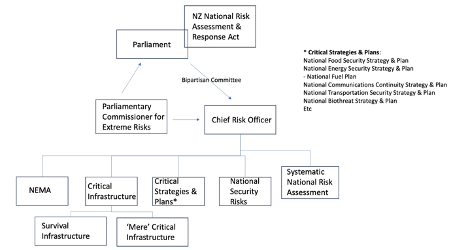





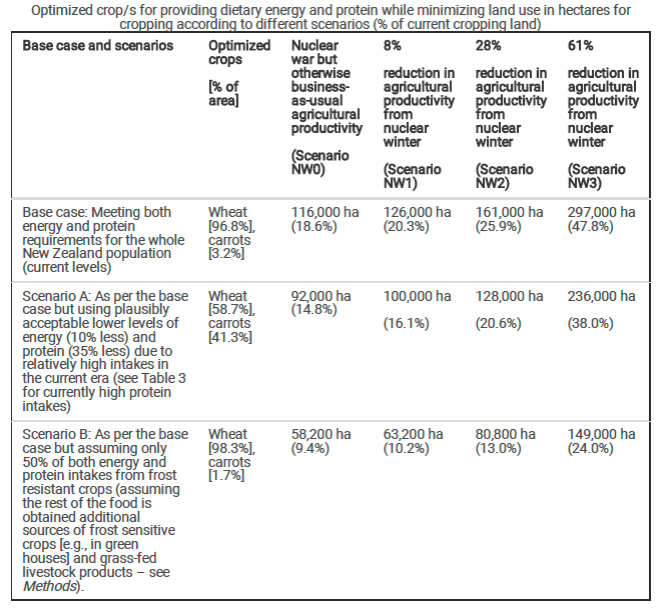




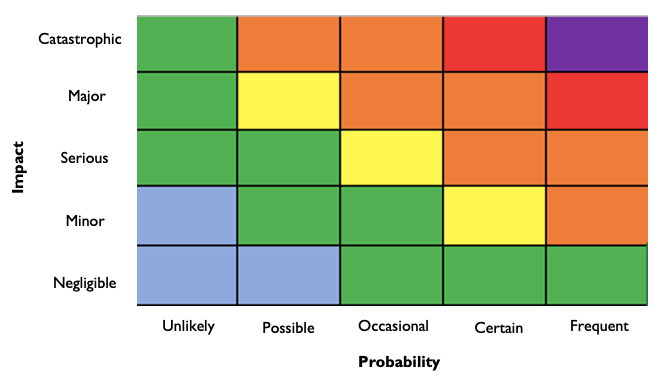

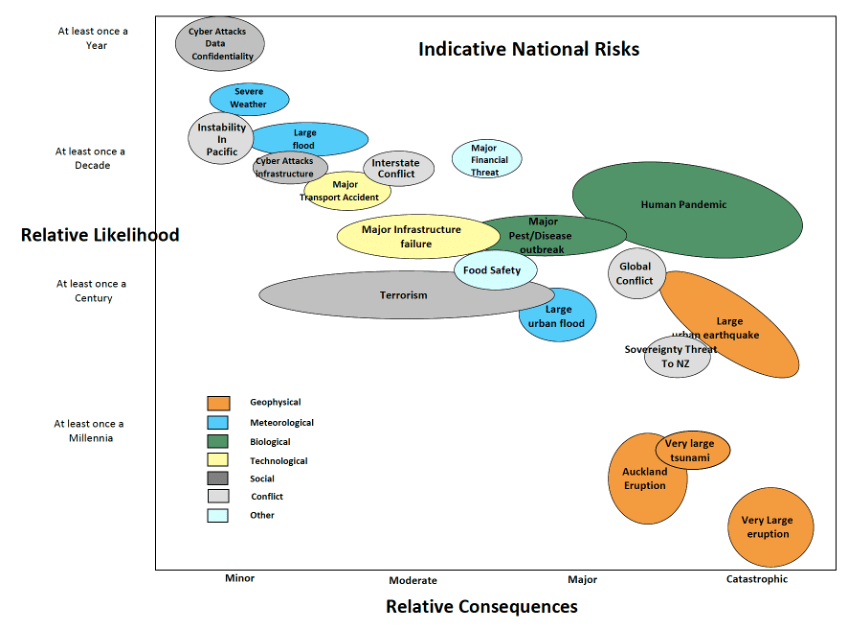
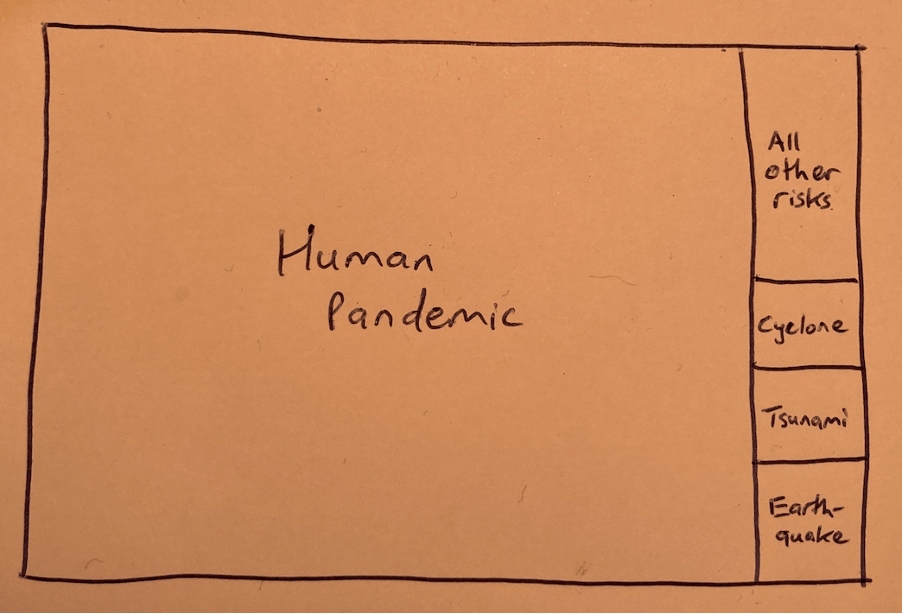
 Adapt Research Ltd