Island nations may have potential long-term survival value for humanity in global catastrophes eg, during a “nuclear winter” or “volcanic winter”.
We studied a major historical eruption (Mt Tambora in 1815), and found that the “volcanic winter” impacts were less in the islands than on the continents (for latitudinally equivalent comparisons).
Out of the 31 islands studied, the smallest temperature drops were seen for islands in the Southern Hemisphere, the Indian Ocean, and in the tropics and subtropics of the Southern Hemisphere.
Island nations could work to enhance their resilience to sunlight-blocking catastrophes to help ensure humanity can survive such events.
Our Study of the 1815 Mt Tambora eruption
Catastrophes such as nuclear war and large magnitude volcanic eruptions could fill the stratosphere with sun-blocking material such as soot or sulphur dioxide. Island nations may have potential long-term survival value for humanity in such sun-blocking catastrophes. We aimed to explore this further by studying the impact on islands after the largest historically observed volcanic eruption: that of Mt Tambora in Indonesia in 1815.
In conjunction with colleagues from Switzerland and the UK, our just published study1 involved 31 large, populated islands for which we conducted literature searches for relevant historical and palaeoclimate studies. We also analysed results from a reconstruction (EKF400v2), which uses atmospheric-only general circulation model simulations with assimilated observational and proxy data.
How did islands fare in the “volcanic winter” after the eruption?
From the literature review, there was widespread evidence for weather/climate anomalies in the years 1815-1817 for these islands (29/29 for those with data; Figure 1, below). But missing data was an issue for other dimensions such as impaired food production (seen in 8 islands out of only 12 with data). Data on food insecurity or famines was also largely missing, but for the 12 islands with data, four definitely experienced such problems. These were all in the North Atlantic region ie, Great Britain, Ireland, Iceland and Newfoundland. In three of these there was also evidence of food riots or demonstrations (ie, all except Iceland). In Ireland there was also evidence of increased death rates from famine and/or famine-related disease.
Based on the EKF400v2 reconstruction for temperature anomalies (compared to the relatively “non-volcanic” reference period of 1779 to 1808), the islands had lower temperature anomalies in the 1815-1818 period than latitudinally equivalent continental sites (at 100 km and 1000 km inland). This was statistically significant for the great majority of the comparisons for group analyses by hemisphere, oceans, and temperate/tropical zone.
Figure 1: Summarised evidence for impacts from the Tambora eruption on 31 islands in the 1815-1817 period (see the published article for additional details; Image produced using Ferret v7.63; Reproduced from Wilson et al 20231 (published under a Creative Commons Attribution 4.0 International License, http://creativecommons.org/licenses/by/4.0/)
When considering just the islands, all but four showed statistically anomalous temperature reductions in the 1816-1817 period (for most p<0.00001; with Figure 2 (below) showing the pattern for 1816). In the peak impact year of 1816, the lowest anomalies were seen for islands in the Southern Hemisphere (p<0.0001), the Indian Ocean (p<0.0001), and in the tropics and subtropics of the Southern Hemisphere (p=0.0057). The latter included the islands of: Australia [a continental island], Java, Madagascar, Marajó (Brazil), New Britain (part of Papua New Guinea [PNG]), New Guinea (PNG) and Timor.
Figure 2: Reconstructed temperature anomalies in 1816 (“the year without a summer”) relative to the “non-volcanic” reference period (1779 to 1808) using monthly data from the reconstruction EKF400v2 (Image produced using Ferret v7.63; Reproduced from Wilson et al 20231 (published under a Creative Commons Attribution 4.0 International License, http://creativecommons.org/licenses/by/4.0/)
Relevance to island refuges – for humanity to survive catastrophes
We might draw some provisional conclusions relevant to the concept of island refuges for humanity from this study. The findings do point to the likely benefits of island refuges in the Southern Hemisphere, the Indian Ocean and the tropics and subtropics of the Southern Hemisphere. Such islands may have features that advantage them in some catastrophes and could be considered for resilience building measures with the aim of ensuring humanity’s survival, especially in case much larger eruptions or nuclear war eventuate.
But other considerations for targeting resilience investments include the following:
The findings of simulation studies of the global climate impacts of nuclear war – which also favours Southern Hemisphere islands, including Aotearoa NZ (as we have studied here2).
The risk of islands being directly attacked in a nuclear war (eg, those in military alliances with nuclear weapon states such as Australia, Iceland and Japan).
Capacity of islands to survive extreme pandemics (as we have studied here3)
And the islands having the socio-economic and technological characteristics to potentially be a “node of persisting complexity” 4 from which more technologically advanced societies could be re-built.
Ideally a number of island nations could build up their resiliency to best survive such catastrophes, perhaps with initial focus on energy, food, transport and communications resilience. Well-placed islands might be provided with support to do so by the international community. But failing such international support – individual nations such as Australia and New Zealand should give consideration to doing this – for both themselves and the future of humanity.
References
1. Wilson N, Valler V, Cassidy M, Boyd M, Mani L, Brönnimann S. Impact of the Tambora Volcanic Eruption of 1815 on Islands and Relevance to Future Sunlight-Blocking Catastrophesdair. Sci Rep. 2023;13:3649.
2. Boyd M, Wilson N. Island refuges for surviving nuclear winter and other abrupt sunlight-reducing catastrophes. Risk Analysis. 2022.
3. Boyd M, Wilson N. Optimizing island refuges against global catastrophic and existential biological threats: Priorities and preparations. Risk Analysis. 2021;41(12):2266-85.
4. King N, Jones A. An Analysis of the Potential for the Formation of ‘Nodes of Persisting Complexity’. Sustainability. 2021;13(15):8161.
We held a workshop on the risk of nuclear war/nuclear winter and implications for Aotearoa/NZ on 9 February 2023.
The workshop was attended by 20 experts representing organisations in the public and private sector, and academia.
Attendees discussed our new NZ Nuclear War Hazard Profile * and deemed the key scenario to be both ‘quite plausible’ and ‘catastrophic’.
Elicitation and sharing of key knowledge underscored the severe and wide-ranging impact of a Northern Hemisphere nuclear war for an isolated non-combatant nation like NZ.
Resilience measures are likely to be possible, but research to understand the cascading impacts through NZ industry and society is needed.
Also needed is a long-term big-picture strategic view of how resilience measures can improve wellbeing now and mitigate a wide class of risks including extreme weather or future severe pandemics.
Next possible steps for better understanding NZ’s resilience and vulnerabilities were identified (see bullet points and numbered list at end).
Global catastrophic risks such as nuclear war could result in long-term harm on a global scale, with profound disruption to our way of life in Aotearoa New Zealand (NZ). Other global risks including extreme pandemics, supervolcano eruptions, catastrophic solar flares, abrupt climate change, and many others are named in the new US Global Catastrophic Risk Management Act which requires analysis and planning for major impacts. Resilience to such risks to protect people now and ensure flourishing of future generations requires more than ‘stacks of tuna cans.’ Wise strategy, investment in risk analysis, planning, quality infrastructure, resilience, and cooperation can help optimise the path forward. This should be bread and butter policy in the 21st century.
New Zealanders have seen first hand the impact of catastrophe in recent weeks. Severe flooding and cyclone damage reveal what happens when regions are cut-off and government response is stretched thin. In a global catastrophe, all of NZ could be isolated making response difficult. We need to ensure that as a nation we can get through such catastrophe by developing national and local resilience ahead of time.
Aotearoa NZ Catastrophe Resilience Project
Using nuclear war as a representative global catastrophe, the Aotearoa NZ Catastrophe Resilience Project seeks to understand NZ’s vulnerability and resilience factors and recommend initiatives to mitigate global catastrophic risk.
The Aotearoa NZ Catastrophe Resilience Project Plan
Hazard Profile
The first step in building resilience to global catastrophe is to analyse the hazards. Using the methodology of national risk assessment, we developed a Nuclear War/Winter Hazard Profile for Aotearoa/NZ.
The profile describes ‘significant’, ‘major’ and ‘extreme’ nuclear war scenarios. The ‘major’ scenario is then analysed in depth.
Major Nuclear War Scenario
In the ‘Major’ scenario 250–500 nuclear weapons of 10–100kT are detonated, many on cities. This results in 10–30 teragrams (megatonnes) of soot rising into the stratosphere. This soot blocks the sun and causes -4.0 C of mean global cooling. Simultaneous conventional attacks mean mass destruction of Northern Hemisphere infrastructure. 30–75 million people are killed immediately. Weeks of chaos follow as radiation disperses, deaths mount, normal business and trade functions halt, and communications are destroyed. The global temperature drop lasts into the following years. Food production in North America, Europe, and Russia falls 60-90% in the second year.As regional famines take hold, countries turn inwards, hoard commodities, and global trade is severely disrupted. NZ suffers from massive trade disruption and some modest impact on crop production (from cooler temperatures and reduced sunlight). The Hazard Profile accounts for 12 key impacts and two plausibility factors (based on a Swiss methodology). Together these allow this hazard to be plotted on a likelihood vs consequences diagram (see below).
February 9 Workshop
We ran a workshop on 9 February 2023 to help validate the nuclear war/winter hazard profile for NZ. The workshop included a pre-workshop activity to estimate the impact and plausibility of the ‘major’ scenario. Expert elicitation activities on the day allowed us to gather and aggregate informed input to refine the Hazard Profile.
The workshop consisted of diverse representatives across public and private sectors, as well as academia. Attendees included experts on global catastrophe, nuclear war, emergency management, and societal systems. The workshop included presentations on national risk assessment and nuclear war, as well as discussion of impacts, plausibility and knowledge gaps.
A lot of brainstorming and expert input took place both in the room and in the Zoom chat.
Findings
Overall, the original ‘Major’ scenario was considered relatively conservative. Outcomes could be worse due to the logic of escalation in a nuclear conflict, likely targeting of industrial capabilities, loss of cloud/digital systems and cascading impacts across all industries.
The likely scenario could result in many fatalities in NZ due to a range of mechanisms including shortages of imported medication. There could be widespread illnesses, including mental health issues, and widespread societal impacts.
The anchor points for economic harms experienced by NZ used in national risk assessment were seen as too conservative (designed for floods, earthquakes, etc). The reality could far exceed NZ$1 trillion in monetised equivalent value loss irrespective of impact on factors such as environment or culture. The potential for electromagnetic pulse (EMP) as a strategic warfare method should not be discounted. Although NZ has held a longstanding anti-nuclear stance, the nascent space industry and existing formal military alliance with Australia (and more informal military links with the US), may be seen as a threat and could lead to NZ being targeted (albeit some participants thought this very unlikely). It was also considered necessary to build a ‘reasonable’ timeframe into the scenario, as a reference point to calibrate thinking on impacts.
Participants rated the impacts the ‘major’ nuclear war scenario would have on NZ using a 0–8 scale anchored with descriptors, where each point increase represents a 3x magnitude increase in impact. The following graph summarises the participants thinking on impact levels, and the table quantifies this scale in concrete harms and monetised value (again using the Swiss methodology). A separate table provides a high-level summary of key contributions.
12 Impacts of a Northern Hemisphere nuclear war on NZ
The 12 impacts quantified (mean of expert estimates, n=14)
The NZ$1 trillion plus risk
When the diverse impacts of the ‘major’ scenario are converted to monetary terms (a necessarily highly speculative activity) to allow comparison with other risks, the harm to NZ from a Northern Hemisphere nuclear war would likely exceed NZ$1 trillion. But this ‘mean’ total value doesn’t capture the distribution – with some expert respondents suggesting that the impacts would be very much higher than the top of the scale in multiple domains.
Plausibility
Agential or unprecedented risks, which lack a historical data set or depend on fluctuating willingness to act, such as nuclear war, can be classified according to the plausibility of the specific scenario being considered (ie, the ‘Major’ scenario outlined above).
In this case, plausibility was construed by combining estimates of the degree of intent and ability possessed by likely perpetrators of nuclear war, with the technical and operational feasibility of the scenario. Following discussion, independent estimates were aggregated and the scenario was estimated to be ‘quite plausible’ at a mean of 3.39 on a 1–5 scale with 0.5 point increments.
Key to the plausibility assessment was the fact that a wide range of nuclear risk variables are trending in the wrong direction, these include: the number of weapons, modernisation of systems, increasing conflict, cyber threat, intermixing of command and control systems, terrorist threats, the desire to acquire weapons, plus the existence of historical near misses.
The resulting plausibility of the ‘major’ scenario is mapped to the estimated impact in the following risk diagram.
Figure Legend: The figure displays the plausibility assessment for the ‘major’ scenario mapped against the impact assessment (using an established Swiss methodology). The circle indicates the mean of independent assessments of diverse experts (n=14) conducting a pre-workshop activity. The arrow indicates that the assessment moved towards a higher impact category (~$1 trillion plus monetised harm) following workshop interactions with diverse other experts (n=12).
Uncertainty
Workshop participants indicated that several of the impact categories in the Hazard Profile were hard to quantify. There was some suggestion that quantification is not necessary if the scenario is clearly in the ‘upper right’ section of the risk diagram (ie, plausible and highly damaging). However, some quantification seems useful as a first step to place it in the upper right part of the risk diagram and therefore to distinguish it from more minor hazards.
Other ‘upper right’ quadrant risks
It is interesting to compare the location of the ‘major’ nuclear war scenario in the upper right (ie, quite plausible and extremely damaging) region of the risk diagram to the glaringly obvious ‘upper right’ risk identified in a NZ national risk assessment that pre-dated the Covid-19 pandemic and the Cyclone Gabrielle disaster (but post-dated the Christchurch Earthquakes and the 1918 pandemic – the highest impact natural hazard in NZ’s history where over 8000 NZ citizens died).
The following represent just some of the key insights that workshop participants contributed and which the Aotearoa NZ Catastrophe Resilience Project will be following up.
Compared to findings of previous 1980s work on nuclear war impact and NZ, the impact of damage to the internet, overseas-based cloud data, and digital communications featured prominently. It is unclear to what degree the internet, cloud data, and digital communications would be operational in the ‘major’ scenario. This is a key area for research and interviews with experts as it has serious implications for the operational potential of government, industry, and personal life.
The risk to NZ’s territorial integrity is very uncertain. It is possible that refugees, non-state actors, hostile state actors, or powerful individuals attempt to reach NZ (just prior to or after such a nuclear war). It is also possible that there are insurmountable difficulties of doing this under the conditions of the ‘major’ scenario. This is another key area for further analysis.
The possible collapse of the financial system and likely shortages including transport/fuel, might mean that a key response to the ‘major’ scenario may be quick transfer of power/agency to local government and local communities. However, planning to ensure that such agencies/groups have access to the raw materials and knowledge required to ensure food supply, alternative energy supply, and communications may be needed. A detailed analysis of these requirements would probably be useful.
Several workshop attendees emphasised the need for a NZ narrative around resilience to major global catastrophe, fostering public discussion of these risks, with emphasis on the need for cooperation to achieve strategic resilience. Fostering such a narrative could be a very worthwhile government action if it focuses on opportunities for enhanced wellbeing now, as well as building resilience against other hazards (eg, severe storms associated with climate change).
The principles of Te Tiriti o Waitangi and the knowledge and perspectives of Māori are likely to aid strategic resiliency to major global catastrophes and to strengthen local level resilience for a wide range of other hazards.
Further analysis of the ‘major’ scenario and other global hazards would not cost much in comparison to large infrastructure projects such as Transmission Gully and could form part of an expanded National Science Challenge on resilience to hazards, or a new national science ‘mission’.
Additional decision-relevant information
Our nuclear war/winter Hazard Profile notes that nuclear war is a representative risk and other global catastrophes could produce conditions with functionally similar impacts on NZ, perhaps requiring common resilience measures. These hazards should also be assessed and include:
Solar flares (that threaten nearly all electronic infrastructure)
Major volcanic eruptions (that cause volcanic winter)
Asteroid/comet impacts (that cause global sunlight blocking)
Conventional Great Power conflicts
Extreme pandemics (eg, from bioweapons)
There is a plausible risk of collapse of both technological and industrial society following a major global catastrophe. Prospects for recovery following such collapse are unclear and societies could stagnate at low technological levels with chronically low levels of wellbeing. This possibility increases the salience of these risks.
NZ is plausibly one of the countries in the world most resistant to the physical and climatic impacts of nuclear war (see our recent publication on this). This privileged position is reason for NZ to ensure resilience to the likely impacts, thereby maintaining a hub of functioning industrial/social complexity for the sake of humanity. Our country could have an inspirational ‘out of the ashes’ story to tell.
Next Steps
This workshop took place in the context of recent global research on the public’s increasingly hawkish views on nuclear conflict. A recent study found that support for the use of nuclear weapons under certain circumstances has risen in the Netherlands and Germany from before to after the Russian invasion of Ukraine. Similarly, another study from the Cambridge Centre for the Study of Existential Risk published in 2023 found that informing people about the possible devastating impacts of nuclear winter reduced their support for nuclear weapon use. There appears to be a role for open discussion about the implications of nuclear war and the use of opinion polls on global catastrophe and resilience, especially in a NZ election year.
The Hazard Profile we have produced should now be connected to a capabilities assessment. This is an assessment of how, specifically, the conditions resulting from a ‘major’ nuclear war would have downstream impacts on NZ sectors and way of life, and how domestic activity could be adapted to preserve systemic functions.
Next, we move into a survey and interview phase of our research to address these questions. We plan to hold additional workshops once results of these studies have been compiled. These discussions will form a foundation for policy recommendations and resilience options that central government, local government, communities, and private industry could consider.
In the meanwhile, there are concrete actions that central government could take to reduce NZ’s risk to major catastrophe in the longer term. Indications at our workshop were that participants felt these actions are “bread and butter policy” and functions that citizens expect of government. Some examples are that central government could:
Work to combine existing narratives in government work on food system security, energy security, communications security, etc, into an overarching narrative of building resilience across interlinked systems to mitigate both catastrophic risks and increasingly routine risks.
Develop and provide information about major risks such as nuclear war/winter and other global catastrophes to the public and decision makers. This is because such information has an impact on people’s beliefs and actions and could aid wise decision making. Our workshop showed that when experts shared information the group’s average assessment of risk rose.
Reframe the upcoming draft NZ National Security Strategy so that it focuses less explicitly on ‘malicious threats’ and more on ‘resilience and vulnerability’ to both catastrophic risks and more routine risks (eg, large storms).
Allocate resources to research and analyse specifically the issue of territorial integrity following a major global catastrophe and a plan to manage likely situations (both aiding refugees in need and protecting the wellbeing of NZ’s citizens).
Allocate resources to research and analyse specifically the issue of whether and how government and the financial system could continue to operate in a context of no internet, no access to cloud data, and no digital communications. What are the required resiliency measures needed to minimise cascading degradation in governance and financial security?
Our 9 February 2023 workshop on the nuclear war/nuclear winter hazard and Aotearoa NZ has provided a fascinating and practical foundation for the next phases of our Aotearoa NZ Catastrophe resilience project. We again thank all the workshop participants and welcome any further feedback on this blog post and the work to date.
Global catastrophic risks (GCRs) include those events or incidents consequential enough to significantly harm or set back human civilization at the global scale (including: severe global pandemics, nuclear war, asteroid and comet impacts, supervolcanoes, sudden and severe changes to the climate, and intentional or accidental threats arising from the use and development of emerging technologies).
Recognising the potentially unbearable impact of global catastrophic risks, the US has just passed the Global Catastrophic Risk Management Act.
The Act requires the Secretary of Homeland Security and the Administrator of the Federal Emergency Management Agency to coordinate an assessment of GCRs within one year, and every ten years thereafter.
The report must be coordinated with senior officials from 16 other specified national agencies.
Each Federal Interagency Operational Plan will then be updated to include an annex containing a strategy to ensure basic needs are met in the aftermath of global catastrophe.
Aotearoa NZ should replicate this Act, with the National Security Group and NEMA coordinating the report. The upcoming shake-up of NZ’s research sector could include a National Science Challenge on Mitigating GCRs.
Global Catastrophic Risks
Global catastrophic risks (GCRs) could inflict serious damage to human wellbeing on a global scale, exceeding humanity’s collective ability to respond, potentially killing billions of people. Existential catastrophes are those GCRs that would either cause human extinction or prevent a full recovery. The significance of such events is potentially very great, superseding the salience of many day-to-day issues when assessed according to likelihood, consequences, neglectedness, and cost-benefit of action.
The US GCR Management Act
Lawmakers in the United States appear to have recently recognised the importance of these risks for people here and now, as well as those living in the future, and the US has recently passed the US Global Catastrophic Risk Management Act.
The Act was folded into the National Defence Authority Act, on the strength of a broad coalition of interest among stakeholders each concerned with various risks.
The Act defines global catastrophes as well as existential risks to human civilisation. These risks include many that have concerned scholars of existential risk for years, namely: severe global pandemics, nuclear war, asteroid and comet impacts, supervolcanoes, sudden and severe changes to the climate, and intentional or accidental threats arising from the use and development of emerging technologies.
The Act requires a broad assessment of all such risks within one year and every ten years thereafter. These reports will be coordinated by the Secretary for Homeland Security and the Administrator of the Federal Emergency Management Agency. These individuals are to coordinate with senior officials from 16 other national agencies, as follows:
Assistant to the President for National Security Affairs
Director of the Office of Science and Technology Policy
Secretary of State and the Under Secretary of State for Arms Control and International Security
Attorney General and the Director of the Federal Bureau of Investigation
The Secretary of Energy, the Under Secretary of Energy for Nuclear Security, and the Director of Science
Secretary of Health and Human Services, the Assistant Secretary for Preparedness and Response, and the Assistant Secretary of Global Affairs
Secretary of Commerce, the Under Secretary of Commerce for Oceans and Atmosphere, and the Under Secretary of Commerce for Standards and Technology
Secretary of the Interior and the Director of the United States Geological Survey
Administrator of the Environmental Protection Agency and the Assistant Administrator for Water
Administrator of the National Aeronautics and Space Administration
Director of the National Science Foundation
Secretary of the Treasury
Secretary of Defense, the Assistant Secretary of the Army for Civil Works, and the Chief of Engineers and Commanding General of the Army Corps of Engineers
Chairman of the Joint Chiefs of Staff
Administrator of the United States Agency for International Development
Secretary of Transportation
Reports on GCRs now mandated by law
The report must include expert estimates of cumulative risk across 30 years, analysis of the most concerning risks, technical assessments, an explanation of uncertainties, whether risk is likely to increase across 10 years, and various recommendations for action.
The Act also requires a supplement to each Federal Interagency Operational Plan that includes a strategy to ensure the health, safety, and general welfare of the civilian population affected by catastrophic incidents. This strategy is to assume the military is otherwise engaged and not able to assist. Plans for critical sectors should include: transportation, communications, energy, healthcare and public health, and water/wastewater.
Finally, the strategies developed above must be validated through exercises.
Increasing global action in the face of catastrophic risk
Global awareness of the risk of major catastrophe has been growing in recent years. We have seen ‘existential risk’ mentioned in the UN Secretary General’s Report ‘Our Common Agenda’. We have experienced the warning shots of the Covid-19 pandemic, Russian invasion of Ukraine, and impactful new weather patterns.
Drawing in part of a House of Lords report on ‘Preparing for Extreme Risks’ the new (Dec 2022) UK Government Resilience Framework takes an explicit focus on value for money, and the cost-effectiveness of resilience planning. They note that every £1 spent advising on flood risk matters saved £12 in future flood damages. Analysis already exists showing that investments to mitigate GCRs might have even more favourable business cases. It is now time for action to systematically determine this. In Australia a new Disaster Ready Fund will provide up to $200 million every year over five years to disaster resilience and mitigation projects across Australia.
New Zealand needs to act
GCRs would affect every country and it is time for Aotearoa New Zealand to get on board and contribute with local analysis, and New Zealand-specific action plans. No country can mitigate the suite of GCRs on their own. New Zealand needs to pivot to a focus on broad resilience rather than merely maximising sector profits. This need was stated clearly by Simon Upton, the Parliamentary Commissioner for the Environment, in his letter to the Minister of Energy (Dec 2022) about energy security.
The new US GCR Management Act has lain the gauntlet. There is no reason why NZ’s National Security Group in conjunction with NEMA can’t lead a similar assessment to that now required in the US. They just need appropriate resourcing, perhaps equivalent to the per capita sum Australia is investing in resilience projects. Indeed, the benefits are likely to be economically positive. NZ Research, Science and Innovation Minister Ayesha Verrall plans an upcoming shake-up of the NZ research sector. Now would be an opportune time to include a National Science Challenge on ‘Mitigating Extreme Risks’ as one of New Zealand’s new science missions. Political Parties in NZ should state where they stand on these possibilities during the present election year.
The McGuinness institute has released a report summarising the likely impacts of nuclear war on NZ and calling for a national risk assessment and strategy
This report was published the same week as our peer-reviewed paper on islands and nuclear war, which uses NZ as a case study
Nuclear war is a representative global catastrophic risk, and a national risk assessment would increase understanding of risk and mitigation strategies across multiple global catastrophes
There are additional reasons to undertake this kind of assessment which include the wellbeing of future generations, preservation of complex functioning society in the wake of global catastrophe, and potential synergies with other risk mitigation plans such as a net-zero carbon transition
It may be strategically better for this kind of assessment to be conducted from outside of the traditional national security silo, given recent indications that Cabinet might move to narrow the scope of the NZ National Security System
A Parliamentary Commissioner for Extreme National Risks is one possible approach
Overview
The world still faces the risk of nuclear conflict and resulting severe cascading global impacts. A new paper from the McGuinness Institute provides a summary of the excellent work on the nuclear risk to NZ that was completed in the 1980s. This work found that the likely impact of a Northern Hemisphere nuclear war on NZ would be felt largely through collapse of global trade, as combatant and non-combatant Northern Hemisphere nations dealt with what would be the most significant internal catastrophe they have ever faced.
The known impacts of nuclear weapon use including blast, thermal radiation, and ionizing radiation would be spectacularly devastating wherever the weapons are detonated.
The uncertain impacts of nuclear weapon use potentially raise the stakes. We know the lower bound of impact could be severe, but the effects of any electromagneticpulse, nuclear winter, ecological catastrophe, and cascading impacts of destruction on the interrelationships among sectors, trade, social cohesion, and international relations could be beyond comprehension.
It is important to note at the outset, that it is not just nuclear war that threatens these kinds of severe cascading global impacts. Risk is also posed by natural hazards such as supervolcano eruptions, massive solar flares, asteroid or comet impacts, and other disasters. Contemporary civilization may be more susceptible to theserisks than ever before.
The 1980s work on NZ and nuclear war emphasized that radiation and physical destruction are not likely to be the problem for NZ and focused on establishing potential impacts of a Northern Hemisphere nuclear war on NZ health, agriculture, energy, trade, transport, communications, social responses, the impacts on government and sector interactions.
If trade were to collapse as anticipated, then a cursory look at a list of commodities imported to NZ demonstrates how wildly impactful this would be for every sector. Notably surveys in the 1980s found that only 4% of respondents recognised the impact on trade as most concerning. This view may be gaining more recognition now, given NZ’s experience with Covid-19 and the Russian invasion of Ukraine, but is probably still not fully recognised as the dire threat it is likely to be.
Key points in the McGuinness Report
The core vulnerabilities NZ possesses in the face of nuclear war (or other trade disrupting global catastrophes) still exist or, as the report notes, have gotten worse across the last 35 years. This is because:
NZ’s energy security has decreased, the country has become less energy self-sufficient in recent years and is also completely dependent on imports of refined fuel for almost all road transportation, and therefore all industrial and agricultural functioning.
Dependence of almost all communication on digital technologies operated by external entities is also a key vulnerability for societal function.
Social cohesion is more fragile, as evidenced by the social responses during the Covid-19 pandemic.
Key examples demonstrate a lack of strategic thinking around these issues, such as the closure of the Marsden Point oil refinery, which in the context of global catastrophes is a strategic asset.
It is problematic that NZ appears to have no rationing or resource allocation plan to smooth the shock of massive disruption to the import of essential industrial inputs.
There remain key knowledge gaps, which should be explored to better understand the impact of nuclear war (and other trade disrupting global catastrophes) on the functioning of NZ society.
There is a need to collate and provide information about the impacts of nuclear war to the public. This would serve two purposes. Firstly, it would allow feedback and peer review of the findings, thereby enhancing their robustness. Secondly, it would help encourage wide-ranging resilience thinking by businesses and individuals beyond the direct reach of policy.
For these reasons we suggested in consultation feedback to DPMC that nuclear war as a representative global catastrophic risk warrants inclusion in the final version of the Long-term Insights Briefing.
The McGuinness report highlights the wide range of risks that could all to some degree have similar deleterious impacts on NZ:
“the seriously disruptive consequences of more likely crises such as severe global economic difficulty or breakdown, regional conflicts that seriously disrupt trade, oil price shocks, far more deadly pandemics, and climate-change-induced disruptions. All these risks have in common a focus on building more resilience into our social, economic and political systems to better weather and recover from major shocks.”
Importantly, a focus on analysing nuclear war could accelerate the analysis and therefore potential mitigation strategies for the entire suite of global catastrophic risks.
The McGuinness report further notes that:
“Resilience, the ability to sustain/recover essential functions, would be the difference between a tolerable, cooperating society or social collapse and conflict”
However, it is even more important than that, because:
Social collapse and conflict might lead to future generations being much worse off than they might have been. It is striking that ‘future generations’ is not one of the ‘interests to protect’ proposed in two 2022 Cabinet papers outlining an approach to restructuring the NZ National Security System.
New Zealand is often argued to be one of the regions of the world most ‘safe’ from nuclear catastrophe and other global catastrophic risks. If even NZ is vulnerable to devastating collapse of industry due to the cascading impacts of global trade disruption, then the future of industrial civilization could be threatened. Such potential outcomes greatly strengthen the argument for nuclear war being analysed as a national threat.
As the McGuinness report argues, there should be a short-term phase of investigation (one should add followed by cost-effectiveness analysis and an intervention prioritisation process) and then a long-term phase of implementation.
The implementation phase should focus on resilience strategies that cut across multiple global catastrophic risks, and which also further other interests of value such as a green transition and decarbonisation. For example, it is striking that some of the most effective measures to mitigate the risk of global catastrophe on NZ are also those that would advance a carbon net-zero goal. Expected cost-utility of these kinds of projects should include the impact in expectation of global catastrophes across the rest of this century.
Key strategic questions remain open
Although operational stockpiling of critical imported resources is mentioned in the report it may be the case that there are just too many ‘critical’ imported commodities. It’s quite likely that focus on pivoting at least a proportion of each sector to a ‘self-sufficient’ posture would help mitigate global catastrophes. Analysis and crowdsourcing should investigate how this might successfully be achieved.
The McGuinness report advocates for the inclusion of nuclear war as a risk overseen by the National Security System and the Department of Prime Minister and Cabinet. The rationale given is that in recent years an ‘all hazards’ approach to National Security has been taken (with the inclusion of a wide range of hazards in a classified National Risk Register).
However, this is at odds with Cabinet papers proactively released in 2022 that appear to chart a course away from the ‘all hazards’ approach to National Security, and, particularly in the wake of the Royal Commission of Inquiry into the Christchurch terror attacks, towards a more specific focus on malicious agential risks against NZ (counter to present global trends in national risk assessment).
It certainly sometimes appears that the National Security System can become politicised with a focus on recent striking events rather than the largest longer term risks to NZ. A related problem occurred in Switzerland. Switzerland’s first national risk register of 1999 illustrated the precedence of civilian public dangers before military issues so clearly that the Ministry of Defence rejected its publication.
The issues identified above show clearly that the likely impact of nuclear war (and other global catastrophes) on NZ are predominantly civil rather than security issues. We have therefore offered constructive critique of these Cabinet papers and the approach to revamping the National Security System.
For the reasons just given, we favour a National Risk Assessment entity independent of the silos of DPMC, the National Security System (and even NEMA – with its traditional focus on natural hazards), that is anticipatory, central/aggregating, coordinating, apolitical, transparent, adaptive and accountable, and looks across all major national risks, providing the short-term assessment work and advising on longer-term implementation work as mentioned above. A Parliamentary Commissioner for Extreme National Risks (or similar, with a well-resourced office) could play such a role providing open, independent, wide-ranging analysis and advice.
Such analysis should start to focus particularly on sectors not addressed by the 1980s NZ Nuclear Impacts Study, such as manufacturing, and welfare, and a better understanding of recently emerging vulnerabilities such as social cohesion, misinformation, and our dependence on digital technologies. Secrecy is not going to solve these issues.
Figure 1: Possible structure of a National Risk Approach
Figure caption: Global catastrophes such as a regional or great power nuclear war, supervolcanic eruption/industry-disabling solar flare, or devastating accidental engineered pandemic should be assessed in comparison with other traditional NZ threats and hazards. An independent office could look across the entire National Risk Approach and conduct an integrated risk assessment, advising parliament and providing information to the public. This information and advice can feed into rationally targeted action based on expected consequences and uncertainty.
Next steps
The 1980s NZ Nuclear Impacts Study identified four major themes of NZ’s vulnerability to major global catastrophe. These were dependence on trade, interdependence among sectors, the fact that vulnerabilities are increasing (largely with technological dependence and globalisation), and a lack of contingency planning.
A Phase II study was proposed at the time but never progressed due to bureaucratic impedance. This study would have aimed to improve public knowledge, coordinate a rationale for preparing contingency plans, and identify strategic areas where NZ’s vulnerabilities could be reduced.
Such a project must be initiated, should assess the risk, and should recommend a long-term strategy to address low-hanging fruit in neglected areas of risk mitigation likely to have the largest marginal cost-benefit when all goals are considered. Contingency planning should only be one element to such a project.
Governments often defer to a ‘response’ focus regarding hazards, but in cases of severe global catastrophe there may not be much role for government in the response phase. However, government must play a critical role in preparing the social conditions, resources, and infrastructure of the nation to maximize the chance that such uncertain but inevitable catastrophes can be weathered. A strategy to build the most resilient ecosystem of NZ industry ahead of inevitable catastrophe (whatever form the next catastrophe takes) is probably the most important plan.
We have started work on such a project, although the 1.7 FTE that we can deploy across one year is in stark contrast to the 8.0 FTE across three years recommended by the McGuinness report for nuclear war alone. We will only be able to take a ‘quick look’ across most issues and present a bullet point strategy and plan building on our recent work through 2022 on the impact of nuclear war (and other global catastrophes). We invite those with additional resourcing, or additional government resources, to complement or integrate with our approach.
Finally, we emphasise that the business case for analysing nuclear war and its impacts on NZ is not just the usefulness of a plan for this (hopefully unlikely) eventuality, but that the same analysis also contributes to resilience and mitigation plans to combat the whole spectrum of global catastrophic risks, which collectively have a concerning probability and large consequences in expectation.
The case for action is enhanced not just by the need to protect New Zealanders alive today and their interests, but to ensure stable wellbeing for future NZ generations, to help accelerate other important transitions such as carbon-zero, and to increase the probability that hubs of functioning social and industrial complexity survive such global catastrophes for the benefit of all humanity. All these benefits need to be assessed in the relevant cost-utility assessments.
Following the Royal Commission of Inquiry into domestic terrorism, two Cabinet papers outline how NZ might improve the National Security System
A proposed National Security Strategy would address malicious threats
Improved national security oversight, and links with agencies such as NEMA would form a more comprehensive national risks approach
However, this approach still omits accountability and resources for analysing, prioritising, and mitigating large global catastrophes and their impact on NZ
Potentially, most of the risk to NZ lies in such rare but devastating scenarios
An integrating office is still needed, which looks across all risks, comparing likely harms and prioritising resources.
Introduction
The Department of Prime Minister and Cabinet proactively released two Cabinet papers describing a plan for improving how security risks of national significance are managed in New Zealand.
These Cabinet papers address aspects of the Royal Commission of Inquiry into the Christchurch terror attacks, the ongoing development of NZ’s first National Security Strategy, and cover some common ground with the recently released Draft National Security Long-term Insights Briefing (LTIB), upon which we have commented here.
Two National Security papers proactively released by Cabinet/DPMC
Two primary Boards govern the existing National Security System (NSS) outside of crisis scope:
· The Security Intelligence Board (focusing on malicious threats)
· The Hazards Risk Board (focusing on civil contingencies)
In the Cabinet papers, however, national security is narrowly defined as, “actively protecting Aotearoa New Zealand from malicious threats to our national security interests, from those who would do us harm” (emphasis added). This very much limits the set of risks managed by the NSS, which is perfectly fine provided all other risks are picked up elsewhere.
At present 42 risks of national significance are compiled in a classified National Risk Register. The Cabinet papers propose creating a clear division between risks of a national security nature (ie threats from malign agents) and natural hazards and civil contingencies such as earthquakes and floods. This is because the ‘securitisation’ of risk in somewhat ad hoc fashion over time has stretched the national security apparatus, which is under-resourced and roles within it are not always formally legislated or appropriately funded.
This issue, perhaps best summarised as the question of ‘who is responsible?’ is highlighted in the Cabinet paper on design of our machinery of government, which states that the NSS relies: “on mechanisms of coordination that do not impose formal responsibilities or specific accountabilities [across a wide ecosystem of agencies]”
Addressing National Security shortcomings
The Cabinet papers highlight that a core task moving forward will be to identify an “appropriate system leader” for the NSS (malign risks), as well as “independent statutory oversight for any new agency and/or the system as a whole”. The Cabinet papers are clear that any structural change must ensure, “our national security and hazard risk systems as a whole are not left worse off by piecemeal change, and are supported by an all-of-government National Risk Approach”.
It is this kind of ‘National Risk Approach’ that we particularly favour, which would account for security risks, hazards and civil contingencies such as those concerning the National Emergency Management Agency (NEMA), and also other major risks that fall through the cracks of the present system (as we discuss below).
Risks and risk amplifying factors
The Cabinet papers acknowledge important risk amplifying factors including low social cohesion and stability, misinformation, and the impact of climate change. Other risk amplifying factors plausibly include rising technological capabilities (eg AI, bioengineering), geopolitical tensions, threats to trade, and consolidation of power in, and dependence on, large multinational firms (for example polarising and immensely powerful social media and technology firms).
The Cabinet papers note that social and environmental policy are needed to address some of these issues. Trends across some, though not all, of these risk amplifying factors are discussed in the recent draft LTIB.
These issues are examples of risks that currently fall outside NEMA and the National Security System. Important global risks and risk factors need to be identified as part of a complete set of national risks and risk factors. Analysing and addressing risk in ad hoc fashion means that resources may not be directed where they are most effective.
Also missing from the discussion in the Cabinet papers is the intent to analyse and mitigate global catastrophes, which could include the future risk of nuclear conflict/winter, extreme climate change scenarios and potential for super-pandemics of significantly greater scale and impact than Covid-19.
Global catastrophic risks are often not traditionally seen as ‘national risks’, due to uncertain probabilities of occuring in the nearer timeframes often applied in national level risk management and planning. However, we argue that the potential for such events across the longer-term should be central to national risk profile development and anticipatory governance and that a large amount of critical risk to NZ arising from these external sources may be missed by what amounts to a clear separation of NEMA and NSS with some additional aims of building interconnections between these risk entities.
Reforms to the system need to ensure all risk finds a home
Overall, we agree with the Cabinet papers where they acknowledge that the NZ NSS needs to:
1. Be clear on what interests are being protected (a list is offered, but notably future generations are absent)
2. ‘Securitise’ fewer risks (while making sure that the NSS is one component of a wider risk assessment and approach)
3. Identify threats earlier and act to influence them before they manifest
4. Be more open and transparent with risk information (to foster engagement and the possibility of resilience-building)
However, it is still not entirely clear where management of some risks would lie with the proposed clear separation of NSS and NEMA. For example, is nuclear war between, eg India and Pakistan, causing a global famine and trade collapse, a malicious threat to NZ, where some agent wants to do us harm? Or is it more like a natural hazard in NZ, that impacts us without there being an overt ‘security’ risk? What about major global catastrophes such as a climate changing supervolcanic eruption in Indonesia (akin to the Toba eruption 70,000 years ago), or a similarly consequential asteroid impact, or a global industry-disabling solar flare? What about a bioengineered pandemic that occurs accidentally? Or an accidental AI catastrophe with global impact, or a great power war not involving NZ, or a yet unknown risk devastating key pinch points of global commerce? Which agency is responsible for assessing these global catastrophic risks, and advising on resource allocation for analysis and, if necessary, mitigation and investment in resilience? There needs to be some systematic assessment and prioritisation across the complete set of risks.
“On the basis of the Policy Review findings, I [the PM] therefore recommend a transition to a national security system that manages the subset of national security risks, complemented by a hazard risk system and supported by an all-of-government National Risk Approach and strategic crisis management mechanism” (emphasis added).
We think that this ‘National Risk Approach’ should not be merely NSS plus NEMA and various strengthened interconnections between them (even with the addition of engagement with other external agencies). Such an arrangement could still result in important risks (perhaps the majority of all actual risk, if significant global catastrophes are considered) falling through the cracks. Figure 1 shows these cracks schematically and the kinds of risks that slip through. A backstop is needed to prevent this from occurring (as outlined below).
Figure 1: There are important risks which neither NEMA nor a more focused National Security System appear responsible for managing
Figure caption: Global catastrophes such as a regional or great power nuclear war, supervolcanic eruption/industry-disabling solar flare, or devastating accidental engineered pandemic should be assessed in comparison with other traditional NZ threats and hazards. An independent office could look across the entire National Risk Approach and conduct an integrated risk assessment, advising parliament and providing information to the public. This information and advice can feed into rationally targeted action based on expected consequences and uncertainty, ie building resilience across a range of catastrophic scenarios.
The Cabinet papers envision, “oversight across all nationally significant risks and a cohesive approach.” This should include all risks and should generate resource prioritisation advice based on the expected magnitude of the consequences, the marginal utility of action, and the likely value gained. If earthquake strengthening is costing tens of millions of dollars per life saved (as it plausibly is) but lives can be saved for $1m each elsewhere in the risk landscape, then those tens of millions should be shifted. The public needs access to risk information, but also to cost-effectiveness information in order to engage in informed prioritisation discussions (across the spectrum of multi-attribute risk impacts).
A fully comprehensive national risk approach (of which NEMA’s domain of expertise, and that of the NSS are important sub-components, along with assessment of risks that have yet to find a home) could be engineered. Indeed, the Cabinet papers ask, “who is best placed to lead and coordinate the National Risk Approach?” There are different possible answers to this question, and we discuss them (at least as they pertain to global catastrophic risks – the ones falling through the NEMA/NSS cracks) in our paper arguing for a Parliamentary Commissioner for Extreme National Risks.
Overall, resourcing needs to be allocated in proportion to the risk (while also considering the marginal benefit of additional resources, or reallocation of existing resources, and the likely value obtained). Both NSS risks and NEMAs traditional focus are subsets of all things that can go badly at a national level and should receive an appropriate slice of the national risk management pie (for analysis, resilience building, prevention, and mitigation). But overarching advice looking across these sets of risks, and all other risks, is needed to ensure comprehensive risk coverage. The new NSS (plus NEMA) will then be integral parts of a wider cohesive whole.
The draft NZ National Security Long-term Insights Briefing (already informed by a public survey) is currently out for public consultation.
The briefing identifies national security trends, potential scenarios, and provides additional detail on six important national security issues: Disinformation, Hacking and cyber attacks, Transnational organised crime, Foreign interference and espionage, Terrorism and violent extremism, Pacific resilience challenges.
The briefing identifies ten features that could help progress to a secure future for New Zealanders.
This post details our three suggestions to improve the briefing: (1) important improvements to future iterations of the public survey, (2) the need to explicitly articulate the extreme tail risks of each major trend identified, and (3) the importance of signalling a move towards an integrated and comprehensive National Risks Assessment.
The Draft NZ National Security LTIB (November 2022)
The LTIB was produced by a group of nine government agencies that are responsible for protecting NZ from national security threats.
The briefing draws on information obtained from communities, businesses, and government agencies. This includes information from a survey, which we discuss below.
The LTIB examines key global trends across the next 10 to 15 years, some national security risks, and challenges ‘of concern’ and how they might change across time.
Four key global trends are identified:
Increasing competition and continued deterioration of the international ‘rules-based order’
Transformational technology changes
Climate change
Covid-19 and future pandemics
Three plausible global scenarios are outlined:
Continued decline: continuing armed conflict, competition for resources and the impact of malicious actors
Dramatic decline: spreading conflict, unmitigated climate impacts and the possibility that ‘a nuclear weapon’ could be used
Optimistic scenario: including international collaboration, technological innovation, and investment in climate adaptation.
The draft of the National Security LTIB focuses on six security issues:
Disinformation
Hacking and cyber attacks
Transnational organised crime
Foreign interference and espionage
Terrorism and violent extremism
Pacific resilience challenges
Each threat is profiled and followed by sections describing ‘what we expect to see in the next 10-15 years,’ and how NZ can be ‘preparing for the future now’.
The LTIB rightly acknowledges the competing demands of, ‘investing in response to current crises and building our capacity and capability to respond to future challenges, including preparing for high impact but rare events.’
The briefing concludes with Ten Features that could support a bright future for national security.
Transparent accessible public information
National security sector stewardship
Strengthened political leadership on national security
International partnerships that grow and strengthen our national security
A national security sector that reflects the diversity of our nation and is adaptable and capable of responding to future challenges
Open debate among, and advice from, experts outside of government
Active and engaging media coverage
Recognising and working with partners outside of government
Communities that feel enabled and empowered to engage with the national security sector
Trusted and accountable institutions
Our feedback on the draft LTIB
The NZ Government and its officials are to be congratulated on this excellent draft National Security LTIB. This work represents a substantial move forward in thinking in this domain. Nevertheless, we take this consultation opportunity to offer ideas for further developing this document and for its future iterations – as outlined below.
1. Scope for Improving Subsequent Surveys of the Public
The survey of public opinion conducted by Ipsos provides a lot of interesting information. We understand that the survey questions were chosen to be consistent with global research undertaken by Ipsos. However, as a basis for decision-making the survey has some shortcomings which should be addressed in future iterations or through other public engagement channels.
Survey results show that New Zealanders want more information about the threats the country faces. The LTIB could specifically advocate for additional research and knowledge generation/dissemination about risks and threats that are poorly understood. The survey also revealed that the NZ population wants the opportunity to comment on national security issues (we discuss this below).
Potentially fruitful areas for improvement in the next iteration of the survey are as follows:
Firstly, many survey respondents indicated that they wanted more information about national security issues. This begs the question of whether their responses are fully informed responses or merely guesstimates based on partial information.
Secondly, the descriptions of some threats are either too broad or too specific.
For example, one of the items included was ‘nuclear, chemical or biological attack somewhere in the world’. The use of a single nuclear weapon could escalate into nuclear war, the effects of which NZ would not escape (see our recent study here: [1]; and previous NZ work on nuclear war impacts here: [2] [3] [4] [5]). However, it was not clear whether respondents were to consider threats such as an all-out NATO-Russia nuclear war and any ensuing global nuclear winter, or whether respondents were contemplating something as localised as chemical attacks in the Syrian conflict. The potential impacts are vastly different – since some nuclear war scenarios could potentially result in the permanent collapse of civilisation.
Some threats as described were possibly overly specific. For example, ‘breakdown in national infrastructure due to attack’ might have implied a direct cyber or physical assault on infrastructure. However, a breakdown in national infrastructure could occur due to the cascading impacts of other threats, such as Northern Hemisphere conflict and abrupt NZ trade isolation, or the impacts of a large supervolcanic eruption, devastating solar flare, or nuclear war. The more causal paths leading to an effect, the more probable (and threatening) a scenario might be ranked by respondents.
This problem of ‘scenario choice’ has important implications for public engagement on risk and we discuss it in our recent paper on national risk assessments and national risk registers [6].
Thirdly, the importance of a threat is often taken to be some product of two factors, probability and consequences, which together generate an estimate of consequences in expectation.
Some survey questions clearly asked about consequences, ‘IF these were to happen… which do you think poses the greatest threat’. However, other questions used ambiguous phrasing, ‘how real do you feel the threat is of any of the following happening…’ It is unclear whether respondents would interpret this as asking about probability, consequences, a combination of probability and consequences, or something else. It is particularly ambiguous given that the word ‘threat’ is also used in the question about consequences. If interpreted as probability by respondents then the latter question reveals nothing about the salience or importance of a risk, this could only be deduced by combining responses to both questions. However, when presenting the following matrix of government capability vs ‘level of perceived threat’ it is the ambiguous item that is graphed. The problem is that a respondent might feel there is a high probability of something happening, but that the consequences are trivial. In which case ‘Act and Improve’ (see ‘Survey Report’ p.10) is the wrong response. There is therefore a strong case for a future survey that accesses more decision relevant risk information across a more comprehensive spectrum of risks. The LTIB should ideally indicate aspiration to commission or conduct such survey work.
The survey might also imply (if we interpret ‘how real do you feel the threat is of any of the following happening’ as accessing consequences in expectation, not merely probability) that violent conflict in NZ, a nuclear ‘attack’, or breakdown of infrastructure in NZ are more salient (deserve more focus moving forward) than, for example, terrorism and violent extremism, since the respondents felt that the government was already well placed to deal with the latter threats. Importantly nuclear attack (the LTIB should be far more explicit that major nuclear war is possible, not merely an ‘attack’), breakdown of infrastructure and violent conflict in NZ are not independent risks.
Future iterations of the survey could be conducted with improved wording, after a public information campaign, and include the full spectrum of risks.
We have previously argued for a two-way communication platform connecting information gathered through a comprehensive National Risk Assessment (all risks, not just national security, see below) with a portal for ongoing public and expert feedback and scrutiny [6]. A comprehensive LTIB could signal aspirations to develop such a tool, promoted by the media, and thereby effect the goals of the previous paragraph as well as advance the desirable national security features of:
Transparent accessible public information
Open debate among, and advice from, experts outside of government
Active and engaging media coverage
Recognising and working with partners outside of government
Communities that feel enabled and empowered to engage with the national security sector
2. Suggestions for completing the Draft National Security LTIB
We agree with the four trends outlined in the LTIB. Increasing global competition, technological advance, climate change and pandemics are growing threats. But each of these four trends has an associated global catastrophic or existential threat to humanity and these extreme tail risks should be acknowledged and analysed because they would be unbearable.
Those that study the largest risks the world faces often prioritise risks from nuclear war, artificial intelligence not aligned to human values, extreme climate change, and engineered pandemics (eg, well summarised in work by Ord [7]). These four risks correspond with the four trends outlined. However, the wording of the LTIB could be clarified to specify that each trend has a globally catastrophic form, or even a tail risk that is an existential threat to humanity. NZ is in a privileged position in that it may well suffer less direct consequences from some of these threats (nuclear war [1], supervolcanic disaster [8]), however as our research has indicated, NZ may be extremely fragile to the cascading consequences of such major threats [1].
Looking to the results of the survey, of these four trends, ‘health epidemic’ tops the list of NZ citizens’ concerns (however they are interpreted). This is probably appropriate, especially if including concerns around natural pandemics (ongoing Covid-19 harms and newly emerging pandemic diseases), bioweapon pandemics, laboratory accidents, and gain-of-function engineering. Nevertheless, the LTIB could be more explicit that the scope of pandemic threats is not limited to influenza pandemics or Covid-19-like events and future biological threats could be extreme (even being existential threats to humanity [7]).
It is particularly appropriate to include misinformation as a major national security risk. A healthy information environment that facilitates accurately informed public discussion on threats is essential, and underpins the ability to analyse, prevent, respond to, and recover from all other threats.
Although the LTIB profiles five important threats other than misinformation, the omissions are interesting. It is not entirely clear why some threats depicted in the four-quadrant figure (public survey results p.10) were selected for inclusion and others for exclusion from further discussion in the LTIB.
For example, domestic terrorism is rated by survey respondents as a moderate threat, that is well-handled by the government at present. Whereas nuclear/biological/chemical attack is rated as at least as threatening, but poorly addressed by the government (noting the ambiguity we discuss above over probability, consequences, and consequences in expectation in the survey).
Some emphasis could be placed on unknown threats. There are likely many risks both internal and external to NZ and indeed to government itself that we do not know about yet (eg, pandemics from synthetic bioweapons was not appreciated as a future threat before genetic engineering technology was invented). General resilience building may be able to mitigate the impact of such unknowns.
The LTIB acknowledges the existence of tension between prioritising resources for current risks (eg, misinformation) vs future risks (eg, nuclear war). This tension is a strong argument for ensuring a methodology to systematically analyse national risks (present and future, national security risks and other risks) in terms of the ‘level of threat’ and how ‘concerning’ they are (with appropriate operationalisation of these concepts, making clear what kinds of wellbeing, assets, and values – now or in the future – are being considered) and make both the methodology and findings of the analysis public, so the public can have a say in resource prioritisation decisions.
Finally, although ‘natural disaster in New Zealand’ could be considered a national security threat, or at least a national risk, then relevant ‘natural disasters outside NZ’ should be included, such as supervolcanic eruptions or coronal mass ejections (solar flares). However, we suspect that an information campaign would be needed to obtain useful public engagement on such risks (given the technical complexities).
The LTIB states that, ‘New Zealand’s approach to building resilience in our society and preventing the spread of disinformation needs to be comprehensive and long term.’ We concur and this should be the case for every threat ‘of concern’. It is also relevant to particularly catastrophic threats. For example, nuclear conflict that rises well beyond the use of ‘a nuclear weapon’ and leads to a possible nuclear winter. A multi-decade (long-term!) strategic plan to build NZ’s resilience could be envisioned as an incremental ongoing project. This could be seen as a priority given NZ’s privileged (high-income remote island nation), though fragile, position in greater context of humanity.
Unless the probability of a risk is zero then it will (by definition) occur given a long-enough timeframe. If the probability is one percent per annum (as is plausible with several global catastrophes eg, nuclear war [9]) then it is likely to happen this century if preventive measures are not scaled up. If each successive LTIB only looks 10 years ahead, then each may be blind to such risks. Some generation at some point must prepare for these risks, or all will suffer.
3. The National Security LTIB should signal a move towards a comprehensive National Risk Assessment
Analysis of national security threats needs to feed (along with other risk issues, eg, natural hazards, existential risks) into a National Risk Register that is aligned with a National Risk Mitigation Strategy & Plan, which includes a methodology for prioritising resources to the greatest threats.
The LTIB takes the perspective that national security issues are by and large agential threats, ie, those where someone or some group poses a threat. Other entities in NZ allegedly deal with other kinds of threats, such as natural hazards and other non-agential threats. However, this arrangement risks leading to siloed focus on historical threats with the result that risks that are less familiar to policymakers, emerging risks, and interacting risks slipping between the gaps. How these entities nest and communicate is very important, because as was highlighted in the UNDRR Framework for Global Science In Support of Risk-informed Sustainable Development and Planetary Health (2021) siloing is paralysing risk mitigation action across the entire spectrum of risks (agential and non-agential)
We think that risk management at a national level in NZ would benefit from a move towards an integrated risk approach. Stewardship and partnerships, as indicated in the ‘ten features’ will be important, but these partnerships should include those outside traditional ‘security’ silos, and there should be an overarching entity accountable for analysis, communication, and resource allocation recommendations across all national risks. This entity could be a Parliamentary Commissioner for national/extreme risks [10], or some other office.
Part of the argument for the national security LTIB signalling the merits of moving to an integrated risk approach rests on global trends towards such approaches. We note that many countries publish a National Risk Register that includes both natural and agential risks. We also note that the distinction between natural and human-induced is often vague. International frameworks such as the Sendai Framework for Disaster Risk Reduction are moving away from such a distinction, with the UN General Assembly deciding to hold a ‘midterm review of the implementation of the Sendai Framework 2015-2030.’ As part of this process, the Global Platform on Disaster Risk Reduction 2022 held a plenary session on ‘beyond natural hazards – operationalizing expanded scope’, and argued in favour of the need to take into account anthropogenic risks and take more preventive action.
The future will likely see the Sendai Framework integrating risks traditionally seen as ‘natural’ and threats perhaps traditionally seen as ‘security’ issues. The plenary session noted that there was a risk of being, ‘blind to the full range of global catastrophic or existential risk scenarios’.
In addition to the Sendai mid-term review, the UN Secretary General has delivered Our Common Agenda (2021), a report that highlights the need to do things radically differently in order to avoid existential and catastrophic risks created as a result of human activity. Additionally, The UN Declaration on Future Generations (part of the Our Common Agenda programme) has published an Elements Paper, which explicitly talks about the need to mitigate extreme risks as a priority to protect future generations. NZ’s LTIBs could look much further than the 10-15 years that concerns the present generation.
In addition, the change in emphasis towards greater integration is reflected in the Framework for Global Science co-sponsored by the UNDRR and ISC and supported by the IRDR IPO in Beijing. Overall, the document takes stock of recent developments in disaster risk science and provides a compelling set of directions for research and scientific collaboration for a more holistic and collaborative approach to understanding and managing risks. The framework highlights the rapidly changing nature of risk dynamics, recognizing that a lot of risk work to date has been hazards focused with specific mitigating actions for specific hazards. However, ever increasingly the risks are complex, systemic and interconnected/cascading (See Framework for Global Science Section 5.1, Priority 1). A concern is that we may remain locked into traditional framings of risks and therefore, overlook interacting, compound, and cascading risks, and fail to effectively manage/plan for catastrophic and existential risks.
These are the arguments for the LTIB signalling that it is part of a future integrated national risk assessment and risk register. This would circumvent the issue of trying to decide what is a ‘security’ risk and what is not, and would help to avoid the problem of institutional silos and would help foster effective communities of practice. To even begin to address the issues of concern, the relevant risks must be included in the analysis.
The LTIB should recommend resources are dedicated to monitoring the four trends identified, but also resources should be committed to acknowledging, analysing and managing the extreme tail risks associated with each trend, in particular those risks that would be unbearable (ie, major nuclear war, powerful unaligned machine intelligence, extreme climate risks (either 6 °C+, or ecological feedforward cascades), and biological engineering of pathogens.
As the most isolated temperate land mass in the world, NZ should be particularly concerned about trade isolation as a severe risk. If any of the extreme scenarios just listed were to manifest, NZ may be the first to be dropped from stressed global shipping or a collapse in air transportation. Such effects could also be brought on by supervolcanic eruption, massive solar flare, large asteroid impact, or a range of other scenarios.
A comprehensive National Risk Assessment would also provide decision-relevant information for rational prioritisation of resources. This is a direction that we believe the National Security LTIB should signal that decision-makers ought to be heading.
Prioritisation decisions are often made within government departments, but shifting resources across government is harder, but more important to do. Areas where NZ is already doing reasonably well probably do not need a lot of extra resourcing (eg, epidemics/pandemics [11], domestic terrorism). But areas where it is perceived we are poorly prepared warrant extra focus, eg, misinformation and impacts of nuclear war/nuclear winter.
The neglectedness of some risks means that investment there will reap low-hanging fruit, while in contrast there are likely to be diminishing returns investing further to mitigate threats NZ is already competent in managing. Government should conduct cost-effectiveness and cost-benefit analyses across national security risks and intervention options (eg, there is scope to significantly advance preliminary work we have done on the cost-benefit of pandemic prevention [12] now that we have Covid-19 experience – this kind of approach can be applied to other threats).
We commend the gestures towards institution building presented in the ten features. However, those writing the LTIB are likely to each exist within one of the national security silos, and each sees what they are familiar with. Other silos exist in the natural hazards domain and yet other hazards and threats may fall between jurisdictional silos. NZ therefore needs a comprehensive National Risk Assessment that integrates natural, security, global catastrophic and existential risks. The LTIB should indicate that this is a goal worthy of pursuing, thereby ensuring there is appropriate responsibility and accountability for foreseeing, assessing, preventing, and mitigating extreme risks that cut across the traditional silos of government, including global risks where indirect harm could be catastrophic for NZ [1].
References
1. Boyd M, Wilson N. Island refuges for surviving nuclear winter and other abrupt sunlight-reducing catastrophes. Risk Analysis (in press).
5. New Zealand Planning Council. New Zealand after Nuclear War: The Background Papers. New Zealand Planning Council, 1987.
6. Boyd M, Wilson N. Assumptions, uncertainty, and catastrophic/existential risk: National risk assessments need improved methods and stakeholder engagement. SocArXiv 2022;(5 August). Doi: 10.31235/osf.io/jt28k.
7. Ord T. The precipice: Existential risk and the future of humanity. Bloomsbury. 2020.
8. Wilson N, Cassidy M, Boyd M, Mani L, Valler V, Brönnimann S. Impact of the Tambora Volcanic Eruption of 1815 on Islands and Relevance to Future Sunlight-Blocking Catastrophes. Research Square (Preprint) 2022;(10 October). https://www.researchsquare.com/article/rs-2124163/v1.
10. Boyd M, Wilson N. Anticipatory Governance for Preventing and Mitigating Catastrophic and Existential Risks. Policy Quarterly. 2021;17(4):20-31.
11. Boyd M, Baker MG, Nelson C, Wilson N. The 2021 Global Health Security (GHS) Index: Aotearoa New Zealand’s improving capacity to manage biological threats must now be consolidated. The New Zealand Medical Journal (Online). 2022:89-98.
12. Boyd M, Mansoor O, Baker M, Wilson N. Economic evaluation of border closure for a generic severe pandemic threat using New Zealand Treasury methods. Aust N Z J Public Health. 2018;42:444-446.
Reconstructed temperature anomalies following the 1815 Tambora eruption indicate islands in the Southern Hemisphere experienced statistically significantly less temperature drop than those in the Northern Hemisphere (Wilson et al 2022, preprint)
This post introduces the Aotearoa NZ Catastrophe Resilience Project (NZCat), and outlines the aims, methods, and results of the project. You can read a range of project blogs here.
Update Aug 2024: See our presentation to the Ministry of Business Innovation and Employment on their NZ Fuel Security Study
Update Nov 2023: You can now read the Main Report for 2023 (PDF, 118 pages).
Update Oct 2023: The NZCat Webinar took place on 25 Oct. Matt presented high-level project findings followed by expert panel discussion, attended by an audience of diverse agencies.
Update Sept 2023: We have completed our interview study and report expert insights on NZ’s resilience.
Update July 2023: A list of academic papers on existential risk and nuclear war/winter produced by the project team.
Update June 2023: We have completed our survey of experts on Nuclear risk and NZ.
Update Jan 2023: We have produced a NZ nuclear war/winter Hazard Profile.
Why this project?
Global catastrophic risks include nuclear war, extreme pandemics, and supervolcanic eruptions, among other threats. Research, and recent experiences with disasters such as the Covid-19 pandemic and Russian invasion of Ukraine, indicate that should global catastrophes eventuate, the cascading global impacts could be severe.
The consequences could be devastating for Aotearoa NZ, plausibly making it difficult to sustain industrial society and difficult for NZ agriculture to continue producing the huge food excess which would help feed the world in a global catastrophe. This thinking runs counter to some views that ‘safe havens’ like NZ or Australia might be relatively less impacted in some global catastrophes.
The NZCat project draws inspiration from the concept of island refuges for mitigating existential risks to humanity. A suitably robust island might increase the probability that humanity survives even the greatest global catastrophes.
Project Aim
To demonstrably nudge government towards addressing these risks. Steps towards this include understanding the impact representative major global catastrophes might have on Aotearoa NZ, for example a Northern Hemisphere nuclear war. We also aim to identify the adaptive strategies and plans that might mitigate these effects, ensuring that industrial society can continue.
Project Team
The NZCat project team consists of three co-investigators plus collaborators. We will work with with Think Tanks, Academic Researchers, Policy Professionals, Industry, and the Public Sector through the 12-month duration of the project.
Dr Matt Boyd
Matt is an independent researcher who completed his PhD in philosophy. He founded Adapt Research in 2015. Matt has researched health, technology, and catastrophic risk for a decade and published over 40 peer-reviewed academic papers. His recent work has focused on national risk processes, nuclear winter, and global health security.
Professor Nick Wilson
Nick is a research professor of public health with research interests that include refuges to mitigate pandemic disease and nuclear war. Nick contributed to work for the Commission for the Future on Nuclear Disaster as far back as 1982. He has over 500 Medline-indexed research publications.
Dr Ben Payne
Ben is an experienced risk professional who completed his PhD in geography. Ben was Lead Scientific Officer with the Global Risk Research-Agenda Development Group of the UNDRR/International Science Council in producing A Framework for Global Science. He has also worked with Massey University’s Joint Centre for Disaster Research.
Sam Ragnarsson
Sam is a Principal Data and Information expert with extensive experience in working on complex national issues that rely on data and future technology. Sam has a strong background in strategic alignment, risk management, and interagency collaboration, with a focus on data interoperability and the integration of emerging technologies.
Timeline
The project began in November 2022. Initial planning days invited advice from risk professionals with established interests in global catastrophe and Aotearoa. Following planning there are four phases:
Phase I saw us develop a National Risk Assessment Hazard Profile for a representative global catastrophe (nuclear war/nuclear winter).
Phase II involved a workshop to validate the hazard profile, assess knowledge gaps, and design mixed method data collection using surveys and interview methodology. Some of these approaches are based on the 1987 NZ Nuclear Impacts Study.
Phase III is where we reached out with a survey and interviews of knowledge holders across industry, the public sector and academia, including interviews. We collected data that paints a rich picture of the likely impacts of nuclear disaster on NZ society and industry, along with crowdsourced adaptive responses, mitigation strategies, and possible plans. We’ve reported the survey findings here, and blogged here.
Phase IV involved an open webinar and expert panel discussion about findings to date, priority policy needs, and mitigation measures.
Dissemination & Engagement through research papers, presentations, blogs, policy recommendations, and shadow Ministerial briefings continues in 2024. Check this site for updates and subscribe to our blog.
Project Goals
The goal is to generate productive discussion, concrete solution ideas, and map a pathway to ongoing and robust analysis of global catastrophic and human existential risk and its relationship to Aotearoa NZ.
Along the way we will provide submissions and policy advice to existing government initiatives, for example our submission to the Productivity Commission on global catastrophe and economic resilience was one of three consultation submissions the NZCat team has made.
We aim to connect our work in logical and, where possible, generalisable ways with catastrophe resilience work being undertaken across other island jurisdictions, with potential to leverage synergies with continental Australia, Tasmania, Indonesia, Iceland, or others, in the future. Our work exploring minimum agricultural inputs could inform many global post-catastrophe food strategies.
Purpose: In this long-read we provide a summary and extended commentary on our recent paper: Island refuges for surviving nuclear winter and other abrupt sun-reducing catastrophes (available as a pre-print via the link). We demonstrate how this research could help direct efforts to reduce the risk from catastrophic sun-blocking scenarios and suggest some next steps to safeguard humanity from these types of existential threat using New Zealand as a case study.
TLDR:
Abrupt sunlight reducing scenarios (ASRS) such as nuclear winter or volcanic super-eruption are plausible and could have serious consequences for climate and food production.
It is often thought that some Southern Hemisphere islands might resist the more severe impacts of these winters.
We find that some locations could likely produce enough food in a nuclear winter to keep feeding their populations, but food supply alone does not guarantee flourishing of technological society if trade is seriously disrupted.
The potential disruption to industry and society caused by serious trade collapse could be severe and cause deindustrialization of societies.
It is problematic to assume that locations such as New Zealand and Australia might survive catastrophes such as nuclear winter with their institutions and technology intact – without major upgrades in their levels of resilience.
This has implications for the future of humanity and human civilisation, given the existing assumptions about Southern Hemisphere islands.
Many nations might be advised to pursue resilient foods to mitigate ASRS, but New Zealand and Australia might focus on resilience measures for preserving transport, energy, manufacturing, and industrial inputs in the absence of global trade.
You can read the full long-read on the EA Forum by clicking here.
Great piece Reuben, and I largely agree with your assessment. The confidential nature of New Zealand’s National Risk Register is frustrating especially for those wanting to contribute to research, idea generation and strategy on catastrophe resilience. It seems that the decision of the government has been to keep ‘bad news’ quiet rather than foster a national culture of strategic planning and resilience (compare Sweden, Switzerland, Netherlands, Norway).
There was some public work in the 1980s on nuclear impacts (which applies to other hazards too such as trade isolation, great power war, climate altering volcanic eruptions, etc). Recommendations for a ‘Phase II’ project to understand vulnerability and resilience were tabled but killed by security officials. Apparently, it was in the best interests of New Zealand to keep resilience thinking secret or non-existent. Yet you don’t buy house insurance because you’re planning for a house fire, you buy it because a fire would be unbearable.
Given that this information is not public, our new project (Aotearoa NZ Catastrophe Resilience Project) looks to start to create ‘modules’ similar in nature to those that might be found in National Risk Register but covering catastrophic and existential threats. Societal prioritisation processes across all risks, are only possible if the thinking is transparent. We further plan to begin crowdsourcing strategic solutions from industry, the public sector and academia.
There are those beyond NZ who care about NZ’s resilience. These are found in the long-termist community that values humanity’s future. An impartial moral stance sees the most worthwhile thinking to be location agnostic, and a rationalist perspective seeks (and finds in eg NZ) optimal targets for developing human resilience. Leveraging this thinking, and its local proponents, could lead to a think tank on NZ resilience issues (eg your Aotearoa NZ Resilience Initiative) catalysed by proof of concept from this and earlier work. We also favour a ‘Parliamentary Commissioner for Extreme Risks’ to look across this set of issues.
Regional collaboration will be important if there is decay of global interconnectedness. New Zealand should re-evaluate its regional trade mix. In particular, NZ should probably ensure complementary rather than competitive industry with Australia.
This exciting new work to try to uncover vulnerabilities and crowdsource solutions for 2023 rather than 1987, and using processes such as Delphi to generate a ‘big 10’ approach, could be insightful. There are some obvious contenders, for example diesel is still needed to feed the country (production, processing, distribution). The recent murmurings about onshoring fuel stockpiles are initial token gestures (eg converting 20 days operational reserve into 24 or 60). This might buffer a 90-day trade hiccup, not a years-long disconnection. Local production, or alternative infrastructure would be better (think Southland green hydrogen, increased production of biofuels – it is disappointing to see Marsden Refinery closed and Z-Energy pulling back from biofuel production at the same time).
But I don’t want to prejudge solutions, our project is taking some initial steps to start extracting them, and hopefully generate some interesting leads which the funder might want to pursue via think tank in a Public/Private/longtermist-NGO collaboration. I welcome anyone interested to get in touch.
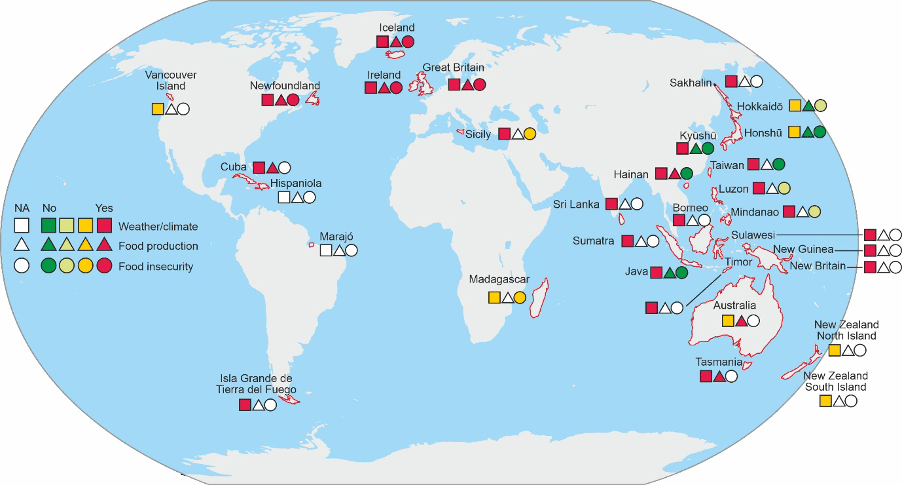
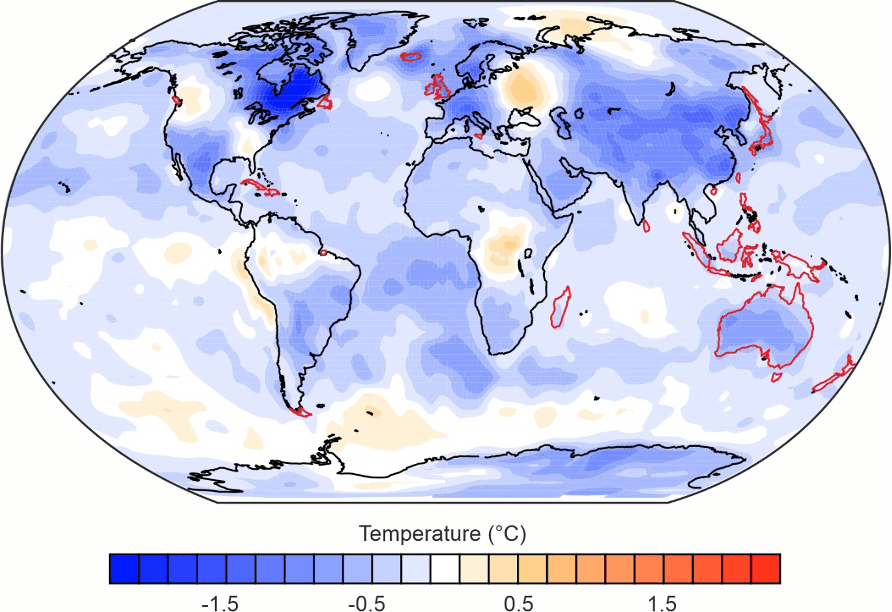


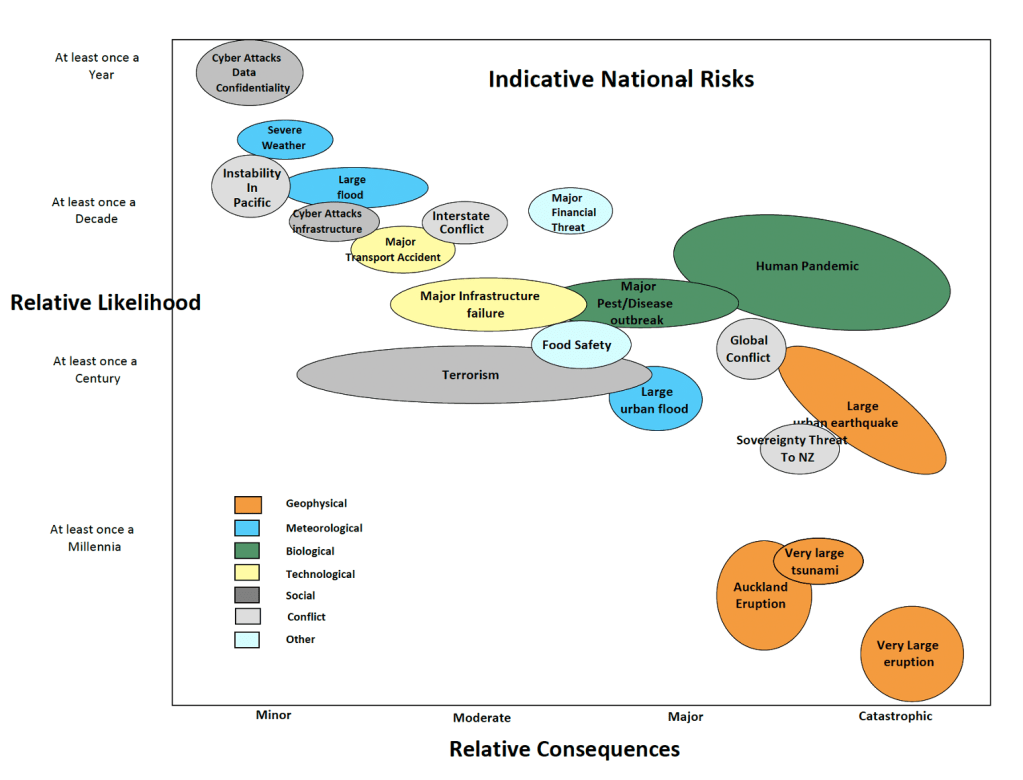

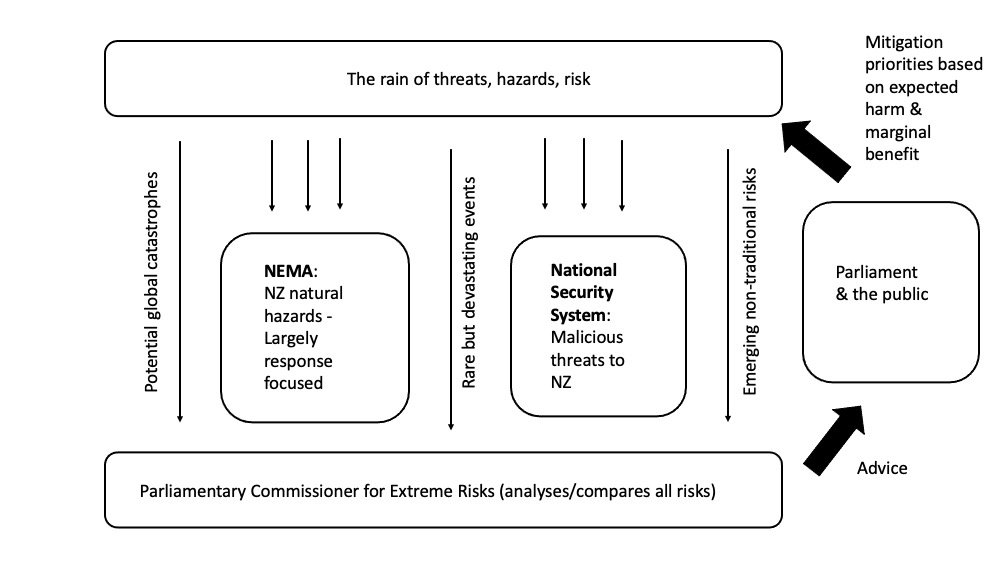


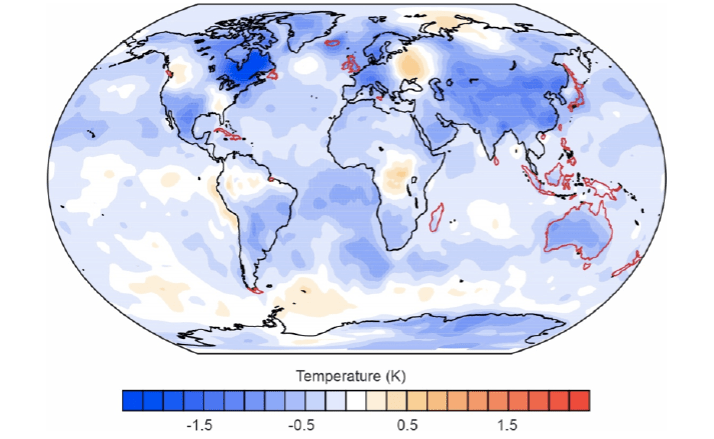





 Adapt Research Ltd