
Beyond 90 Days: A Critical Analysis of NZ’s 2025 Fuel Security Study

By Matt Boyd & Nick Wilson

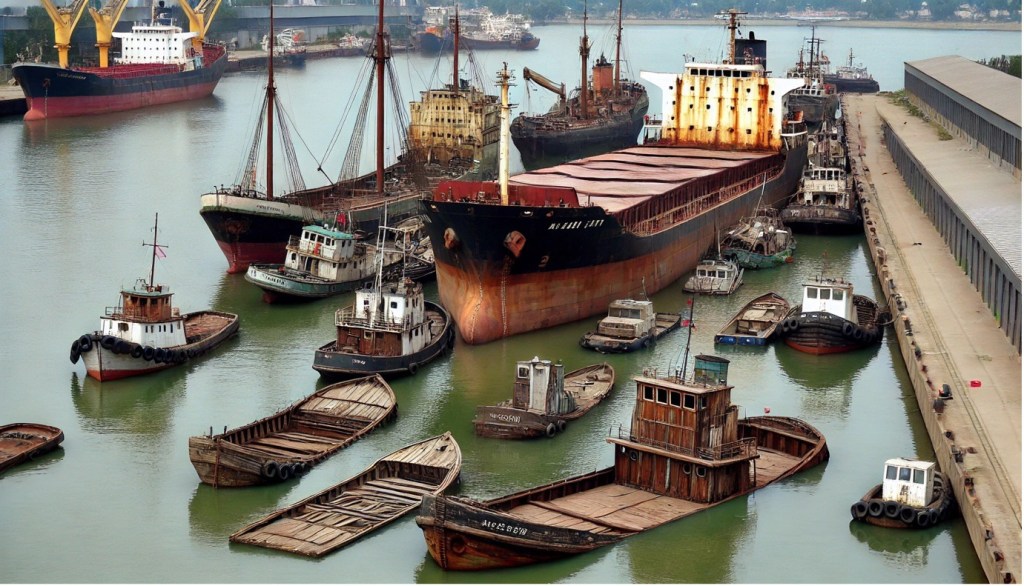
Image credit: DALL-E via Chat-GPT

TLDR/Summary

  • The just published 2025 NZ Fuel Security Study recommends increasing storage capacity, trucking logistics, considering biofuel development and accelerating zero-emission vehicles over reopening Marsden Point oil refinery (estimated at $4.9-7.3 billion).
  • While the Study models a complete 90-day fuel import cessation (a substantial improvement over previous analyses), it fails to examine longer timeframes or identify when systems would break down.
  • The Study’s “severe disruption” scenario avoids naming specific global catastrophic risks like the effects of nuclear winter or solar storms that could cause prolonged or permanent disruptions to global trade.
  • The Study evaluates biofuel options based on a single large tallow refinery rather than considering distributed smaller-scale seed oil solutions that almost certainly would provide better resilience in a catastrophe.
  • To maintain minimal functioning during long-term disruptions, we estimate NZ would need to produce at least 200 million litres of biofuel annually, yet the Study doesn’t analyse how this minimum could be achieved sustainably, instead only examining a single larger (expensive) solution.
  • The Study misses the opportunity to examine how fuel security connects to NZ’s National Risk Register, public information, or NZ’s potential role as a global food producer and possible refuge during worldwide catastrophes.
  • Our own extension of the analysis estimates that essential services would require approximately 17% of normal diesel consumption (5% for lifeline utilities, 5-15% for critical transport, 0.6-2.8% for minimal agricultural production), meaning current stockholdings would only last about 160 days in a catastrophe.
  • This ‘point of breakdown’ is not at all apparent from the 90-day calculations in the NZ Fuel Security Study – highlighting the need for further research in this critical domain.

What is the NZ Fuel Security Study?

The NZ Ministry of Business, Innovation and Employment (MBIE) recently published its commissioned NZ Fuel Security Study, developed in response to growing concerns about the nation’s vulnerability to disruptions in global fuel supply chains.

As a remote island nation that imports essentially all of its refined fuels, NZ faces a range of challenges and vulnerabilities in ensuring fuel security.

The Study aimed to map NZ’s fuel consumption trends, investigate reopening the Marsden Point oil refinery, assess the risks of extended fuel shortages, and evaluate potential mitigation options.

This work is intended to inform a forthcoming Fuel Security Plan that will guide national strategy for building resilience in the medium to long term.

Given that a secure and resilient fuel supply is not just critical to NZ’s economy but potentially to NZ’s survival as a functioning society post-catastrophe, the government’s initiative is timely and necessary. Indeed, we previously blogged about what the Study would need to do to fully inform resilience measures against global catastrophic risks.

As we’ll explore in the present blog, the Study’s approach to catastrophic risks does not provide the information necessary to fully inform decisions around preparing for the most severe scenarios that could threaten NZ in an increasingly unstable world.

Main Findings of the Study

The Fuel Security Study, conducted by Envisory and Castalia, was delivered in two parts. The first focused specifically on investigating the feasibility of reopening the Marsden Point oil refinery. This analysis concluded that reestablishing the refinery would be prohibitively expensive, with capital costs estimated between NZ$4.9-7.3 billion, a construction timeline of at least six years, and significant ongoing operational costs.

The report determined that a reopened refinery would unlikely be economically viable without substantial government support and would contribute only modestly to fuel security while increasing NZ’s greenhouse gas emissions.

The main Study mapped NZ’s international and domestic fuel supply chains, projected future demand trends through 2035, and modelled various disruption scenarios to evaluate economic impacts and potential mitigation options. The analysis assessed both international supply disruptions (including a severe 90-day cessation of all fuel imports) and domestic logistics disruptions affecting critical infrastructure. The Study recommended a portfolio of mitigation measures including:

  • Increasing diesel storage capacity by approximately seven days of national demand
  • Expanding jet fuel storage capacity, especially at or near Auckland Airport
  • Establishing additional trucking capacity for emergency distribution
  • Supporting biofuel development, particularly for jet fuel and potentially for diesel applications
  • Accelerating the transition to zero-emission vehicles (especially for light vehicles)
  • Continuing to develop international arrangements to protect supply chains

The Report concluded that reopening the Marsden Point refinery or developing a small refinery for indigenous crude would be among the least effective options compared to the other measures.

Following the Study, Resources Minister Shane Jones admitted the Crown cannot afford the reopening option. Instead, he has proposed a special economic zone around the former refinery site to enable alternative fuel manufacturing like biofuels, with the aim of protecting NZ’s fuel security while preventing development from being blocked by “Nimbyism.”

Global Catastrophic Risks: The Missing Dimension

Photo by Sara Farshchi on Unsplash

What the Study Got Right

The 2025 Fuel Security Study makes important strides in considering severe disruption scenarios beyond previous analyses, which focused mainly on modest 10% supply reductions. Most notably, the Study models a “severe disruption” where NZ experiences a complete cessation of fuel imports for 90 days. This represents a significant evolution in thinking about fuel security, acknowledging that extreme scenarios are possible and warrant planning. The Study also correctly identifies that such a severe disruption would likely be part of a broader economic and societal crisis, noting that “the whole NZ economy would be impacted for reasons unrelated to fuel supply” (p.31). This concurs with our own research work examining NZ’s vulnerability and resilience to scenarios such as Northern Hemisphere nuclear war.

Additionally, the Study provides a useful baseline by comparing potential fuel availability during severe disruptions with Covid-19 Level 4 lockdown consumption patterns. This offers a real-world reference point for dramatically reduced fuel demand during a crisis (albeit during Covid-19 lockdowns the entire export industry was effectively still operating) and therefore projections of how long stockholdings might last.

The Study also acknowledges that essential services and critical government functions would require only a small fraction of normal fuel demand—approximately 5% for diesel and 3% for petrol for lifeline utilities and potentially another 5–15% demand for critical transport, eg, food distribution and essential workers (p.33). There is no estimate of off-road liquid fuel consumption by agricultural processes for food production (despite these being essential for feeding New Zealanders).

Methodological Shortcomings

Despite these advances, the Study falls significantly short in its approach to global catastrophic risks (GCRs). Most conspicuously, the “severe” disruption scenario (pp. 31-33) avoids naming any specific catastrophic events that might cause such disruptions. The report states, “We do not speculate on the cause of such an event,” which deprives readers—and more importantly, decision-makers—of the concrete contexts needed to fully grasp the implications.

References to “major global war” or “major sustained global banking failure” appear briefly but are not developed. The absence of explicit discussion of solar storms, nuclear conflicts, extreme pandemics, global cyberattacks, or Major Power wars makes the scenarios abstract and difficult to conceptualise, potentially undermining the urgency of preparedness measures.

A fundamental methodological weakness is the Study’s reliance on point estimates rather than trends or ranges in its “severe” scenario. The 90-day timeframe for the severe disruption scenario appears arbitrarily selected without justification for why this particular duration was chosen. This approach fails to show how resilience measures would perform across different timeframes—what if the disruption lasted 180 days, one year, or became the new normal? The analysis doesn’t show at what point NZ would transition from “muddling through” to being unable to maintain essential services (see below for our own details on this).

This limitation is particularly problematic given what we know from analogous fields. For instance, research by Simon Blouin and colleagues on food security during catastrophic electricity outages has shown that the United States could weather a food supply shock of a month or two if there was 10-days’ household stored food. Whereas consuming these stockpiles makes little difference in a one-year disruption. Similar trend analysis for fuel scenarios would provide critical insights into when different mitigation measures become insufficient.

Comparison of Mitigation Options: Apples and oranges

The comparison of mitigation options (pp. 72-79) suffers from methodological inconsistencies that make meaningful evaluation difficult. The Study employs a “volume usefulness” metric that combines the amount of fuel an option could provide with its scenario usefulness. However, this approach leads to comparing fundamentally different scales of intervention.

For example, the biofuel option is evaluated based on a single large refinery of a specific size. This creates a situation where biofuels appear “effective but expensive,” even though they oversupply compared to some other solutions. A more consistent approach would be to compare all options at equivalent volumes (eg, analysing the cost and feasibility of each option providing, say 100 million litres of diesel fuel equivalent annually).

The analysis also fails to provide a clear comparison of how different options would perform under scenarios such as: (A) maintaining only critical government functions, lifeline utilities, essential transport, and minimal agriculture to feed the population during a one-year or five-year catastrophe; (B) sustaining 50% of business-as-usual (BAU) operations; and (C) maintaining BAU levels. A tiered approach like this to the zero imports scenario would offer much clearer guidance for decision-makers about which solutions best address different severity levels and durations of catastrophic disruption. Furthermore, arguably government interventions ought to focus primarily on ensuring supply of basic needs under catastrophe scenarios, rather than supporting business-as-usual during lesser shocks.

Biofuels: More depth required

The treatment of biofuels (pp. 63-64) is notably superficial given their potential importance in a global catastrophe scenario. The Report’s preference for “used oils and animal fats” (p.64) over vegetable or seed oils focuses on lifecycle emissions rather than security or cost-effectiveness considerations. In a true catastrophe, seed oil production might be more readily maintained than the operation of freezing works, which depend on export markets and complex supply chains. Tallow, highlighted in the Report, is merely a byproduct of meat processing facilities that might not operate in a severe global disruption.

The analysis doesn’t consider important existing infrastructure such as Canterbury’s PureOil NZ canola food oil plant, which would be relevant to understanding NZ’s current capabilities and the potential for distributed smaller scale biofuel plants, rather than potential dependence on a single central producer and the vulnerabilities inherent in that arrangement. Indeed, this refinery used to produce biodiesel (before food oil became more profitable).

Looking Beyond the 90-day Horizon

Perhaps most fundamentally, the Study’s 90-day severe disruption scenario falls well short of the timeframes necessary for genuine global catastrophic risk planning. Events like nuclear winter (up to a decade in length), volcanic winter (several years), extreme solar storms with cascading infrastructure failures, or a conflict that permanently disrupts global shipping (eg, through destruction of vessels and/or refineries) could all create disruptions or global fuel trade reconfigurations lasting years or even decades. Existing modelling of food trade networks shows that this concern is important and could leave some trade network nodes without supply following global catastrophe.

A truly robust Fuel Security Plan will need to address how NZ could maintain minimal critical functions for extended periods (see our analysis below)—potentially transitioning to a fundamentally different energy system over time. This horizon is largely absent from the current analysis, potentially creating a blind spot in national resilience planning.

The issue is particularly salient given the views of major energy corporates such as Z Energy, who have provided a somewhat complacent ‘House View’ on matters. In un-dated sponsored content on Business Desk, Z Energy expressed confidence in NZ’s fuel supply chain resilience for handling conventional disruptions. But their analysis fundamentally overlooks the unique challenges posed by global catastrophic risks. Z’s “worst case” scenarios still assume functioning international markets and temporary disruptions, rather than considering truly existential threats like nuclear winter, global infrastructure collapse from solar storms, or prolonged geopolitical realignment that could sever trade networks for years or decades. Z Energy’s “55 to 90 day stockpile” strategy provides a buffer for “replumbing the system” but offers no solution for scenarios where there simply is no system to replumb. Concerning is the absence of any discussion about developing local production capacity that could operate independently of global supply chains during a prolonged catastrophe—precisely when such capability would be most vital for national survival. We note of course that any development of local production or incentivised transition from BAU would likely directly compete with Z Energy’s business, so their position must be taken with a grain of salt and in general national resilience planning must not be beholden to the preferences of existing energy suppliers.

Truly Resilient Solutions

The Study is right to note that fuel security planning may need to look beyond ‘lifeline utilities’ with the fuel demands of additional essential services to be quantified in Civil Defence and Emergency Management (CDEM) plans.

However, while agriculture is acknowledged as a diesel consumer, the Fuel Security Study doesn’t provide the detailed analysis of agricultural fuel requirements that would be needed for planning food security during prolonged catastrophes.

We have previously modelled the ‘bare minimum’ liquid fuel requirements for off-road agricultural production to produce minimal food supply for just the NZ population. This sums to less than 22 million litres of diesel (with optimised grain and vegetable cropping under unchanged climate conditions [0.6% total annual diesel consumption], or up to 107 million litres for dairy production in a nuclear winter scenario (ie, 2.8% of diesel consumption). However, realistic off-road consumption to produce just enough food would likely be greater, given the highly optimised assumptions in our analysis.

We can therefore sum the diesel fuel needs of 5% for lifeline utilities, up to 5–15% for critical transport, and 0.6–2.8% for off-road agriculture, resulting in up to 11–23% of BAU diesel consumption as a bare minimum. Taking the mid-point (17%) this equates to 1.8 million litres per day.

This result means that without onshore liquid fuel production, no matter how many trucks NZ has for distributing fuel, all stockholdings are exhausted by 166 days, even assuming that the relevant restrictions and prioritisations were implemented without delay when catastrophe struck.

None of this information is conveyed by analysing a single 90-day fuel supply shock, without projecting processes and trends across time.

The critical question is not, ‘Can we muddle through an arbitrary 90-day shock’, it is surely, ‘Under such circumstances when will we run out?’ The latter is, for completely unknown reasons, not directly addressed in this ‘Fuel Security Study’.

The obvious next question is then, ‘How much local production of replacement fuels needs to be available?’ The answer is, at a minimum, for diesel (as above), 11% of daily consumption, or ~430 million litres per year – or about half of this in the first year if we are judicious with the 166 day minimal buffer supply.

How could ~200 million litres be sourced locally. One answer is in the Report: biofuels. Unfortunately the Report mostly estimates costs for a single refinery, tallow-type hydrogenated biodiesel solution. Which the report finds to be expensive, reporting throughput of 200,000 tonnes per year creating up to 220 million litres of renewable diesel, at a capital cost of $530 million+ (p.64), or 537 million litres at an annual cost of $257 million (Figure 24, also p.78).

It does not attempt to cost, for example, a solution with 4 or 5 regionally distributed seed oil biodiesel refineries providing say up to 40 million litres each (indeed small seed oil biodiesel refineries have existed in NZ producing in the order of 10-20 million litres per annum). Such refineries could perhaps produce food oil commercially in normal times (for local use and export), but be configured to be able to pivot to biodiesel in catastrophe times. With anticipatory expansion of feedstock such as canola, perhaps on a standard rotation with wheat (with perhaps some substituting for dairy, resulting in net increased food energy production) such solutions might be commercially viable in normal times as well as providing much more sustainable resilience than ‘more storage’ or ‘more trucks’. These kinds of solutions should be analysed.

Beyond this we should also be contemplating the interdependencies among essential utilities and considering how, for example, to supply liquid fuel in contexts of protracted electrical system failure. This is another story, but interested readers can look to our blog on catastrophic electricity loss, and our in-depth webinar and expert panel discussion on the same topic.

Conclusions

The NZ Fuel Security Study provides a valuable starting point, but a more comprehensive approach to global catastrophic risks such as nuclear war, extreme pandemics, massive cyberattacks, and solar storms would require clearer scenario definitions, clear, consistent and relevant comparison of mitigation options, and planning horizons that extend beyond 90 days to explore the point of system break-down. Scenario exercises should push systems to the point of breaking and even beyond to truly understand the threats we’re faced with and mitigation options available.

The economic analysis would benefit from focusing not just on GDP impacts but on societal resilience more broadly, accounting for the expected value of rare but devastating global catastrophes in cost-effectiveness calculations.

For a truly comprehensive approach to fuel security in the context of potential global catastrophes, an expanded study would need significant expansion to address long-term (1+ year) scenarios, detailed sector-by-sector minimum requirements, and integration with broader national resilience planning. While the current Study represents an improvement over previous analyses, it continues to approach fuel security primarily as an economic and supply chain issue rather than as a potential existential threat requiring whole-of-society resilience planning.

These issues are particularly salient to NZ because there are strong reasons to overengineer resilience in island nations. It is not only to protect domestic populations. NZ can potentially feed eight times its population number through food exports if these can be sustained through catastrophe. NZ is also often cited as a potential ‘refuge’ for humanity, a place where societal complexity might persist through a truly global catastrophe. Securing fuel supply for essential functions in a sustainable way, across time, alongside accelerating electrification, is central to this.

Learn more about our work, or donate to support further analysis, at https://www.islandfutures.earth/
Lost at Sea: Shipping in NZ through a Catastrophic Risk Lens

By Matt Boyd, Mike Hodgkinson, Nick Wilson

Listing to Port: Is this the marketplace for interisland ships NZ has been browsing? (Image credit: ChatGPT)

TLDR/Summary

  • NZ’s interisland and coastal shipping infrastructure is inadequate for global catastrophe scenarios that limit international shipping or liquid fuel supply to NZ.
  • The recent history of failures including ferries and coastal ships highlights the vulnerability of interisland connections to any loss of component supply or international expertise.
  • NZ heavily relies on road trucking (93%), which is fuel-inefficient and vulnerable to disrupted fuel supply or road damage.
  • Coastal shipping capacity is low, limiting transport options.
  • Key resilience options to protect against global catastrophic risks: Upgrade and diversify the interisland ferry fleet; Expand and modernise coastal shipping capabilities; Develop local biofuel production for shipping; Accelerate transport electrification; Improve rail infrastructure, including interisland rail capacity; Create redundancy in transport systems.
  • Benefits include: improved catastrophe resilience, reduced emissions, better preparedness for various disasters.

Introduction

Aotearoa New Zealand (NZ) is supposedly a seafaring nation, but in case of a global catastrophe our interisland and coastal shipping infrastructure is far from being up to scratch.

Global catastrophic risks such as nuclear war, supervolcano eruptions, extreme pandemics, cyberattacks and solar storms threaten global infrastructure and could precipitate the collapse of global trade (see for example our Hazard Profile on nuclear war and NZ). NZ is the ‘last bus stop on the route’ and could suffer immense consequences that accelerate the risk of societal collapse.

NZ’s transport infrastructure is extremely dependent on imported liquid fuel supplies, but also imported components for maintenance and repair. In the case of an extended period of trade isolation, the country may struggle to fuel and repair transport assets such as ships.

This is particularly concerning given NZ’s recent track record of shipping maintenance woes, poor liquid fuel security status, and NZ’s extreme dependence on road trucking for transport.

NZ needs to upgrade its shipping infrastructure and secure a minimum locally produced shipping fuel supply as a national public priority. This is to ensure food and essential commodities can be distributed around the country even in a severe global catastrophe.

For resilience, NZ would ideally use a balanced mix of transport options such as efficient locally controlled coastal shipping, electric rail, road trucking, and trans-Tasman shipping options that don’t depend on global shipping routes. However, at present NZ is 93% dependent on the least fuel-efficient option of road trucking (which can consume double the fuel per container moved than rail or shipping).

Road trucking in turn is dependent on functioning and resilient Cook Strait ferries. But these ferries have a track record of failures in recent times, and in a global catastrophe, it may not be possible to conduct repairs that depend on imported parts and international expertise.

To avoid isolating the North from South Island, the interisland ferry fleet needs to be diverse, modern, well-maintained, have high capacity and redundancy. It also needs a secure fuel supply that doesn’t depend completely on imported liquid fuels.

The Problem

The history of interisland ferry failures is worrying (see supporting links after this blog):

  • In 1999 the Aratere suffered power failures shortly after entering service.
  • In 2005, the Arahura experienced a major loss of propulsion power approaching Tory channel due to failure of a diesel generator.
  • In 2006, the Aratere developed a significant list due to shifting cargo in heavy weather, causing minor injuries.
  • In 2013, the Aratere was taken out of service after a fatigue fracture caused it to lose a propeller while crossing Cook Strait.
  • In 2021, the Kaiārahi experienced a major gear box failure during a Cook Strait crossing.
  • Throughout 2021 and 2022, there were sporadic cancellations across both Interislander and Bluebridge services due to various mechanical issues.
  • In 2023 the Kaiārahi and Connemara both faced “engineering issues” in February causing widespread cancellations.
  • In 2023, the Kaitaki lost all power due to a cooling system leak, drifting dangerously close to Wellington’s south coast, with Wellington hospital going on alert for potential mass casualties.
  • In 2023, the Kaitaki was out of service again with a gear box problem that required overseas experts to be flown in.
  • In 2024 the Aratere ran aground in the Marlborough Sounds after a steering failure.
  • In 2024 the Connemara lost power and started drifting in Cook Strait.
  • In 2024 the Strait Feronia lost power coming into Wellington Harbour.
  • There have also been multiple incidents of ferries colliding with wharves or other vessels.

These issues have resulted in frequent cancellations, delays, and stranded passengers, vehicles and freight. Plans to replace the aging ferries in the Interislander fleet with new hybrid-electric ferries failed to materialise and now the government has scrapped a planned upgrade to new vessels.

In response, KiwiRail announced increased ferry maintenance and scheduled longer periods in dry docks for serious maintenance work. Also, international experts were consulted to assess the ships’ conditions and provide recommendations. KiwiRail has considered alternative options, including extending the life of existing ferries, leasing or buying second-hand ferries, and exploring new ferry designs with reduced landside requirements. Though none of these is a comprehensive and long-term resilience solution.

KiwiRail did report 97% ship availability and 85% on-time performance in February 2024, but as noted above, a single mechanical failure, or inability to access fuel could be disastrous for NZ’s connectedness in a global catastrophe. Redundancy and the ability to troubleshoot locally are critical.

Importantly, the problems are not limited to interisland shipping. It is recognised that NZ has low coastal shipping capacity and efforts to improve coastal shipping services have also met with failures. For example, a ‘she’ll be right’ NZ attitude to fitting out a beleaguered coastal barge ended in disaster this year as it ran aground near Westport immediately after being put to service.

We note Waka Kotahi’s Freight and Supply Chain Strategy. There is a 3-year plan to analyse port connections, and a plan across 30 years to strengthen parts of the freight and supply chain system that are critical to national interest, but global catastrophe could strike at any moment. We applaud the goal of more freight being transported by rail and coastal shipping rather than road, but there is yet little evidence of sweeping improvements in resilience.

Future NZ Shipping? (Image credit: Midjourney)

Catastrophe Resilient Solutions

In 2023 we produced a report on increasing NZ’s resilience to global catastrophe. In the chapter on transport, we provided resilience options including the need to:

  • Accelerate electrification, including electric road and rail transport, short haul coastal shipping, and interisland air travel.
  • Invest in research and development of the optimal methods for producing transport fuel locally in NZ, for example biofuel feedstocks such as canola, and developing food oil factories that can convert to biodiesel production.
  • Explore how coastal shipping might employ wind assist technology to conserve fuel, be capable of running on biofuels, and quantify the minimum liquid fuel needs for shipping to move the most essential goods (eg, food) around NZ.
  • Develop principles of land transport and shipping fuel rationing based on prioritisation of population basic needs in a global catastrophe.
  • Collaborate with Australia on global catastrophe resilience to ensure that trans-Tasman trade can continue using just assets controlled by NZ and Australia.

Interisland Ferry Resilience and Redundancy

NZ needs reliable and resilient interisland shipping options, that are flexible enough to move people, freight, trucks and rail assets, and modern and reliable enough that the risk of irreparable breakdown is extremely low. There needs to be capacity and redundancy in the system.

There are concerns that any Cook Strait ferry solution will not be rail capable. Ideally interisland ferry solutions would accommodate future emphasis on electric rail. If the North and South islands are disconnected, NZ risks a less resilient rail system (as rail assets or repair workshops may be stranded on one island or the other).

Rail, especially electric rail, may be particularly important in a global catastrophe if fuel and transport options are scarce, as it allows intensive near-urban agriculture to follow a railway, as we have argued in our research paper on near urban agriculture for resilience.

Coastal Shipping Assets and Infrastructure

At present it is more cost-effective to ship Australian wheat to processing in Auckland than bring wheat from the South Island, but we cannot assume that trans-Tasman transport will be operational following a global catastrophe. Reliable and sufficient NZ bulk, liquid, and container coastal shipping assets are strategically important.

NZ needs an expanded, capable, flexible and reliable coastal shipping fleet, and associated port infrastructure, perhaps including roll-on, roll-off capability for trucks and rail at a range of ports. This would provide transport resilience, reduced emissions and fuel efficiencies. Yet there are doubts about NZ’s coastal shipping capability and capacity and a lot of ‘coastal’ transport in NZ depends on vessels plying global routes.

Liquid Fuel Supply for Shipping

Shipping is more fuel efficient than road transport in most cases and can be markedly so when a full load of containers is transported. However, shipping still requires a significant amount of liquid fuel.

We’ve previously calculated that as little as 5–15 million litres of locally produced biofuel could power agricultural equipment sufficient to produce food for the entire NZ population (if efficient crops such as wheat are grown near processing and consumption sites – with many more litres needed for producing food such as dairy products).

In contrast the annual fuel consumption of a single ship to distribute food is in the order of 10 million litres. Such a ship (eg, like the MV Moana Chief) can ply coastal routes and is trans-Tasman capable. Some ships can run on 100% biodiesel (B100), but regulatory changes and certifications would be needed to permit this. We estimate that local production would require at least 8,000 hectares of canola crop or some other biofuel feedstock for every 10 million litres of biodiesel. Such considerations need to be part of a comprehensive mixed transport resilience plan and essential quantities compiled in an improved National Fuel Plan.

These liquid fuel volumes need to be put in the context of the amount of biodiesel that previously operating refineries could produce. One refinery in NZ is capable of producing in the order of 10–20 million litres of biodiesel per annum, however it has now switched to producing food oil.

We commend a new agreement for a biofuel refinery at Marsden Point, but from a diversification and resilience perspective NZ needs to produce a wide range of fuels (for aviation, shipping, agricultural machinery etc) and the problem of interisland transportation of this fuel remains. Biofuel refineries would ideally be in both North and South islands, at least until more widespread electrification of agriculture and road transport occurs.  

One concrete possibility is to begin by pursuing the potentially low hanging fruit of marine fuel. Canola feedstock in Canterbury with the potential for wheat rotation crops (to expand production), could supply the Rolleston PureOil NZ refinery which could produce marine fuel with linkage to Lyttleton for a single NZ marine bunker. Multiple refining and bunker nodes would be ideal, and additional opportunities should be sought.

Infrastructure Commission Proposals

The NZ Infrastructure Commission is calling for submissions to its Infrastructure Priorities Programme (first round due 20 December 2024). Submissions can include ‘Stage 1’ proposals that detail major problems (of national significance) that NZ faces. We contest that resilient coastal and interisland shipping is one such priority issue and we encourage people to submit proposals for infrastructure that will enhance the resilience of NZ’s interisland and coastal shipping in the face of potential global catastrophe. Solutions might include interisland or coastal vessels, landside infrastructure, trans-Tasman trade options, and solutions for a resilient shipping fuel supply.

The country cannot assume that help, expertise and components from overseas will be easily available when needed after a global catastrophe. Distribution of food, fuel, and medicines depends on a resilient local transport system. Indeed, all industrial systems are interdependent and without reliable shipping every sector would break down in a multi-island nation. There is potential for widespread societal harms in a catastrophe that accrue well beyond the accounting in shipping industry risk processes. The right resilience incentives are lacking and this means there may be a case for government ownership of some strategically critical shipping assets.

Finally, the suggestions above would likely help provide a range of immediate benefits to the country. These include reducing greenhouse gas emissions, increase transport security, and providing resilience to a wider class of natural hazards such as extreme weather or earthquakes.

Further recent media about NZ shipping problems and solutions

[1] https://www.rnz.co.nz/news/national/502312/timeline-the-troubled-cook-strait-ferries

[2] https://www.rnz.co.nz/news/national/528514/timeline-a-recent-history-of-cook-strait-ferry-woes

[3] https://www.1news.co.nz/2024/06/22/grounded-interislander-ferrys-25-years-of-troubled-history/

[4] https://nzhistory.govt.nz/culture/cook-strait-rail-ferries/strikes-and-strandings

[5] https://en.wikipedia.org/wiki/Interislander

[6] https://www.interislander.co.nz/explore/the-history-of-the-interislander-ferry

[7] https://www.thepost.co.nz/nz-news/350319712/troubled-waters-brief-history-interislander-issues

[8] https://www.treasury.govt.nz/sites/default/files/2024-05/project-irex-4914527.pdf

[9] https://www.rnz.co.nz/news/national/511300/more-frequent-checks-for-kiwirail-s-ageing-ferry-fleet

[10] https://www.munz.org.nz/2024/09/20/connemara-failure-highlights-urgent-need-to-address-ferry-fiasco/

[11] https://www.rnz.co.nz/news/national/528525/bluebridge-ferry-maritime-union-sounds-alarm-about-health-and-safety

NZ needs to audit shipping capabilities through a global catastrophe lens (Image credit: Midjourney)

NZ’s Fuel Security Study: An opportunity to ensure survival

Photo by Adolfo Félix on Unsplash

TLDR/Summary

  • NZ is vulnerable to interruptions in global fuel trade.
  • MBIE has commissioned a NZ Fuel Security Study.
  • This study is to be commended, but the contractor needs to include analyses through the lens of ‘Global Catastrophic Risks’.
  • Zero liquid fuel import scenarios are possible and must be contemplated. This is the appropriate ‘first principles’ starting point for analysis of fuel security.
  • Mitigation options need to provide for minimal fuel requirements across months or even years.
  • The Aotearoa NZ Catastrophe Resilience Project mapped these scenarios and problems in 2023 and provided a high-level framework for approaching these problems.

Purpose

New Zealand imports nearly all its engine fuels, except for small amounts of biofuels.

Therefore, the NZ Ministry for Business Innovation and Employment (MBIE) is:

Seeking specialist services to undertake a Fuel Security Study on fuel security requirements for New Zealand out to 2035. The findings from the Fuel Security Study will feed into the development of a Fuel Security Plan which will be a strategy document for building resilience in the medium to long term.

This blog outlines some potential global catastrophes and suggests that the contractor undertaking the fuel study should apply the lens of global catastrophic risks to address national fuel security in the worst potential scenarios.

Fuel security is essential to the economy, but also to national food security to ensure farm machinery works and food is transported to people.

Global Catastrophic Risks and Fuel Security

NZ’s geography provides potential for a degree of national self-sufficiency in energy and food production. However, economic drivers mean that NZ depends on trade for many essential goods and services, including liquid fuel.

This arrangement is efficient in normal times but may not provide sufficient resilience should trade networks degrade or collapse. The deteriorating world geopolitical situation in 2024, along with the ever-present risk of major catastrophes such as nuclear war, extreme pandemics, global food shocks, and industry disabling technological or cyber disasters, necessitate a measure of national resilience.

Major recent reports detail the risk of significant global disaster, including those by the Joint Research Centre of the European Commission, World Economic Forum, KPMG, and a 2023 superforecasting study of existential risks. Governments such as the US are now taking global catastrophe and critical infrastructure resilience very seriously.

Against this backdrop the coalition agreement between the National Party and NZ First mandated a study of NZ’s fuel security. Proposals for this analysis are now being sought by MBIE (due on 25 June 2024).

The government and MBIE should be commended for initiating this critical work.

MBIE’s RFP notes that:

A secure and resilient supply of engine fuels is critical to our economy. A significant and sustained supply disruption of engine fuels would impact industry and cause significant hardship to New Zealanders.

‘Critical to our economy’ possibly doesn’t capture the full extent of NZ’s dependence on liquid fuel imports.

A short interruption to liquid fuel supply could be mitigated by demand reduction and judicious distribution of onshore fuel stockholdings. But an extended collapse of fuel trade would put agricultural production and food distribution at risk.

Liquid fuel, at present, is ‘critical to our survival’.

The 2023 report by the NZCat research collective titled Aotearoa NZ, Global Catastrophe, and Resilience Options spelled out the dire impact of a zero-trade scenario for NZ. But also provided mitigation options.

Among wide-ranging multi-sector options, NZCat suggested that NZ needs to:

Reverse the trend to decreased energy self-sufficiency, and ensure adequate electrified transport/machinery and local liquid fuel production to supply essential needs in a global catastrophe.

Specific analyses identified the potential for a modest national production of biofuel that could be titrated to absolute minimum needs to support agricultural production of the most efficient crops to ensure food for New Zealanders. NZCat recommended that other sectors perform similar calculations of critical minima.

Additionally, the NZ Productivity Commission (before its disestablishment) included the following box in their 2024 report on Improving Economic Resilience (p.24)

NZ Productivity Commission 2024

The Productivity Commission highlights the centralised oversight of risk management in NZ and any Fuel Security Study needs to contemplate the full range of potential catastrophes, and feed results into central planning across interdependent sectors and agencies.

It is clear from the scenarios described above, that recent analyses of NZ’s fuel security have not gone far enough in considering the potential magnitude of fuel shocks.

Past studies MBIE commissioned from 2005 on tested only one external supply constraint – a uniform 10% cut in crude production for 6 months. And this was treated as resulting in simply a price effect. I welcome MBIE’s new study.

The 2024 NZ Fuel Security Study

MBIE’s RFP lays out the following objectives for the Fuel Security Study:

  • Identify and mitigate vulnerabilities in NZ’s fuel supply chain
  • Enable us to minimise the impact of fuel disruption events
  • Investigate how NZ could improve sovereign fuel resilience
  • Maintain available fuel at an affordable price

Furthermore, the project scope requires the consultants to:

  • Investigate the reopening of the Marsden Point oil refinery
  • Investigate the strategic importance of infrastructure at Marsden Point and the role it could play in underpinning NZ’s fuel resilience
  • Understand the risks, impacts and mitigation measures of an extended fuel supply shortage
  • Understand potential domestic disruptions to fuel distribution
  • Map fuel consumption trends and how they could impact fuel security

If I was undertaking this Fuel Security Study, as well as investigating the key factors MBIE has identified, I would ensure the following analyses are included:

  1. Contemplate scenarios where NZ suffers a complete loss of liquid fuel imports. This could arise because of massive destruction of refineries/ports/bunkers worldwide (eg, nuclear war), a total regional shipping blockade (eg, China-Taiwan conflict), catastrophic disruption to electrical systems (massive solar flare, cyber disaster), or any one of several other scenarios.
  2. Ideally, the cascading impacts of the scenarios in (1) could be modelled through country-level network node analysis of fuel production, import and export volumes, as has been done for global food trade (eg, Hedlund et al. 2022), to estimate the impact of various representative catastrophes on NZ’s fuel supply.
  3. Contemplate protracted (months/years) fuel supply disruptions and consider essential services that could be disrupted, starting from the most critical basic needs, ie, water supply, agricultural production/food distribution, and heating.
  4. Estimate the quantities of liquid fuel required by each critical sector (eg, Transport, Energy, Communications, Food/Agriculture, Emergency Services, Defence, etc) to sustain absolute bare-minimum functioning to supply survival needs across months/years. These volumes can then inform a quantified and updated National Fuel Plan.
  5. Investigate mitigation measures that include local production of liquid fuels. Until widespread electrification (which should be pursued) liquid fuel is critical to NZ’s survival. Local production options at the required scale are probably limited at present to:
    • Refining local crude oil (from Taranaki)
    • Biofuel production
  6. Suggest options for how to develop mitigation measures for fuel supply shocks, including the potential for:
    • Pilot programmes of incentivised biofuel production
    • R&D on electrification of critical industries
    • Alternative fuel production
    • Infrastructure decentralisation
    • Other innovative solutions
  7. Estimate in broad terms the cost-effectiveness of various interventions. The cost-effectiveness analysis should include:
    • A societal perspective (because costs and benefits are not limited to the fuel industries directly and this analysis would demonstrate the potential return on investment for public funding of fuel resilience).
    • The collective likelihood (across the lifetime of fuel supply infrastructure) and impact of rare but devastating global catastrophes, such as extreme pandemics, nuclear war, supervolcano eruptions, solar flares, AI powered cyber-attacks, Great Power war, etc (ie, analysis of costs should account for expected value of the largest disasters).

If I was undertaking the Fuel Security Study, I would consult the following resources, which help frame these issues at a high level, through the lens of potential global catastrophe, from a NZ perspective:

I would also ensure that the study is framed such that it can inform NZ’s list of Nationally Significant Risks. As the coordinator of NZ’s risk management strategy, DPMC maintains this list (and a confidential National Risk Register). The impact of global catastrophes that could end NZ’s fuel supply needs to be spelled out, so that these can be included in lists of the most important risks NZ faces. The analysis should be publicly facing, so that communities and businesses can respond accordingly.

The first step for a fuel security study is to start from first principles and understand the implications of a zero-fuel scenario. Then priority actions can be identified.

Again, MBIE is to be congratulated for progressing this important work, and hopefully a resilient and thriving NZ emerges, rather than a nation critically dependent for survival on systems beyond our control.