Do these NZ government draft plans adequately address national resilience?
TLDR/Summary
The NZ Government is consulting on two major draft plans: the National Infrastructure Plan and the National Fuel Security Plan.
Our charity, Islands for the Future of Humanity, submitted responses to both, urging stronger planning for global catastrophic risks (GCRs) like nuclear war, extreme pandemics, or trade collapse.
We find both plans lack adequate preparation for long-term or extreme global disruptions or global critical infrastructure destruction.
Our recommendations include more focus on infrastructure essential for providing basic needs like water, food, transport and communications in the worst possible scenarios, such as trade isolation.
We also propose mandatory resilience assessments in all infrastructure investment decisions, explicitly addressing potential global catastrophes.
Submissions are open: help shape NZ’s future resilience before the deadlines—6 August (Infrastructure) and 25 August (Fuel Security).
Two critical government consultations
The New Zealand government has called for submissions on drafts of two major plans pertaining to national infrastructure and fuel security.
The NZ Infrastructure Commission and the Ministry of Business, Innovation and Employment (MBIE) have asked how we can future-proof the systems that keep our country running.
Our non-partisan independent charity Islands for the Future of Humanity has made submissions on both, advocating for a bold shift in how we think about resilience: not just to climate change or short-term shocks, but to global catastrophic risks (GCRs) that could fundamentally alter New Zealand’s operating environment.
We find that neither draft satisfactorily addresses global catastrophic risk. We need to ask more of our decisionmakers to ensure national resilience and future wellbeing.
Government plans need to ensure basic needs like food, water, transport and communications can be provided no matter what catastrophes befall the world.
The Draft National Fuel Security Plan, released by MBIE, proposes stockholding obligations, better data visibility, expanded fuel storage, and support for biofuels and EVs. The Plan builds on the 2025 Fuel Security Study, which modelled a severe 90-day disruption to fuel imports (and which we critiqued in a previous post finding the analysis wanting). While welcome progress, the draft plan stops short of addressing how New Zealand could survive a prolonged or permanent disruption to global fuel supply—such as from nuclear conflict, electromagnetic pulse, or widespread supply chain collapse. These are not science fiction; they’re now being actively studied by global agencies, including the US National Academies of Sciences and a new UN Scientific Panel on nuclear war impacts (see our previous post on these reports).
In our submission, we call for a fuel system that guarantees basic needs—food, water, critical transport—under even the worst scenarios. That means modelling fuel demand for essential services in year-long (or longer) disruptions, and developing domestic liquid fuel production capacity, especially regionally distributed biofuel refineries that can pivot between commercial and crisis modes. Electrification is essential, but we must also prepare for shocks that knock out the electric grid itself, as detailed in our recent webinar and expert panel discussion on catastrophic electricity loss.
Meanwhile, the Draft National Infrastructure Plan, published by the NZ Infrastructure Commission, takes a broad look at long-term investment challenges. It rightly addresses fiscal constraints, climate resilience, and aging infrastructure—but barely mentions the possibility of catastrophic global disruption, yet the risk of this is clearly rising, as we’ve discussed in a previous post. Our submission urges the Commission to embed systemic risk and GCR thinking into infrastructure planning, including:
Distributed and resilient energy and food systems,
Domestic cloud and communication infrastructure,
Transport redundancy across islands and to Australia, and
Pandemic-ready health facilities and critical supply sovereignty.
We also argue for mandatory resilience assessments in infrastructure funding decisions, contemplating catastrophic risk scenarios, and using long timeframes and appropriate discount rates that don’t marginalise future generations.
Both submissions draw on our wider work, including our NZCat Report, which maps how island nations like New Zealand are vulnerable to GCRs, but with foresight can play a vital global role in preserving human civilisation through catastrophe—if we plan accordingly.
Let’s make sure resilience means more than recovery after the fact, or merely protecting business as usual. It must mean anticipatory governance and preparedness for whatever comes.
Support our work
If you support this kind of thinking and work, then help us free up time to do more. Please consider donating via our NZ registered charity’s givealittle page.
This blog cross-posts a University of Otago media release about our recent research:
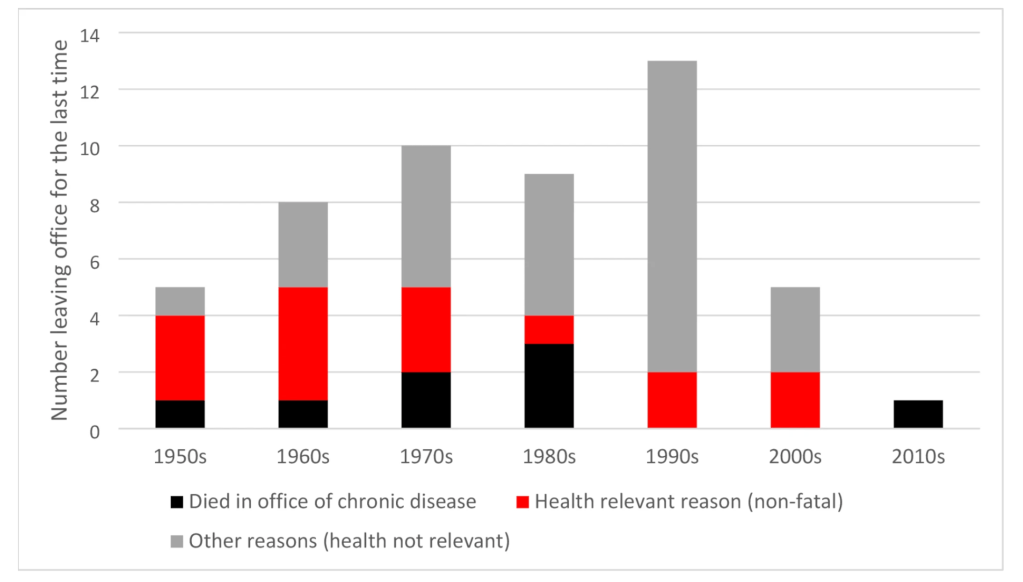
Many former leaders of the world’s nine nuclear-armed nations were impaired by health conditions while in office, raising concerns over their decision-making abilities while they had access to nuclear weapon launch codes, a study from the University of Otago, New Zealand, has found.
The study analysed the health information of 51 deceased leaders of nuclear-armed countries: China, France, India, Israel, North Korea, Pakistan, Russia, the United Kingdom and the United States. Eight of the leaders died from chronic disease while still in office, five from heart attacks or strokes. Many of the leaders had multiple serious health issues while in office, including dementia, personality disorders, depression and drug and alcohol abuse.
The research was led by Professor Nick Wilson, from the Department of Public Health at the University of Otago, Wellington – Ōtākou Whakaihu Waka, Pōneke, with Associate Professor George Thomson and independent researcher Dr Matt Boyd.
Professor Wilson says that of the leaders who left office while still alive, 15 had confirmed or possible health issues which likely hastened their departure.
“Probably all of this group of 15 leaders had their performance in office impaired by their health conditions. In some cases, the degree of impairment was profound, such as in the case of two former Israeli Prime Ministers: Ariel Sharon, who became comatose after suffering a stroke in office, and Menachem Begin, whose depression was so severe he spent his last year as leader isolated in his home. Impairment during crises was also seen in the case of Richard Nixon’s bouts of heavy drinking – including during a nuclear crisis involving the Middle East.
“There have also been occasions where health information about leaders has been kept secret at the time.”
This was the case for multiple US presidents, including Dwight D Eisenhower, whose doctor described his 1955 heart attack as a digestive upset; John F Kennedy, whose aides lied about him having Addison’s disease, a serious, chronic condition; and Ronald Reagan, whose administration hid the extent of his injuries after he was shot in 1981, and the likely signs of his dementia near the end of his term.
Professor Wilson says Kennedy was in poor health during his first two years in office in 1961 and 1962, with his performance likely impaired from Addison’s disease, back pain, and his use of anabolic steroids and amphetamines. It was in 1961 that he authorised the failed CIA-backed Bay of Pigs invasion of Cuba and that his poor performance at a Cold War summit with Soviet leader Nikita Khrushchev in Vienna was noted. In turn, Khrushchev’s poor mental health probably contributed to him triggering both the Berlin Crisis and the Cuban Missile Crisis.
In France, long-serving President François Mitterrand clung onto power until the end of his term in 1995, despite keeping secret his advanced prostate cancer and after his doctor had concluded in late 1994 that he was no longer capable of carrying out his duties.
This latest study follows previous research involving Professor Wilson on the health of former New Zealand Prime Ministers. It found the performance of at least four of the leaders was impaired, in three cases by poor health, and, in the case of Robert Muldoon, by his heavy drinking.
Professor Wilson says with the rise in international instability following the Russian invasion of Ukraine in 2022 it has become even more important to ensure there is good leadership and governance in those countries with nuclear weapons.
“This is particularly the case for the United States, where a leader can in principle authorise the release of nuclear weapons on their own, a situation referred to as a ‘nuclear monarchy’.”
He says there are a range of measures which could reduce global security risks from leaders whose judgement is in question. They include removing nuclear weapons from ‘high alert’ status, adopting ‘no first use’ policies where nations refrain from using nuclear weapons except as a retaliatory second strike, ensuring any weapon launches need authorisation by multiple people, and progressing nuclear disarmament treaties.
Professor Wilson says democracies could consider introducing term limits for their leaders, as well as recall systems, so voters could petition for politicians to step down. Requirements for medical and psychological assessments could be introduced for leaders before they take office, and during their terms.
“Maintaining a strong media with investigative journalists can also help expose impairment in leaders.”
Professor Wilson says politicians in general are exposed to high levels of stress, which can affect their mental wellbeing. A study of UK Members of Parliament has found they were 34 per cent more likely to experience mental health problems than other high-income earners.
“Finding ways to reduce stress on politicians and better address their mental health needs is another way global security risks can be reduced.”
New US National Academy of Sciences Report reveals the complex web of societal vulnerabilities that could amplify nuclear war’s devastating impact
TLDR/Summary
The US National Academy of Sciences has just released a comprehensive report on the “Environmental Effects of Nuclear War”. This work extends analysis beyond physical damage to examine impacts on human social and economic systems.
Chapter 7 reveals that nuclear war’s most severe consequences may come through cascading societal failures rather than direct blast effects, with global interconnections creating “societal teleconnections” that could spread impacts worldwide.
Global crop yields could suffer 3–16% reductions from nuclear winter cooling, while marine fisheries could decline by 30–70%, threatening global food security.
The report identifies fundamental gaps in our understanding of how complex human systems respond to nuclear shocks, calling for unprecedented interagency coordination and advanced modelling.
While acknowledging massive uncertainties, the evidence suggests even regional nuclear conflicts could trigger global disruptions through interconnected trade, financial, and supply chain networks.
Key recommendations call for coordinated US Government assessment, advanced predictive modelling, comprehensive research programmes, health system preparedness, and community resilience initiatives.
We have previously made similar recommendations about the need for post-nuclear-war trade and supply modelling, the need for New Zealand to build resilience and how, and lessons from past volcanic winters.
A System of Systems Under Stress
The National Academy of Sciences’ (NAS) latest report on nuclear war represents a critical evolution in how we understand catastrophic risks. Unlike Cold War-era studies focused primarily on blast radius and fallout, this analysis treats nuclear conflict as a “system of systems” problem, where cascading failures through interconnected human networks may prove more devastating than the initial explosions. I watched with interest the 25 June webinar presentation by the NAS authors, which summarised the findings. Chapters deal in turn with:
Nuclear weapon scenarios and weapon effects
Fire dynamics
Effects of plumes, aerosols, and chemistry
Physical Earth system impacts
Ecosystem impacts
Societal and economic impacts
Although the report inexplicably omits study of the effects of radiation and radioactive fallout, as per their directive from the US Congress, particularly relevant is Chapter 7, which examines the societal and economic impacts of nuclear war.
This Chapter has much in common with our own NZCat Main Report from 2023 on New Zealand’s vulnerability and resilience options to Northern Hemisphere nuclear war (summarised in recent journalistic reporting here).
Chapter 7 provides a sobering assessment of how nuclear war would ripple through the complex web of modern civilisation. The findings reveal that while humanity has grown adept at modelling the physics of nuclear explosions, we remain dangerously ignorant about how human societies collapse and recover under such extreme stress.
Figure source: National Academy of Sciences 2025 Report.
When Food Systems Fail
The agricultural impacts alone paint a grim picture. The report concludes that nuclear winter effects from atmospheric soot could reduce global crop yields by 3–16%, with temperate regions above 30°N—including the United States, China, and Europe—facing the greatest impacts.
The cause of this precipitous drop in yield is the 5–12 teragrams (Tg) of soot that would be thrown high in the atmosphere, blocking the sun.
The large-scale scenario described in Section 2.2.2 could inject 5 to 12.5 Tg of submicron particles in the stratosphere (p.42).
These findings align our own reporting for New Zealand (NZCat Main Report), based on 10–30 Tg of soot, with even further reductions in yield due to cascading shortages of industrial agricultural inputs like imported fuel, fertiliser, seed, and agrichemicals.
Marine ecosystems would suffer as well. The NAS report projects 30% declines in global fisheries catches after a major nuclear conflict, potentially reaching 70% if fisheries are already overfished. These aren’t abstract statistics—they represent the potential collapse of food systems that sustain billions of people.
As the report notes:
Nuclear winter may be one of the most far-reaching public health crisis scenarios, with effects including threats to global food security. Secondary impacts would disrupt transport, food, water, trade, energy, finance, and communication to the detriment of public health efforts (p.169).
The Cascade Effect: When Everything is Connected
Perhaps most concerning is the report’s analysis of “societal teleconnections” (p.155), how disruptions cascade through today’s hyperconnected global systems. Historical examples demonstrate this vulnerability: oil crises, natural disasters, and regional conflicts have repeatedly triggered worldwide food price spikes and economic instability. Nevertheless, the report possibly understates these connection risks, given advancing research in global systemic risk, such as the interaction of algorithms and the potential for deleterious algorithmic collisions in unforeseen circumstances.
In a nuclear conflict scenario, these connections become transmission vectors for catastrophe. Trade networks, supply chains, and financial systems that normally distribute prosperity could instead spread economic collapse. The scale could surpass Covid-19 pandemic disruptions (p.169), with the added challenge that recovery infrastructure might itself be compromised. As we’ve written before, the world needs specific ‘resilience’ infrastructure to call on when business-as-usual has ceased functioning, not merely ‘resilient’ infrastructure.
The NAS report notes that the human toll extends far beyond immediate casualties. Direct health consequences include blast injuries, thermal burns, radiation exposure, and severe mental health trauma. Studies of atomic bomb survivors show increased suicide rates, PTSD, and intergenerational psychological effects that persist for decades. Mass displacement would overwhelm shelter, healthcare, food, and water provision, while psychological impacts could trigger panic, hoarding, and breakdown of civil order. Additionally the webinar panel was explicit that:
It’s difficult to understate the importance of the economic disruptions.
That said, the geographic particulars, and type and number of weapons employed, as well as the targets struck, will all interact to determine the effects of any particular nuclear conflict.
Figure source: National Academy of Sciences 2025 Report.
The Knowledge Gap Crisis
The report’s most troubling finding may be how little we actually know. As the authors acknowledge:
There is a fundamental lack of data, process understanding, and modelling capabilities that prevents researchers and analysts from quantitatively linking specific nuclear war scenarios to precise societal outcomes (p.152).
Current climate models “are not well suited for evaluating the consequences of sudden shocks such as nuclear war” as they focus on gradual changes rather than abrupt disruptions. We lack understanding of ecosystem recovery thresholds, low-dose radiation effects, complex human behavioural responses, and cascading infrastructure failures.
We have noted these shortcomings before and highlighted the need for modelling the potential cascading consequences to trade and supply chain of major catastrophes like nuclear war. Our paper ‘Resilience Reconsidered: The need for modelling resilience in food distribution and trade relations in post nuclear war recovery’, is forthcoming in a Special Issue on Polycrisis and Systemic Risk in the International Journal of Disaster Risk Science. You can read a preprint here.
Without understanding how societies collapse and recover, we cannot effectively prepare for or prevent these catastrophes.
Building Resilience in an Uncertain World
Despite massive uncertainties, the report doesn’t counsel despair. Community resilience, social capital, and preparedness can significantly influence outcomes. Strong governance, robust infrastructure, and social cohesion enable better recovery.
These are investments that benefit society whether or not nuclear war can be prevented. This finding echoes our own mention of a four capitals approach to building resilience to global catastrophic risk, see our report Aotearoa New Zealand, Global Catastrophe, and Resilience Options.
While the prevention of nuclear war must remain a high priority of all governments, countries not contributing to the nuclear arms race (like New Zealand) should consider improving their survival chances. The NAS report’s key recommendations around societal and economic consequences of nuclear war provide a roadmap for action:
Interagency coordination: Major government agencies must develop coordinated assessments of how nuclear war would affect food, water, health, and economic systems.
Advanced modelling: Investment in sophisticated capabilities that integrate climate, agricultural, and economic factors to help policymakers develop contingency plans.
Comprehensive research: Transdisciplinary collaboration to understand climate impacts, ecosystem recovery, and community resilience.
Health system preparedness: Strengthening hospital capacity, public health workforce, and strategic stockpiles.
Community resilience: Research on how social inequities would influence nuclear impacts, with emphasis on local collaboration.
The evidence is strongest for direct agricultural and health impacts, moderate for broader economic disruptions based on historical precedents, and weakest for complex cascading social effects.
But even the moderate-confidence findings paint a picture of civilisational disruption that demands preparation, and preparing to survive nuclear war would benefit preparations for other major global catastrophes too.
Wider Global Context
This US NAS report joins a growing body of work examining the likely impacts of nuclear war, including:
The UN’s recent call for nominations for a scientific panel being established to assess the impacts of nuclear war
Our own NZCat analysis of New Zealand’s vulnerability to Northern Hemisphere nuclear war.
Together, these efforts represent recognition that nuclear threats require serious, coordinated analysis and mitigation options.
As geopolitical tensions rise in 2025, the NAS report’s timing proves prescient. We face an era of increasing instability where nuclear risks intersect with other global catastrophic threats, such as pandemics, climate change, and technological disruption (eg, from artificial intelligence).
Finally, it is a shame that the NAS was so cautious in their assessment of the quality of evidence available. The report seemed to demand very high levels of certainty, yet what we need to know to act is that there is a reasonable chance of major famines and social collapse, and that seems to be that case. The report shied away from using evidence from past volcanic eruptions as any kind of analogue for the climate impacts of nuclear war, yet both events are sun-blocking. Our own work describing impacts and lessons from the 1815 Tambora eruption are examples of this.
Sometimes it is important to acknowledge what we don’t know, but act on “good enough evidence”, rather than wait for perfect understanding. Irrespective of the state of knowledge, we should begin acting now, so we are not too late.
I attended the 2025 European Urban Resilience Forum in Rotterdam and learned the following:
There is a resilience blind spot: European cities excel at climate adaptation but miss the bigger picture—climate change is just one of 14 global systemic stresses that could cascade into catastrophic failures.
Cities like Rotterdam have made advances: Treating cities like accident patients, monitoring vital systems (electricity, water, transport, communications) through cross-sector teams that meet fortnightly, building relationships and understanding system interdependencies.
War is a resilience killer: Geopolitical conflicts from Ukraine to India-Pakistan tensions are overwhelming political bandwidth needed for long-term resilience planning, diverting resources from preparation to immediate survival.
New Zealand’s unique challenge: Our geographic isolation could be either shield or vulnerability—New Zealand needs resilience systems that preserve urban functions when global supply chains collapse, not just protection from local weather events.
We must move beyond simple climate thinking: Nuclear conflict, extreme pandemics, and system-wide failures don’t respect borders—urban resilience must address the full spectrum of global catastrophic risk.
The bottom line: New Zealand must ensure cities can maintain basic human needs (water, food, energy, communications) post-catastrophe, turning our remoteness into strength rather than weakness.
A Judging Panel at the Forum concurred that pilot projects are over—we need systematic approaches that seek to change the mechanics of cities.
Action needs to include cooperation among organisations. At home this might mean NEMA working seriously with the Infrastructure Commission, overseen by Chief Risk or Resilience Officers to build resilient solutions ahead of time.
Graphical recordings of the European Resilience Forum 2025 sessions can be accessed here.
Introduction
I attended the European Urban Resilience Forum (Rotterdam, June 25-27), which brought together city leaders, policy makers, and resilience practitioners grappling with an uncomfortable reality: traditional approaches to climate adaptation may no longer be sufficient in an era of converging and interacting global risks.
Rotterdam’s vice-mayor discussed life six metres below sea level, while Greek innovation seeks to detect wildfires using AI-enabled drones, and Ukrainian municipal officials are balancing climate action against the immediate demands and effects of war. Discussions at the Forum revealed both the promise and limitations of current resilience thinking.
While many European cities are pioneering innovative climate adaptation approaches, there was also a critical blind spot that New Zealand, given its unique geography and vulnerabilities, cannot afford to ignore: the need to build resilience not just to local climate impacts, but to the full spectrum of global catastrophic and systemic risk and the various cascading and interacting effects that could reshape our world.
The State of Play: Europe’s Resilience Foundations
The Forum’s opening session, featuring a video message from Kamal Kishore of the United Nations Office for Disaster Risk Reduction, established the context that while disaster-related deaths have declined decade on decade, exposure to droughts and seismic risks continues to rise across Europe’s increasingly urbanised landscape. The message was clear, cities house 70% of Europe’s population and face disproportionate climate impacts, but this concentration also presents an opportunity for disproportionate positive impact through targeted urban resilience investments.
Rotterdam’s vice-mayor delivered practical wisdom: we need to make cities green. At six meters below sea level, Rotterdam has learned that green infrastructure—water buffers, reduced concrete, car-free spaces—isn’t just about aesthetics. It’s about heat stress relief, flood management, and public health.
The city’s Roofscape Rotterdam tool allows users to map how 18 square kilometres of roof space could contribute to energy, water management, and other resilience goals, exemplifying the kind of bold and systematic thinking needed.
Our own food system research has recently argued for discussions about land use policy in the context of urban and near urban agriculture for resilience. Similar interactive tools could encourage the public to explore and debate optimal land use policy in New Zealand to balance resilience and development.
A recurring theme at the Forum was multilevel governance with risk ownership at every scale, supported by central government. European officials consistently emphasised the need to move beyond viewing resilience as a cost, instead acknowledging it as essential infrastructure investment that protects people, economies, and existing assets, with figures suggesting every dollar spent on resilience prevents ten dollars in future harm.
Although collaboration was spoken of across many contexts, the most innovative and actioned insights came from Rotterdam’s Maarten Nypels who oversees the Vital Urban Systems programme. Maarten articulated both the theoretical and practical dimensions of addressing our current predicament. He observed that “most crises are manmade”, a point that aligns with metacrisis thinking I’ve outlined in my recent blogs. He noted that humanity needs to understand how we created global and systemic vulnerabilities before we can address them effectively. This was a perspective missing from many reactive resilience solutions.
One of Maarten’s practical solutions is transformative: treat a city like an accident patient whose vital signs need constant monitoring. Rotterdam’s Vital Systems resilience program brings together experts responsible for electricity, water, transport, communications, and data systems in iterative fashion. Meeting fortnightly for three hours, these professionals developed deep understanding of system interdependencies and potential cascading failures, understanding each other’s systems. More importantly, they built the relationships and communication channels that enable rapid coordinated response when crises hit.
This model addresses a fundamental challenge in resilience building: breaking down silos and addressing resilience with cross-cutting approaches, agnostic to the specific hazards, whether climate change or otherwise.
Lessons about the Hurricane Katrina recovery efforts presented by Cedric Grant reinforced this. As a Director of recovery, he provided key learnings such as New Orleans developing five microgrid electrical systems to prevent future total power loss, and collaborating with global experts from the Netherlands on flood protection, but also the learning that childcare availability determines whether people can report to work during recovery. The social infrastructure proved as critical as the physical.
The Blind Spot: Systemic risk and polycrisis
The Forum included a session on the current global polycrisis, in which panellists acknowledged the need for holistic approaches, but the discussion fell short of addressing the full spectrum of systemic and global catastrophic risk.
Climate change dominated discussions, despite being just one of 14 global systemic stresses. The holistic agenda needs to encompass disaster risk reduction, systemic risk (system-wide failures), polycrisis (interacting and cascading risks), the underlying stresses generating these risks, and the underlying drivers of humanity’s current predicament. These drivers include human behaviour, and evolutionary and game-theoretic processes subsumed under the moniker of ‘metacrisis’, just as Maarten alluded.
Visual summary of the session on polycrisis and urban resilience. Image credit: carlottacat.com
The narrow focus on climate mitigation and adaptation becomes particularly problematic when considering New Zealand’s unique position. A recent Cambridge Centre for the Study of Existential Risk (CSER) paper highlighted the crucial intersection between global systemic risk and global catastrophic risk. Nuclear war, extreme pandemics, and supervolcano eruptions don’t just interact with existing vulnerabilities—their effects can amplify through global systems to produce catastrophic outcomes. These systems include many that are not traditionally considered in climate change mitigation and adaptation thinking.
For New Zealand, this intersection is critical. Our geographic isolation, which provides some protection from certain risks (eg pandemics), also creates unique vulnerabilities.
At the Forum, war emerged repeatedly as a barrier to resilience building, not just in Ukraine, but as a persistent drain on political attention and resources. Politicians are overwhelmed by war considerations across multiple theatres. This must be curtailed if humanity is to ensure resilience to the systemic and catastrophic risk we have created. War is accelerating humanity’s race to the bottom.
Lessons for New Zealand Urban Resilience Policy
New Zealand needs to consider the full and real consequences of escalating global war, potential global systemic failures, and the other varied hazards, vulnerabilities, amplifying and latent factors that contribute to global catastrophic risk, especially from the perspective of a remote island nation.
As well as asking how our cities can resist the effects of flooding, cyclones, and heat, while reducing emissions, we also need to be investing in ways to prevent disruption due to lack of industrial inputs like fuel, fertiliser and imported spare parts. We should design our vital systems to be self-contained, diverse, and resilient. We need to anticipate the demands of communications in the event of catastrophic internet failure, how to transport and process food with limited liquid fuel, and how to mitigate harmful mis- and dis-information, and a host of other system wide risks.
New Zealand’s resilience planning must extend beyond climate adaptation and economic resilience to address global catastrophic risks. This means ensuring that vital urban systems—electricity, energy, food supply, transport of critical goods—can operate at minimum levels post-catastrophe. It’s more than planting trees or providing heat shelters; it’s about maintaining basic human needs (like water, food, shelter, energy, transport, communications) when global systems fail. Action such as that which Rotterdam is taking, described by Maarten Nypels, was one of the few examples of genuine resilience building across risks that I heard at the Forum.
New Zealand’s new Space Weather plan, developed by NEMA, exemplifies this challenge. The plan focuses on response but it needs integration with the likes of the Infrastructure Commission’s long-term infrastructure plan to ensure that we’re not stuck in cycles of response and recovery, but rather we build out resilient solutions ahead of time. In London response and recovery teams are now co-located with resilience and prevention teams. NEMA must work with the Infrastructure Commission, and consider systemic risk beyond climate adaptation.
To achieve this upstream investment, finance sessions at the Forum emphasised that investors need detailed plans and predictable contexts. Cities will only be resilient if they’re resilient to the spectrum of Anthropocene risk. For New Zealand, this means building resilience systems that work whether the challenge is climate change, pandemics, or potential Northern Hemisphere nuclear conflict. It means ensuring our remote location becomes a strength rather than a vulnerability.
The conference’s emphasis on Chief Resilience Officers and acceleration of implementation has particular relevance for New Zealand and resonates with much of our previous work, such as our call for a Parliamentary Commissioner for Extreme Risks. Our cities need systematic approaches to resilience that acknowledge our unique vulnerabilities while learning from innovations in Europe and elsewhere.
Judges dispensing sustainability awards at the Forum were clear, that the time of pilot projects is over. Winning entries were visionary, and aimed at changing the mechanics of cities fundamentally.
Conclusions
Much was said and shared at the European Urban Resilience Forum, and I have necessarily focused on just a few themes, namely the need to incorporate an understanding of global systemic and global catastrophic risk in urban resilience programmes.
The Forum demonstrated that the solutions exist, but we need the political will to implement them at scale. For New Zealand, the imperative is clear: we must build resilience systems that address not just the climate crisis, but the full spectrum of global catastrophic risks that could affect our remote island nation.
Perhaps most striking for New Zealand observers is how geopolitical instability emerged as a defining constraint on resilience planning. Ukrainian representatives highlighted the cruel paradox of needing to build climate resilience while resources are diverted to immediate survival. This reality check extends beyond Ukraine—panellists repeatedly noted how global conflicts from Israel and Gaza to Iran to India-Pakistan tensions are overwhelming political bandwidth needed for long-term resilience planning.
For New Zealand, this raises fundamental questions about how our geographic remoteness might be both shield and vulnerability in an era where Northern Hemisphere conflicts, extreme pandemics, or other global catastrophic risks could profoundly impact our resilience assumptions and supply chains. A new wave of resilience action needs to address global systemic and catastrophic risk.



 Adapt Research Ltd