Learning from Covid-19: Why NZ Needs a Broader View of Catastrophic Risk

Matt Boyd & Nick Wilson

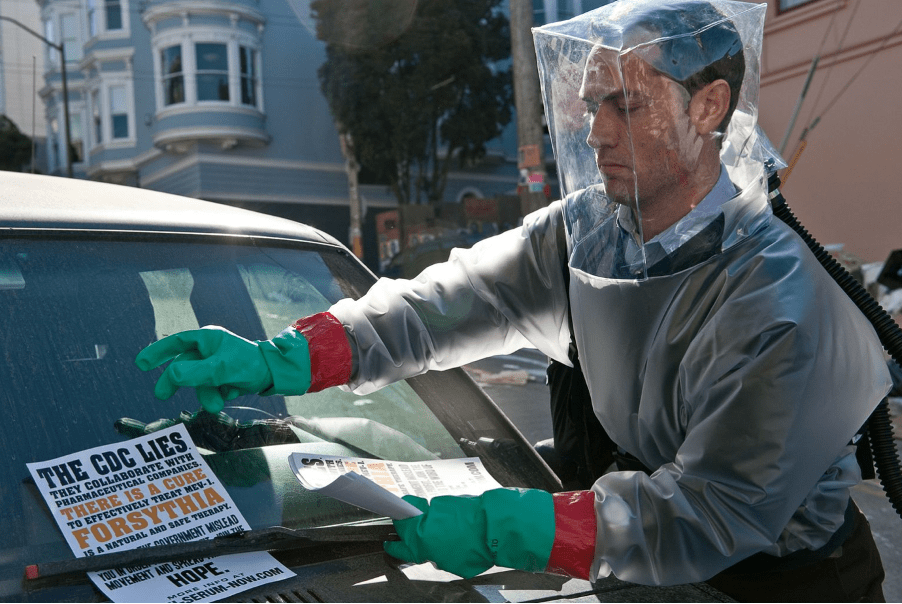
The Royal Commission of Inquiry’s Report on Covid-19 lessons learned should be expanded and applied across the set of global catastrophic risks that threaten NZ.

Summary/TLDR

The recently published Covid-19 Royal Commission’s lessons should be applied beyond pandemic preparation to address all potential global catastrophic risks (GCRs).

Aotearoa New Zealand (NZ) needs comprehensive plans for scenarios worse than Covid-19, including those involving destruction rather than just disruption of critical systems.

Key priorities include:

  • Developing robust national risk assessment methodology that includes global catastrophes.
  • Building resilience against extended trade isolation.
  • Strengthening core health security measures including investment in public health and border control capabilities.
  • Creating threat-agnostic plans for protecting critical sectors (energy, transport, food, communications).

Anticipatory governance of GCRs requires:

  • Public engagement throughout the planning process.
  • Integration of ethical frameworks.
  • Cost-effectiveness analyses across prevention and mitigation options.
  • Explicit consideration of worst-case scenarios.

Action is needed now while global stability permits meaningful preparation, as future conditions may make building resilience more difficult.

Success requires maintaining public trust, government transparency, and strong coordination across all sectors of society.

Introduction

NZ’s Royal Commission of Inquiry into Covid-19 Lessons Learned published its Phase I Report in November 2024. The Report acknowledges the successes of NZ’s Covid-19 approach, but also the harms and associated lessons. The Commission makes 39 recommendations to help mitigate future pandemics, and other risks to NZ.

The Report covers the all-of-government NZ response to Covid-19, including ‘lockdowns’, border restrictions, the health system response, economy and social impact, vaccination and mandatory measures.

It is a shame that it took a catastrophe for a suite of sensible recommendations to emerge. However, we agree with the authors that action should extend beyond mere pandemic preparation.

In this blog, we look beyond naturally occurring pandemics and applying a global catastrophic risk (GCR) lens, we discuss what the Inquiry Report means in the wider context of national risks.

The Report’s Findings

The Inquiry Report makes eight ‘big picture’ observations about the Covid-19 pandemic, which it presents as follows (p.65):

The Report then follows these observations with six important lessons for the future, which they summarise in the following graphic (p.67):

Global Catastrophic Risks

The Report is explicit that, “many findings and lessons can be usefully applied to other threats [than pandemics].” We leave readers to look at the Inquiry’s Summary Document for full details and a comprehensive list of recommendations for pandemic preparedness. What we wish to highlight are the findings and gaps relevant to a sensible approach to GCRs more generally.

Other threats on the scale of Covid-19, or greater, include more extreme pandemics, perhaps resulting from bioweapon use, or spread of bioengineered pathogens. Also, major global risks such as nuclear war, extreme climate change, volcanic eruptions causing ‘volcanic winter’, global cyberattacks, asteroid and comet impacts, solar storms, and great power conflict. RAND Corporation has detailed most of these risks for the US Government in a 2024 Report. The same thinking underpinning the Inquiry Report on Covid-19 lessons learned, should be applied to these risks as well in coordinated fashion.

Assessing and preparing now for these civilisation-threatening risks is important, because civilisation appears to be entering a period of downturn and fragmentation, as exhibited in a series of concerning megatrends, and as is typical of civilisation cycles across time. This means, however, that the ability to prepare for and mitigate these risks might become more difficult in the medium-term future.

The Report is clear that some of NZ’s Covid-19 successes were down to mere luck, singling out for example the continuation of essential trade (p.49). The importance of locally led initiatives was also critical (p.50). Both resilience to trade disruption and appropriately resourcing communities are important global risk mitigation measures.

The Inquiry Report recommends that future approaches to major catastrophes should make explicit use of ethical frameworks. We completely agree. In fact, we took steps to starting a national conversation on values frameworks and extreme risks with our 2018 paper ‘Existential Risks: New Zealand needs a method to agree on a value framework’. GCR research has become more nuanced since then, but the need for a public conversation to inform national risk strategy remains.

Health Security

It is clear in the Report that public health expertise and infrastructure played a huge role in NZ’s Covid-19 success. While ‘lockdowns’, although often effective, were very expensive and caused harm to many people.

We support the Commission’s calls for investment in public health. We also advocate cost-effectiveness analyses across the many prevention and mitigation options for GCRs. We suspect that some initiatives, such as investing strongly in public health systems and workforce, will turn out to be some of the most cost-effective investments government can make, when the iterated costs of future pandemics are accounted for.

Our own retrospective analyses of Covid-19 outcome data (still in progress and preliminary) suggests that non-island countries experienced a death rate from Covid-19 inverse to the level of development of their core health security measures. Developing capabilities and capacities like those in the Global Health Security Index will be important during pandemics if NZ chooses not to strictly control its borders.

That said, another recent analysis we’ve performed suggests that the longer time islands spent with strict border measures, the fewer Covid-19 deaths they suffered, without any associated adverse economic impact.

We emphasise the difference in the determinants of Covid-19 outcomes between islands and other jurisdictions and caution anyone making comparisons between island and non-island countries.

It is possible that some future pandemics are far worse than Covid-19. See this report by Madhav et al for an indication of how frequently more severe pandemics will strike. NZ’s preparation needs to account for the possibility of a long period of isolation as an island refuge. The cost-effectiveness analyses we advocate above need to account for these likelihoods and which impacts of severe pandemics that we could avert.

Critically, future pandemic plans need to thoroughly consider border closure thresholds, and decision rules for similar, less strict, and more strict border measures depending on the severity and characteristics of a pandemic.

Health security and border measures are important, but we also know that people’s trust in each other, and trust in government, as well as less government corruption, are all strongly associated with pandemic success. These national characteristics must be maintained and strengthened.

Anticipatory Governance

The Inquiry Report strongly recommends more and better coordinated anticipatory governance of pandemic threats. It also highlights the lack of mechanisms to anticipate and evolve response plans. Particularly problematic was a kind of all-eggs-in-one-basket assumption that vaccines would end the pandemic, without a Plan B for emerging from ‘lockdowns’ and other measures.

We agree, and underline that anticipatory governance of pandemics can’t really be separated from governance of all GCRs, given many of the common downstream impacts that GCRs would have on an island nation like NZ.

Planning for pandemics, and especially a pandemic with the characteristics of Covid-19 was undercooked in NZ. If this is true of possibly the largest threat in expectation that the country was known to face, then it is likely to be truer for other GCRs. We note that NZ has only just (Nov 2024) released its first ever plan for a space weather catastrophe. The country needs plans for other GCRs, and threat agnostic plans that mitigate harm to critical sectors such as energy, transport, food supply, and communications. We have outlined this case, and a suite of resilience options in our 2023 report, ‘Aotearoa NZ, Global Catastrophe, and Resilience Options: Overcoming Vulnerability to Nuclear War and other Extreme Risks.’

The Commission’s Report emphasises the importance of all of government readiness for a pandemic, along with the need for central oversight of integrated pandemic preparation and an effective national risk management system. We agree. Such as system needs to develop an improved national risk assessment methodology and include GCRs in their assessment (perhaps referring to the RAND Report in the US).

NZ also needs legislation underpinning and mandating these assessment and planning functions, not just legislation that enables responses. The Inquiry Report advocates a publicly facing National Risk Register, but we’d extend this call. The whole national risk assessment process needs public involvement throughout its development and analysis cycles. The use of citizen assemblies could simultaneously inform and identify concerns and could be a forum for putting options and trade-offs to the public.

We have previously described similar processes in our papers on ‘Assumptions, uncertainty, and catastrophic/existential risk assessments’ and ‘Anticipatory governance for preventing and mitigating catastrophic and existential risks’. Our 2023 Main Report includes a chapter detailing what such anticipatory governance of GCRs generally might look like in the NZ context.

The implementation of a government Chief Risk Officer is another path that could be considered. Chief Risk Officers and the ‘three lines of defence’ approach are common and effective in the private sector (including the airline industry that Prime Minister Luxon comes from). The three lines include frontline operational ownership of risk, risk oversight by a Chief Risk Officer, and independent oversight of the whole process.

Strategic Resilience

The Inquiry Report rightly underscores the importance of resilient and adaptive health, justice, education, social and economic systems during a pandemic.

As indicated above, many GCRs have common (and different from Covid-19) implications for distribution of harm across sectors. Furthermore, sectors are densely interconnected and dependent on key processes such as trade, transport, energy, communications, and food supply.

Any initiatives aimed at improving resilience to future pandemics should be integrated with a wider ranging risk assessment and a set of strategies to build resilience and redundancy across at least these key sectors. Particularly concerning for NZ is trade isolation.

Destruction not just Disruption

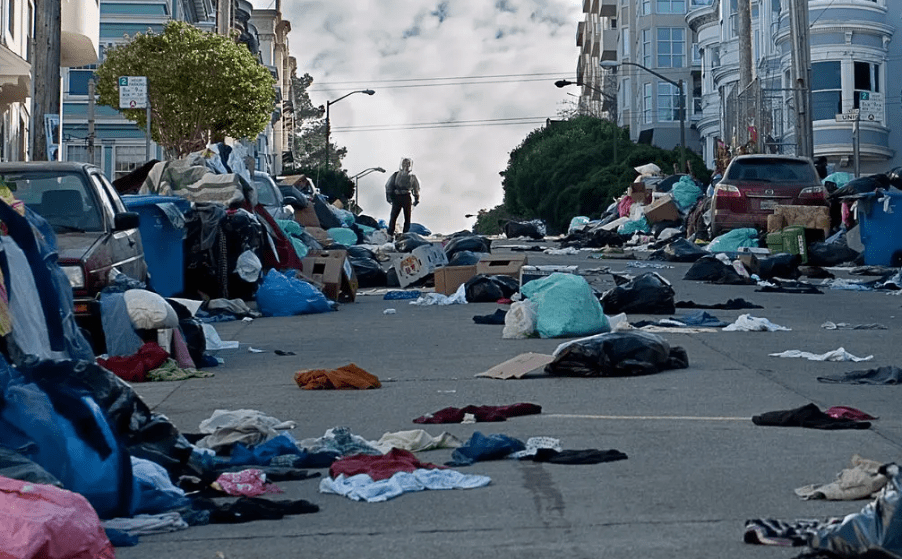
Although trade was able to continue during Covid-19, this cannot be guaranteed in the case of other GCRs such as nuclear war, extreme solar storm, and so on. So, we need plans for scenarios where there is destruction, not merely disruption of global trade infrastructure.

We cannot be caught preparing only for the last battle, not the next. NZ needs to develop its ability to withstand an extended period of trade isolation and develop the infrastructure and capability to trade independently with Australia, coordinating and cooperating on critical needs.

Development of such resilience infrastructure, providing a Plan B, no matter what the critical issue, be it catastrophic shipping collapse, electrical grid failure, food production collapse, communications blackout, liquid fuel shortage, requires a trade-off between efficiency and resilience.

It is this kind of protection, from large scale unpredictable harm, that governments are most suited to ensuring. The risks, resilience options, and trade-offs need to be explicitly put to the public and debated. This requires a sophisticated and detailed national risk assessment, detailing the kind of capitals (human, physical, natural, and financial) that might provide affordances and options in the face of future catastrophes.

Action for National Resilience is Needed Now

We reiterate what we stated above, the world appears to be entering a period of geopolitical, climate, and economic instability, which as it progresses will likely undermine the ability of nations to develop resilience. We should not delay investment in assessing and mitigating GCRs. The prudent move is to buy our ‘insurance’ now, before any crisis strikes. Now is not the time for cuts and austerity on critical science and protections.

The Inquiry Report states that we need to be able to deliver ‘business-as-usual’ activity (p.78) during a pandemic of extended duration. We contest that future catastrophes could be very much worse, and we need plans that focus on how to deliver basic needs such as food, energy, and minimal communications during extreme scenarios. ‘Business-as-usual’ could be a dream.

The Report evaluated, and found problematic, some of the mandatory measures during Covid-19. Future scenarios could require other kinds of far-reaching mandatory measures, such as fuel or food rationing. These considerations need to be surfaced ahead of time, and debated, with resilience options sought, so they don’t come as a surprise should other GCRs strike.

NZ will need the capacity and capability to deal with future global catastrophes, and the experience with Covid-19 showed that although we managed to muddle through with some success, this cannot be assumed for other risks, at other scales, and in future contexts.

Conclusion

The Royal Commission’s Inquiry into Covid-19 provides valuable insights not just for future pandemic preparation, but for NZ’s approach to global catastrophic risks more broadly. While NZ managed the Covid-19 pandemic relatively well, we cannot rely on luck or assume similar approaches will work for different types of catastrophes.

The time to act is now, while we still have the capacity and stability to make meaningful preparations. This means developing robust risk assessment frameworks, building redundancy into critical systems, and strengthening our ability to operate independently during extended trade disruptions. Most importantly, we need to move beyond planning for mere disruption to preparing for potential destruction of key global infrastructure and systems.

As we face an increasingly unstable global environment, NZ must take a comprehensive, forward-thinking approach to catastrophic risk management – one that ensures our resilience against the full spectrum of potential global catastrophes, not just pandemics.

Global Catastrophe Assessment: What RAND’s Landmark Report Tells Us About Civilisation’s Biggest Threats

Matt Boyd & Nick Wilson

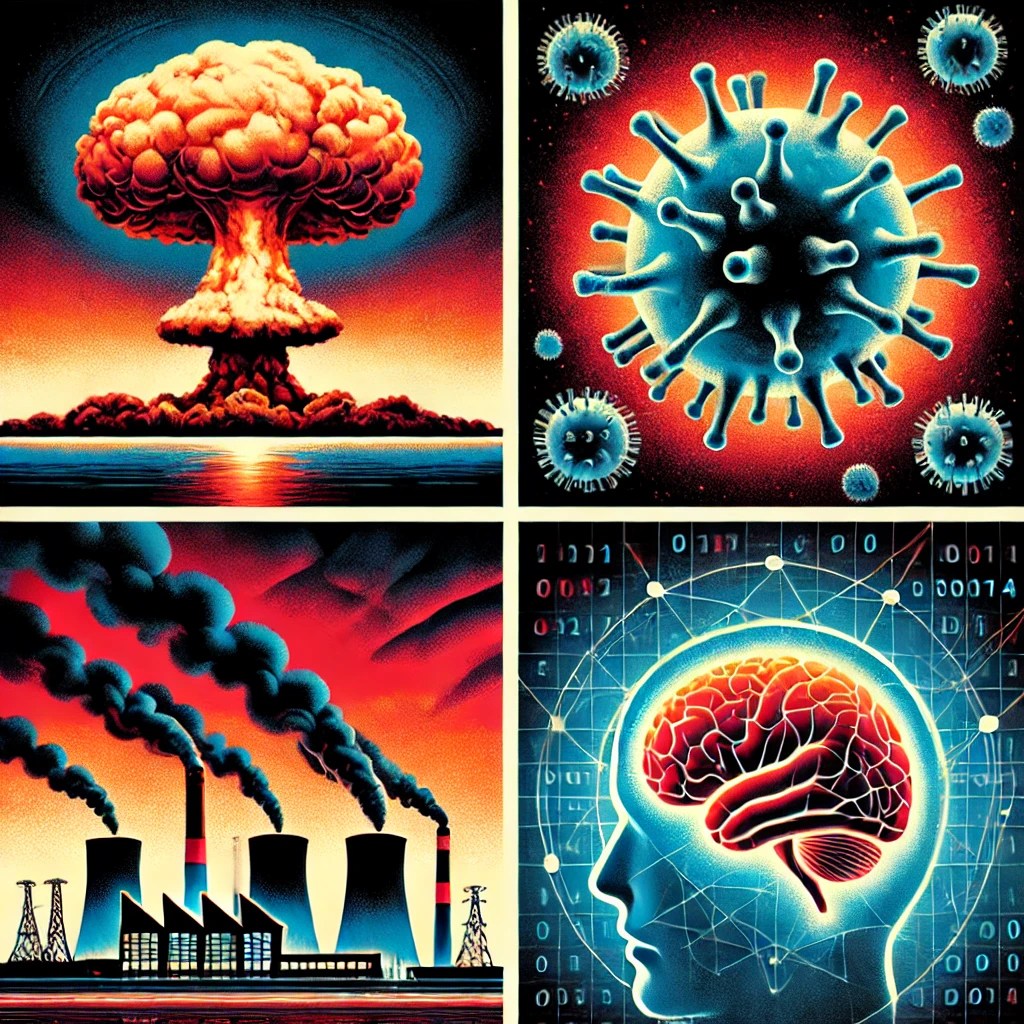
Image credit: ChatGPT

TLDR/Summary

  • The US Global Catastrophic Risk Management Act (2022) mandated assessment of six major threats that could significantly harm human civilisation: pandemics, climate change, nuclear war, asteroid/comet impacts, supervolcano eruptions, and artificial intelligence (AI).
  • RAND has produced a report representing the first comprehensive US government-mandated assessment of these risks.
  • Key findings reveal that while asteroid impacts and supervolcanoes are better understood scientifically, the most pressing concerns come from human-influenced risks.
  • The report identifies the threats with increasing likelihood of occurrence as pandemics, climate change, nuclear war, and AI, with pandemic likelihood projected to double or quadruple by 2100.
  • Importantly, these risks are interconnected and can amplify each other – for instance, AI could exacerbate nuclear or pandemic risks.
  • The report’s significance extends beyond mere assessment: it provides a foundation for the development of concrete central government response strategies and testing these plans through exercises, as mandated by the Act.
  • This practical approach, combined with calls for international cooperation and expanded research, marks a crucial shift from theoretical discussion to actionable policy on catastrophic risks.
  • While the report has some inconsistencies, its existence signals growing recognition that global catastrophic risks require coordinated global action.
  • As these threats continue to evolve and interact, the findings provide a foundation for international collaboration on risk management – making this work relevant not just for the US, but for all nations concerned with humanity’s future resilience.

The US Global Catastrophic Risk Management Act

Enabled by the US Global Catastrophic Risk Management Act (2022) (US GCRMA), the Secretary of Homeland Security and the administrator of the Federal Emergency Management Agency directed RAND to produce a report on six threats and hazards considered global catastrophic risks (GCRs). The report assesses pandemics, climate change, nuclear war, asteroid/comet impacts, supervolcano eruptions, and AI.

The Act defines GCRs as ‘events or incidents consequential enough to significantly harm or set back human civilisation at the global scale’.

The Act also requires that subsequent work ensures each Federal Interagency Operational Plan be supplemented with a strategy to ensure the health, safety, and general welfare of the civilian population affected by catastrophic incidents, as well as ensuring that the strategies developed are validated through exercises.

RAND’s assessment of GCRs

RAND’s Global Catastrophic Risk Assessment analyses both natural hazards and human-created inventions and actions that could cause global catastrophe.

The report foreshadows its focus on processes and consequences (rather than a probabilistic risk assessment). Early chapters note the value of identifying causal chains to catastrophe and where these are more and less understood.

Each risk is described in terms of the likelihood of potential consequences across the categories of death, ecosystem instability, societal instability, and reduced human capabilities.

Supervolcanoes

The RAND Corporation’s report highlights the severe threat posed by supervolcanoes, which erupt approximately every 15,000 years. These events produce violent eruptions causing extensive damage through pyroclastic flows, ash clouds, and climate impacts that can span regional to global scales. The report emphasises that sulphur-containing gases entering the stratosphere could alter Earth’s climate for years, potentially threatening agriculture and billions of lives. While acknowledging these risks, RAND suggests the long-term atmospheric and climatic effects remain uncertain due to limited peer-reviewed evidence.

However, this assessment appears to underestimate the volcanic threat. While RAND focuses on supervolcanoes (Volcanic Explosivity Index [VEI] of 8+), smaller but still massive VEI 7+ eruptions, like Tambora in 1815, occur far more frequently—approximately every 625 years (see our study of the impact of Tambora). Even moderate eruptions (VEI 3-6) near major trade routes could trigger global catastrophes, if occurring at critical communication and trade hubs as documented in Nature.

This blog’s first author (MB) consulted with volcanology experts at Oxford and Cambridge Universities who revealed more extensive peer-reviewed evidence than RAND presents, particularly regarding climate and food supply impacts. The report’s projection of 1-2°C global temperature decreases over 1-2 years underplays literature showing 2-4°C drops lasting 10-20 years. RAND also appears inconsistent in emphasising massive potential casualties while downplaying climate effects.

Despite these limitations, the core message stands: even moderate volcanic eruptions could severely disrupt global society, with larger events threatening food security worldwide.

Asteroid/comet impact

Large asteroids are known as ‘world killers’ and the effects of an asteroid or comet just 300m across hitting the Earth would be felt worldwide. Impacts leading to country-sized devastation occur approximately every 100,000 years, and impactors large enough to cause global devastation strike the Earth every 10 million years.

RAND reports that work by the global planetary defence community has substantially increased our knowledge of asteroid risks, including efforts to detect existing asteroids (such as NASAs Near Earth Object Programme and Planetary Defense Coordination Office). The successful NASA DART mission tested and proved one method for deflecting objects in space.

Thankfully the infrequency of large impacts coupled with our emerging understanding of how to mitigate the risk, makes the risk of global catastrophe posed by asteroid or comet strikes very low, indeed probably the lowest of the risks identified in the RAND report.

Severe pandemics

RAND’s analysis warns that severe pandemics can inflict massive casualties and social disruption in remarkably short periods. The report highlights how human activities are amplifying pandemic risks, projecting a two to four-fold increase through 2100. While natural pandemics are becoming more frequent, the report also acknowledges the less quantifiable risks of laboratory accidents and engineered pathogens—noting historical incidents of accidental exposure and mishandled pathogens during biological research.

The report emphasises that technological advancement and improved pandemic preparedness could both reduce outbreak likelihood and minimise their impact.

However, newer research paints an even clearer picture of future risks. A 2023 study from the Center for Global Development projected Covid-19-scale pandemics every 33-50 years, with catastrophic events killing 80 million people expected every 120 years.

Preliminary findings from our own work on pandemic mitigation indicates that we largely know how to manage pandemics, but the appropriate responses vary by context. Increasing the capabilities and capacities measured by the Global Health Security Index appears to correlate with improved pandemic outcomes (in terms of excess mortality during the Covid-19 pandemic) for countries that are not islands. For island jurisdictions, tight border management appears effective, to buy time until a vaccine is available or other protections put in place.

It will be worth watching what advice emerges from the US with respect to global pandemic catastrophe, as each jurisdiction will probably need tailored advice.

Nuclear war

RAND finds that nuclear war could kill hundreds of millions of people directly and potentially billions of people indirectly through the effects of radiation, and the climate impacts of nuclear winter and famine. The indirect effects of nuclear war are less predictable than the direct impact of detonations and experts disagree on some key assumptions.

Nuclear war could wreak havoc with ecosystems, destroy government infrastructure, economies, and the function of national governments. Damages could total hundreds of trillions of dollars. Our own estimation of the impact on the small non-combatant nation of New Zealand exceeded NZ$1 trillion.

Depending as it does on human decision makers, the true probability of nuclear war is not knowable.

Regardless, RAND notes that deeply uncertain processes can have significant policy implications. The report evaluated the quality of evidence supporting estimations of the scale and severity of nuclear war impacts as below that of asteroids, pandemics, and supervolcanoes. Further research is urgently needed.

It is perhaps timely then that the United Nations (UN) delegations of Ireland and New Zealand recently introduced a resolution on the scientific study of the impacts of nuclear war. The UN First Committee on Disarmament approved the resolution on 1 Nov 2024, by a vote of 144 to 3, with 30 abstentions. If passed in December at the General Assembly, then the resolution mandates a 21-member international scientific panel to evaluate the immediate and downstream effects of nuclear war. This will be the first time the UN has done so since the 1980s.

Rapid and severe climate change

RAND states that human-induced climate change has the potential to disrupt the natural environment and ecosystems in ways that threaten the stability of society and human health and welfare. The effects of climate change will likely lead to death, disruption, and degradation of ecosystem stability, as well as slowing economic growth, and reduction of human capabilities.

The report cites UN Environment Programme probabilities across a range of global mean temperature thresholds, finding that 2-3°C rise by 2100 is most likely. However, a 1% chance of >4°C would bring catastrophic consequences.

The RAND analysis considers weak economic growth of <1% per annum for the remainder of the 21st century, a large social cost of climate change, and negative effects on poverty, consumption, and quality of life. GDP per capita could be lower than it is today, with effects worse in vulnerable countries and risks of state fragility.

Decades of scientific study mean that RAND has comparatively high confidence in their assessment of the risk of global catastrophe due to human-induced climate change.

Artificial intelligence

The RAND report acknowledges that emerging AI technologies could amplify existing risks from nuclear war, pandemics and climate change. Also, that AI systems have the potential to destabilise social, governance, critical infrastructure and economic systems. Malicious actors could employ AI, or AI systems underpinning critical systems could fail.

However, the likelihood of global catastrophe mediated by AI is highly uncertain and little empirical evidence exists for assessing either likelihood or consequences. As such the risk of AI is rated the most uncertain among the hazards examined in the report.

AI has no inherent ‘kinetic or physical effect’ and as such an AI catastrophe will manifest via some other catastrophe, affecting social, governance, economic, environment, and critical infrastructure systems, perhaps disempowering humans in decision-making.

Overall risk assessment

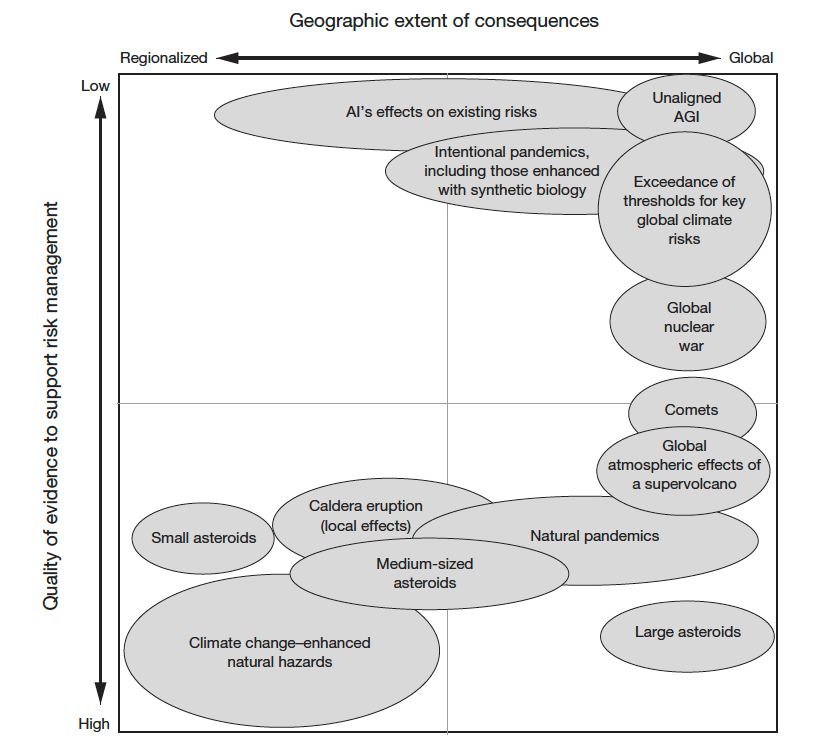
RAND presents their overall risk assessment in terms of the geographic extent of the global catastrophes assessed, and the quality of evidence that can support risk management, see the Figure below.

Source: RAND 2024

From the Figure we see that large asteroids, natural pandemics, and supervolcano eruptions have the potential to adversely impact the entire globe, and therefore every human on Earth. Quality evidence exists to guide management of these risks, but global cooperation is needed.

Global nuclear war, extreme climate change, and AI also have the potential to cause global catastrophe, but more evidence is needed to understand how to best mitigate these risks. There is also inherent uncertainty due to lack of any precedent.

RAND assesses that the risks associated with AI, climate change, nuclear war, and pandemics are increasing.

Additionally, the risks are interconnected, and all are influenced by the rate of technological change, the maturity of global governance and coordination, the failure to advance human development, and interactions among these hazards.

The report states that we can take technical and logistical action to mitigate risks where good evidence exists to guide action.

We can improve governance of risks where human behaviour amplifies the risk.

We can learn about risks for which there is yet insufficient evidence to recommend action.

RAND notes the need for enhanced institutions at all levels of governance (including internationally) able to implement these responses and risk management approaches.

Additionally, the report recommends a portfolio approach across these risks, collective action at all levels, the need to address deep uncertainty with scenarios and stress tests of the risk management portfolio, and working across diverse values, objectives and expectations.

Report recommendations

  • Incorporate comprehensive risk assessments into management of global catastrophic and existential risks
  • Develop a coordinated and expanded central government funded research agenda to reduce uncertainty about global catastrophic and existential risks and to improve the capability to manage such risks (analogous to a recommendation by NZ’s former Productivity Commission)
  • Develop plans and strategies when global catastrophic and existential risk assessments are supported with adequate evidence.
  • Expand international dialogue and collaboration that addresses global catastrophic and existential risks
  • Adapt planning and strategy development to address irresolvable uncertainties about global catastrophic and existential risks.

Commentary

The RAND report is to be lauded. Although it has its weaknesses and inconsistencies. For example, having rejected the primacy of probabilities in assessing many of these global catastrophic risks, detailed probabilities are presented throughout some of the chapters. Having questioned long-term utilitarian arguments for action to prevent catastrophic and existential risks in early chapters, the report then employs them in the pandemic chapter (p.72). For several hazards the risk of severe climate impacts and the failure of global agriculture is noted (eg, nuclear war/winter, supervolcanoes, asteroid impact), yet resilience measures such as ‘stockpile food and medicine’ form the basis of the sketch of mitigation measures, rather than gesturing to a diverse and resilient global food supply and food system.

It also appears some offers by leading experts to contribute peer review of the report were not taken up. This runs against our previous arguments that national risk assessments must engage a wide body of experts and the public iteratively. Such review is critical when chapters are being written by two, or even just one contributor.

However, this RAND report is just the first step mandated by the US GCRMA. When one of us (MB) wrote about the Act back in Feb 2023, it was noted that the Act requires the assessment of these risks (the current RAND report), but then subsequently:

  • A report on the adequacy of continuity of operations and continuity of government plans based on the assessed global catastrophic and existential risk.
  • An Annex in each Federal Interagency Operational Plan containing a strategy to ensure the health, safety, and general welfare of the civilian population affected by catastrophic incidents.
  • An exercise as part of the national exercise program, to test and enhance the operationalization of the strategy.

We must now await these developments in the US. But given the clear need for global coordination on these risks, other countries (including NZ) should use the RAND report to inform their own ‘interagency operational plans’ to ensure health, safety, and general welfare in the event of any, or any combination or, these six hazards, along with other potentially catastrophic scenarios such as massive solar storms or cyber-attacks.

Ongoing technological development should prioritise technologies that tend to reduce global catastrophic risk, rather than those that amplify it.

Coordinated governance of these risks should be developed in the form of agreements, treaties, collaborative knowledge seeking exercises, and investment. (See our recent arguments for such pandemic cooperation between Australia and NZ).

This action needs to start now, because there is a growing risk that these potential catastrophic processes will undermine our ability to mitigate and respond to them.

The UN has started to take global catastrophic risks seriously. Mention of these issues at the beginning of the 2024 Pact for the Future, also the abovementioned Ireland/New Zealand sponsored UN resolution are to be commended. But other risks need more work. A global pandemic treaty met serious hurdles of national and regional self-interest, and there is no collaborative global body directed against the risk of global catastrophe due to volcanoes. The world needs to lift its game, and hopefully this RAND report is a timely reminder that nations need to make wise choices now, that ensure affordances when they need to act later in the face of potential catastrophe.

The Critical Minerals That Matter: Aotearoa/NZ’s Basic Needs in a Global Catastrophe

Matt Boyd, Nick Wilson

ChatGPT imagines NZ mineral stockpiles

TLDR/Summary

  • The NZ Ministry of Business, Innovation and Employment released a Draft Critical Minerals List, for public consultation (now closed).
  • The list is based on a report by Wood MacKenzie which identified a short list of critical minerals.
  • We find that the list could pay more attention to the minerals essential to NZ in a global catastrophe scenario.
  • Therefore, we made a submission on the draft list that takes this global catastrophic risk management perspective.
  • We strongly agree that the following minerals already included should remain on the list: Potassium, Phosphate, Boron, Cobalt, Copper, Magnesium, and Selenium
  • Given changing needs following a global catastrophe, the list could additionally include Gold, Silver, Iron, Calcium (Limestone), Thermal Coal, Salt (sodium chloride), Iodine, and Geological Hydrogen (and perhaps other minerals).
  • The global catastrophic risk lens should be applied across all strategic analyses the government undertakes.

Two Tales of the Apocalypse

In the book The Knowledge Lewis Dartnell speculates on how someone might rebuild civilisation from scratch after an apocalypse. The essential minerals he mentions, in rough order of priority, include those needed for agriculture (potassium, nitrogen, and phosphorus for fertiliser), food preservation (salt), thermal energy (coal), lime/calcium carbonate (multipurpose for agriculture, hygiene, safe drinking water, smelting metal, making glass, and construction materials), the pyrite rocks (to make sulphuric acid for chemical production processes), clay and lime mortars plus sand and gravel for cement, and iron for steel.

In The End of the World is Just the Beginning Peter Zeihan examines global demographic trends and geopolitical strife, and warns of future severe disruptions to global trade, and the potential for industrial collapse in many regions. His analysis underscores the importance of access to iron ore, bauxite (aluminium), copper, cobalt, lithium, silver, gold, molybdenum, platinum, and the rare earth elements.

The overarching point of these two books is that industrial processes and the wellbeing and quality of life that depend on them, are in turn dependent on a critical set of key inputs. The critical minerals. Preserving what already exists is clearly easier than rebuilding an industrial society from scratch, so it is wise for societies to ensure continuing access to critical minerals.

Global Catastrophic Risks

Production, trade and supply of critical minerals is threatened by global catastrophic risks such as nuclear war, supervolcano eruptions, extreme pandemics, cyberattacks and solar storms. These all threaten global infrastructure and could precipitate the collapse of production or global trade (see for example our Hazard Profile on nuclear war and NZ).

A core problem for island nations is that many of them, such as Aotearoa New Zealand (NZ) are effectively the ‘last bus stop on the route’ and could suffer immense consequences in these contexts that accelerate the risk of societal collapse. Access to critical minerals is needed to secure basic needs such as clean water (eg, chlorine), food production (NPK fertilisers), and heating (eg, coal for thermal energy in case of electrical failures).

MBIE’s Draft Critical Minerals List

To its credit, the NZ Ministry of Business, Innovation and Employment (MBIE) recently released a Draft Critical Minerals List for public consultation. MBIE’s justification for creating a critical minerals list centres on ensuring economic stability, supporting technological advancement and clean energy transitions, strengthening international partnerships, and addressing potential supply chain vulnerabilities for minerals essential to NZ’s current and future needs.

The List is extracted from a report by Wood Mackenzie, which also draws on critical mineral lists of other countries. In preparing the report industry stakeholders were consulted and the process included: Definition of Critical Minerals within the NZ context, analysis of NZ mineral production, consumption and trade, data gap analysis, development of a Long List identifying minerals produced by and/or essential to NZ, and a supply risk assessment. The result is the list of minerals in Table 1:

Source: Wood MacKenzie (2024)

Not Business as Usual

We note that the Wood MacKenzie methodology appears to assume that a degree of global trade continues, as “Global Reserves” and “Global Supply” are key factors in the supply risk assessment. However, there are plausible scenarios where global trade is completely disrupted (see for example our Hazard Profile detailing the impact of a Northern Hemisphere nuclear war on NZ). In such cases even trade with Australia may take some time to re-establish at scale. We feel that the analysis does not yet adequately consider a range of global catastrophic risk scenarios.

The Wood MacKenzie Report defines critical minerals: “to be included in the draft list, a mineral must be:

  • Essential to NZ’s economy, national security, and technology needs, including renewable energy technologies and components to support our transition to a low emissions future and/or
  • In demand by NZ’s international partners, and
  • Susceptible to supply disruptions domestically and internationally.

Essential is defined as critical to maintaining the NZ’s economy today and into the future and not readily substitutable.”

This definition, and the “total mineral demand” calculation performed for the Wood MacKenzie Report, appears to omit minerals that, while not essential under business-as-usual, may attain particular significance in situations where global conditions are radically altered, such as following a global catastrophe that potentially lasts years or a decade or more (eg, nuclear winter).

We are most concerned about the class of risks that would cause the most harm to NZ (including a risk of permanent economic and social damage). To reiterate, these global catastrophic risks (GCRs) include: major volcanic eruptions at global pinch points, nuclear war (with or without nuclear winter or high-altitude electromagnetic pulse), severe pandemics (natural or engineered), major global food shock, global industry disabling solar storms, devastating global cyber-attack, catastrophe from misaligned artificial intelligence (AI), large asteroid/comet impact, etc.

Such risks have the greatest expected harm (when likelihood and impact are multiplied). We have written a detailed report about this kind of risk and how NZ might ensure resilience. Although individually such risks may have a low probability of occurring in any given year, collectively they are plausible, and some are even likely in the long term.

Critical Minerals for Basic Needs

Following a global catastrophe, it will be necessary to focus on ensuring that basic needs (water, food, shelter, energy, communications, transport) are able to be supplied and distributed.

In catastrophe circumstances minerals such as Potassium and Phosphate (which are not on our international partners’ Critical Mineral Lists) may be particularly important, as might Gold, Silver, Coal, Iron, Calcium/Lime. NZ’s critical minerals analysis needs to include a global catastrophic risk lens and contemplate the downstream context following the potential extreme catastrophes listed above.

The particulars of which minerals are “In demand by NZ’s international partners” should include analysis of scenarios where global trade has collapsed and trade operates on a restricted regional basis (eg, NZ, Australia, Indonesia), as this context may alter what is “in demand” regionally.

We made a submission to MBIE about the Draft Critical Minerals List. Our main point in making the submission was that decisions around critical minerals must be taken through a lens that includes global catastrophic risks where international trade is radically altered. There could be a completely new context, and therefore new priorities could emerge (ie, where global reserves and global supply are inaccessible).

This perspective should supplement considerations of mineral needs under business-as-usual for economy, trade, sustainability, and general security considerations.

Through the global catastrophe lens we strongly agreed with the following minerals already included on the Draft List: Potassium, Phosphate, Boron, Cobalt, Copper, Magnesium, and Selenium.

But we also recommended that the following be added to the list: Gold, Silver, Iron, Calcium (Limestone), Thermal Coal, Salt (sodium chloride), Iodine, and Geological Hydrogen.

Our reasoning was as follows:

  • Potassium and Phosphate: Critical for industrial agriculture and food security.
  • Boron, Cobalt, Copper, Magnesium, and Selenium: Essential for addressing soil deficiencies in NZ and for alloyed steel production.
  • Limestone/Calcium and Aggregate/Sand: Crucial for construction and road repairs, especially important due to NZ’s extreme dependence on road transport.
  • Iron (and Bauxite): Vital for tool-making and construction. Domestic production capability important in case of trade disruptions.
  • Thermal Coal: For heating, and potential energy source if hydroelectric generation is impaired due to climate disruptions (eg, nuclear winter or volcanic winter).
  • Salt (sodium chloride): Essential for food preservation without refrigeration and chlorine for water treatment.
  • Gold (and/or Silver): Potentially needed to base a new currency in case of economic collapse, or for purchasing critical imports from Australia and Indonesia.
  • Iodine: Important for preventing dietary deficiencies and producing disinfectants.
  • Minerals used as Catalysts for Biofuel Production: Critical for producing biofuels to run agricultural machinery, interisland ships, and other transport in post-disaster scenarios.
  • Geological Hydrogen Gas: Potential future fuel source in case of disruptions to liquid fuel imports

We are concerned that much risk mitigation activity in NZ addresses only smaller more common risks (eg, floods, earthquakes, 10% global fuel supply disruptions) and therefore leaves most of the expected future harm to New Zealanders unaddressed. In contrast we note that the US has a Global Catastrophic Risk Management Act (2022) and the first US report on how to supply ‘basic needs’ in such scenarios is imminent.

Interdependent Sectors

Finally, we note critical links between minerals, agriculture, transport, interisland shipping, liquid fuel and other industries. For example, agriculture depends on mineral inputs, which must be transported, perhaps between islands, using liquid fuel. These issues of resilience to global catastrophe cannot be addressed in isolation, and the global catastrophic risk lens should be applied across the spectrum of resilience initiatives, such as NZ’s National Fuel Security Study, solution scoping for the interisland ferry replacements, when considering coastal shipping, transport infrastructure decisions, crop choices and development and land use strategies.

Lost at Sea: Shipping in NZ through a Catastrophic Risk Lens

By Matt Boyd, Mike Hodgkinson, Nick Wilson

Listing to Port: Is this the marketplace for interisland ships NZ has been browsing? (Image credit: ChatGPT)

TLDR/Summary

  • NZ’s interisland and coastal shipping infrastructure is inadequate for global catastrophe scenarios that limit international shipping or liquid fuel supply to NZ.
  • The recent history of failures including ferries and coastal ships highlights the vulnerability of interisland connections to any loss of component supply or international expertise.
  • NZ heavily relies on road trucking (93%), which is fuel-inefficient and vulnerable to disrupted fuel supply or road damage.
  • Coastal shipping capacity is low, limiting transport options.
  • Key resilience options to protect against global catastrophic risks: Upgrade and diversify the interisland ferry fleet; Expand and modernise coastal shipping capabilities; Develop local biofuel production for shipping; Accelerate transport electrification; Improve rail infrastructure, including interisland rail capacity; Create redundancy in transport systems.
  • Benefits include: improved catastrophe resilience, reduced emissions, better preparedness for various disasters.

Introduction

Aotearoa New Zealand (NZ) is supposedly a seafaring nation, but in case of a global catastrophe our interisland and coastal shipping infrastructure is far from being up to scratch.

Global catastrophic risks such as nuclear war, supervolcano eruptions, extreme pandemics, cyberattacks and solar storms threaten global infrastructure and could precipitate the collapse of global trade (see for example our Hazard Profile on nuclear war and NZ). NZ is the ‘last bus stop on the route’ and could suffer immense consequences that accelerate the risk of societal collapse.

NZ’s transport infrastructure is extremely dependent on imported liquid fuel supplies, but also imported components for maintenance and repair. In the case of an extended period of trade isolation, the country may struggle to fuel and repair transport assets such as ships.

This is particularly concerning given NZ’s recent track record of shipping maintenance woes, poor liquid fuel security status, and NZ’s extreme dependence on road trucking for transport.

NZ needs to upgrade its shipping infrastructure and secure a minimum locally produced shipping fuel supply as a national public priority. This is to ensure food and essential commodities can be distributed around the country even in a severe global catastrophe.

For resilience, NZ would ideally use a balanced mix of transport options such as efficient locally controlled coastal shipping, electric rail, road trucking, and trans-Tasman shipping options that don’t depend on global shipping routes. However, at present NZ is 93% dependent on the least fuel-efficient option of road trucking (which can consume double the fuel per container moved than rail or shipping).

Road trucking in turn is dependent on functioning and resilient Cook Strait ferries. But these ferries have a track record of failures in recent times, and in a global catastrophe, it may not be possible to conduct repairs that depend on imported parts and international expertise.

To avoid isolating the North from South Island, the interisland ferry fleet needs to be diverse, modern, well-maintained, have high capacity and redundancy. It also needs a secure fuel supply that doesn’t depend completely on imported liquid fuels.

The Problem

The history of interisland ferry failures is worrying (see supporting links after this blog):

  • In 1999 the Aratere suffered power failures shortly after entering service.
  • In 2005, the Arahura experienced a major loss of propulsion power approaching Tory channel due to failure of a diesel generator.
  • In 2006, the Aratere developed a significant list due to shifting cargo in heavy weather, causing minor injuries.
  • In 2013, the Aratere was taken out of service after a fatigue fracture caused it to lose a propeller while crossing Cook Strait.
  • In 2021, the Kaiārahi experienced a major gear box failure during a Cook Strait crossing.
  • Throughout 2021 and 2022, there were sporadic cancellations across both Interislander and Bluebridge services due to various mechanical issues.
  • In 2023 the Kaiārahi and Connemara both faced “engineering issues” in February causing widespread cancellations.
  • In 2023, the Kaitaki lost all power due to a cooling system leak, drifting dangerously close to Wellington’s south coast, with Wellington hospital going on alert for potential mass casualties.
  • In 2023, the Kaitaki was out of service again with a gear box problem that required overseas experts to be flown in.
  • In 2024 the Aratere ran aground in the Marlborough Sounds after a steering failure.
  • In 2024 the Connemara lost power and started drifting in Cook Strait.
  • In 2024 the Strait Feronia lost power coming into Wellington Harbour.
  • There have also been multiple incidents of ferries colliding with wharves or other vessels.

These issues have resulted in frequent cancellations, delays, and stranded passengers, vehicles and freight. Plans to replace the aging ferries in the Interislander fleet with new hybrid-electric ferries failed to materialise and now the government has scrapped a planned upgrade to new vessels.

In response, KiwiRail announced increased ferry maintenance and scheduled longer periods in dry docks for serious maintenance work. Also, international experts were consulted to assess the ships’ conditions and provide recommendations. KiwiRail has considered alternative options, including extending the life of existing ferries, leasing or buying second-hand ferries, and exploring new ferry designs with reduced landside requirements. Though none of these is a comprehensive and long-term resilience solution.

KiwiRail did report 97% ship availability and 85% on-time performance in February 2024, but as noted above, a single mechanical failure, or inability to access fuel could be disastrous for NZ’s connectedness in a global catastrophe. Redundancy and the ability to troubleshoot locally are critical.

Importantly, the problems are not limited to interisland shipping. It is recognised that NZ has low coastal shipping capacity and efforts to improve coastal shipping services have also met with failures. For example, a ‘she’ll be right’ NZ attitude to fitting out a beleaguered coastal barge ended in disaster this year as it ran aground near Westport immediately after being put to service.

We note Waka Kotahi’s Freight and Supply Chain Strategy. There is a 3-year plan to analyse port connections, and a plan across 30 years to strengthen parts of the freight and supply chain system that are critical to national interest, but global catastrophe could strike at any moment. We applaud the goal of more freight being transported by rail and coastal shipping rather than road, but there is yet little evidence of sweeping improvements in resilience.

Future NZ Shipping? (Image credit: Midjourney)

Catastrophe Resilient Solutions

In 2023 we produced a report on increasing NZ’s resilience to global catastrophe. In the chapter on transport, we provided resilience options including the need to:

  • Accelerate electrification, including electric road and rail transport, short haul coastal shipping, and interisland air travel.
  • Invest in research and development of the optimal methods for producing transport fuel locally in NZ, for example biofuel feedstocks such as canola, and developing food oil factories that can convert to biodiesel production.
  • Explore how coastal shipping might employ wind assist technology to conserve fuel, be capable of running on biofuels, and quantify the minimum liquid fuel needs for shipping to move the most essential goods (eg, food) around NZ.
  • Develop principles of land transport and shipping fuel rationing based on prioritisation of population basic needs in a global catastrophe.
  • Collaborate with Australia on global catastrophe resilience to ensure that trans-Tasman trade can continue using just assets controlled by NZ and Australia.

Interisland Ferry Resilience and Redundancy

NZ needs reliable and resilient interisland shipping options, that are flexible enough to move people, freight, trucks and rail assets, and modern and reliable enough that the risk of irreparable breakdown is extremely low. There needs to be capacity and redundancy in the system.

There are concerns that any Cook Strait ferry solution will not be rail capable. Ideally interisland ferry solutions would accommodate future emphasis on electric rail. If the North and South islands are disconnected, NZ risks a less resilient rail system (as rail assets or repair workshops may be stranded on one island or the other).

Rail, especially electric rail, may be particularly important in a global catastrophe if fuel and transport options are scarce, as it allows intensive near-urban agriculture to follow a railway, as we have argued in our research paper on near urban agriculture for resilience.

Coastal Shipping Assets and Infrastructure

At present it is more cost-effective to ship Australian wheat to processing in Auckland than bring wheat from the South Island, but we cannot assume that trans-Tasman transport will be operational following a global catastrophe. Reliable and sufficient NZ bulk, liquid, and container coastal shipping assets are strategically important.

NZ needs an expanded, capable, flexible and reliable coastal shipping fleet, and associated port infrastructure, perhaps including roll-on, roll-off capability for trucks and rail at a range of ports. This would provide transport resilience, reduced emissions and fuel efficiencies. Yet there are doubts about NZ’s coastal shipping capability and capacity and a lot of ‘coastal’ transport in NZ depends on vessels plying global routes.

Liquid Fuel Supply for Shipping

Shipping is more fuel efficient than road transport in most cases and can be markedly so when a full load of containers is transported. However, shipping still requires a significant amount of liquid fuel.

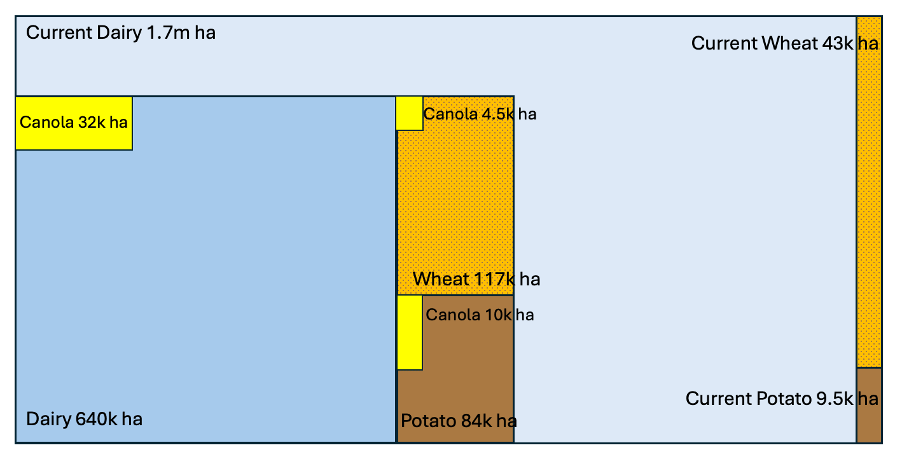
We’ve previously calculated that as little as 5–15 million litres of locally produced biofuel could power agricultural equipment sufficient to produce food for the entire NZ population (if efficient crops such as wheat are grown near processing and consumption sites – with many more litres needed for producing food such as dairy products).

In contrast the annual fuel consumption of a single ship to distribute food is in the order of 10 million litres. Such a ship (eg, like the MV Moana Chief) can ply coastal routes and is trans-Tasman capable. Some ships can run on 100% biodiesel (B100), but regulatory changes and certifications would be needed to permit this. We estimate that local production would require at least 8,000 hectares of canola crop or some other biofuel feedstock for every 10 million litres of biodiesel. Such considerations need to be part of a comprehensive mixed transport resilience plan and essential quantities compiled in an improved National Fuel Plan.

These liquid fuel volumes need to be put in the context of the amount of biodiesel that previously operating refineries could produce. One refinery in NZ is capable of producing in the order of 10–20 million litres of biodiesel per annum, however it has now switched to producing food oil.

We commend a new agreement for a biofuel refinery at Marsden Point, but from a diversification and resilience perspective NZ needs to produce a wide range of fuels (for aviation, shipping, agricultural machinery etc) and the problem of interisland transportation of this fuel remains. Biofuel refineries would ideally be in both North and South islands, at least until more widespread electrification of agriculture and road transport occurs.  

One concrete possibility is to begin by pursuing the potentially low hanging fruit of marine fuel. Canola feedstock in Canterbury with the potential for wheat rotation crops (to expand production), could supply the Rolleston PureOil NZ refinery which could produce marine fuel with linkage to Lyttleton for a single NZ marine bunker. Multiple refining and bunker nodes would be ideal, and additional opportunities should be sought.

Infrastructure Commission Proposals

The NZ Infrastructure Commission is calling for submissions to its Infrastructure Priorities Programme (first round due 20 December 2024). Submissions can include ‘Stage 1’ proposals that detail major problems (of national significance) that NZ faces. We contest that resilient coastal and interisland shipping is one such priority issue and we encourage people to submit proposals for infrastructure that will enhance the resilience of NZ’s interisland and coastal shipping in the face of potential global catastrophe. Solutions might include interisland or coastal vessels, landside infrastructure, trans-Tasman trade options, and solutions for a resilient shipping fuel supply.

The country cannot assume that help, expertise and components from overseas will be easily available when needed after a global catastrophe. Distribution of food, fuel, and medicines depends on a resilient local transport system. Indeed, all industrial systems are interdependent and without reliable shipping every sector would break down in a multi-island nation. There is potential for widespread societal harms in a catastrophe that accrue well beyond the accounting in shipping industry risk processes. The right resilience incentives are lacking and this means there may be a case for government ownership of some strategically critical shipping assets.

Finally, the suggestions above would likely help provide a range of immediate benefits to the country. These include reducing greenhouse gas emissions, increase transport security, and providing resilience to a wider class of natural hazards such as extreme weather or earthquakes.

Further recent media about NZ shipping problems and solutions

[1] https://www.rnz.co.nz/news/national/502312/timeline-the-troubled-cook-strait-ferries

[2] https://www.rnz.co.nz/news/national/528514/timeline-a-recent-history-of-cook-strait-ferry-woes

[3] https://www.1news.co.nz/2024/06/22/grounded-interislander-ferrys-25-years-of-troubled-history/

[4] https://nzhistory.govt.nz/culture/cook-strait-rail-ferries/strikes-and-strandings

[5] https://en.wikipedia.org/wiki/Interislander

[6] https://www.interislander.co.nz/explore/the-history-of-the-interislander-ferry

[7] https://www.thepost.co.nz/nz-news/350319712/troubled-waters-brief-history-interislander-issues

[8] https://www.treasury.govt.nz/sites/default/files/2024-05/project-irex-4914527.pdf

[9] https://www.rnz.co.nz/news/national/511300/more-frequent-checks-for-kiwirail-s-ageing-ferry-fleet

[10] https://www.munz.org.nz/2024/09/20/connemara-failure-highlights-urgent-need-to-address-ferry-fiasco/

[11] https://www.rnz.co.nz/news/national/528525/bluebridge-ferry-maritime-union-sounds-alarm-about-health-and-safety

NZ needs to audit shipping capabilities through a global catastrophe lens (Image credit: Midjourney)

Lessons from the Cambridge Conference on Catastrophic Risk 2024

Video: Dr Matt Boyd presents highlights of NZ’s vulnerability and resilience to nuclear war and other global catastrophes. You can download a PDF version of this presentation to access all links.

Blog Summary/TLDR

  • Diverse researchers, analysts, and officials gathered at the University of Cambridge’s Centre for the Study of Existential Risk (CSER) in September 2024 to discuss global catastrophic risks and potential solutions.
  • Key topics included: emerging risks, the systemic nature of risk, resilience options, comprehensive risk governance, and partnerships for change.
  • The conference highlighted the expanding and interdependent nature of global risks, the challenges in managing them, and the need for better international cooperation and coordination in risk assessment and governance.
  • Practical solutions included: inclusion of global risks in national risk assessments, new international agreements, national chief risk officers, and on-the-ground solutions to the local manifestations of catastrophe.
  • New Zealand needs to improve its preparedness for global catastrophe and consider measures such as ensuring local fuel supply, upgrading critical infrastructure, and developing a publicly facing National Risk Register that includes global catastrophic risks.
  • Click the YouTube video above to watch Dr Matt Boyd’s conference presentation.
  • For more on these issues, you can read the NZCat Main Report about NZ’s vulnerability and resilience to nuclear war or visit Islands for the Future of Humanity.

The CSER Conference

On the 17–18th Sept 2024 I joined a diverse set of researchers and analysts converging on the University of Cambridge’s Centre for the Study of Existential Risk (CSER) to contemplate risks that could result in the collapse of civilisation.

Alongside catastrophic risk researchers and analysts from the global North and South, attendees included diplomats, representatives from the UN, think tanks, governments such as Singapore, NATO advisors, and students.

Tongue-in-cheek dinner speaker Lance Gharavi professed the merits of the comical Centre for Applied Eschatology, however most in attendance had the goal of preventing global catastrophes such as nuclear war, extreme pandemics or technological disasters, and ensuring recovery should these catastrophes ever befall us.

Keynote speaker Mami Mizutori, a former Special Representative of the UN Secretary-General for Disaster Risk Reduction, talked about four needs in the face of potential global catastrophe:

  • Comprehensive risk governance
  • Partnerships for change
  • Better synergy among global agendas
  • Courage to tackle systemic risk

But Mizutori also warned that there is a difficult path ahead with multilateralism and binding agreements being difficult to achieve in 2024.

Peter Sogaard Jorgensen spoke about the evolution of the polycrisis we now face, and the structural drivers of risk that have landed the world amid a set of ‘anthropocene traps’. Understanding the evolution of these structural incentives is key to overcoming them.

The conference heard grass-roots solutions to major risks including flood resilience in Pakistan (from Sabuhi Essa), and the importance of indigenous knowledge and rights (Elena Kavanagh). We also heard about ‘derailment risks’ (Laurie Laybourn) where solutions to catastrophes such as climate change could become unattainable as our capability to solve them is undermined by the very catastrophe process itself.

Emerging risks discussed included biological and other converging technological threats (Margaret Kosal), the risk of space wars and satellite disruption (Joanna Rozpedowski), including the blurred lines between what is a military target vs civilian asset. 

The audience heard new approaches to risk analysis and mitigation such as ‘impact webs’ (Edward Sparkes) or ‘webs of prevention’ (Catherine Rhodes), as well as the value of a potential UN convention on existential risk (Manfred Kohler).

A session on resilience to global catastrophe highlighted solutions such as fuel security for agriculture in NZ (this author: Matt Boyd), resilient foods (Juan Garcia), and the need for government plans. One success reported by Monica Ulloa of the Observatorio de Riesgos Catastróficos Globales, was the government of Argentina including abrupt sunlight reducing scenarios (such as volcanic or nuclear winter) in government risk analysis. Argentina is the first country to do this.

I had informative and stimulating conversations ranging from the importance of government Chief Risk Officers to coordinate anticipatory risk governance, through to first-hand accounts about wealthy individuals looking to identify resilient locations to build secure refuges.

It’s impossible to give full details of the 50 speakers and dozens of poster presentations here, but the overall picture was one of expanding major global risks (due to rising complexity, interconnectedness and human impacts) some which may be beginning to elude our capacity to manage them, and an international system not up to the task of coordinated risk governance.

But solutions are possible, and takeaways included the urgent need for governments to add global catastrophic risks to risk assessment and risk management processes, and perhaps more critically, to cooperate and coordinate on cross-border risks.

We have recently seen the UN Member States adopt a Pact for the Future, which explicitly calls out global catastrophic and existential risks and addresses climate, nuclear, biological, and technological risks. These ambitious statements must now be backed through action of Member States individually and collectively. 

I also had the opportunity to take part in two of Lara Mani’s (CSER) global risk workshops.

The first was a creative workshop focused on practical creation and dissemination of risk information and key messages in succinct and accessible forms.

In the second, I played the role of UK Minister for Health in a scenario-based workshop contemplating firstly an Indonesian supervolcano eruption, the cascading consequences of which spread to affect the entire world, and secondly, a scenario dealing with the catastrophic collapse of the UK power grid.

These exercises in communication and understanding of catastrophic risk were very effective and governments should undertake such exercises regularly.

Not all risk communication should be dry research reports: Communication workshop facilitated by Lara Mani (CSER) – Author’s photo

Reflections

On reflection after the conference, I can commend the government of my own country (NZ) for some of its recent initiatives:

  • National Fuel Security Study – to investigate the options for ensuring liquid fuel supply, however this study needs to contemplate global catastrophic risks explicitly.
  • Draft Critical Minerals List – for public consultation to inform strategic development of essential mineral resources (see our submission that takes a global catastrophe perspective here).
  • Draft Resolution on Nuclear War Effects and Scientific Research, announced with Ireland, that proposes an up-to-date international study on the effects of nuclear war (ideally including second order cascading effects).
  • National Emergency Management Agency ‘CatPlan’ handbook for hazard agnostic catastrophe management – not released yet. It appears this handbook will discuss catastrophes ‘requiring international support’, however some scenarios need to assume such support is not forthcoming.
  • Given the last point, NZ needs to assess its capital stocks and ensure that the available human, natural, physical, and financial capitals are sufficient to provide resilience options in the radically altered context of a true global catastrophe.

As such, the NZ Government can still learn from global examples:

  • Argentina’s inclusion of abrupt sunlight reduction scenarios in national risk assessment (ie, nuclear, volcanic, or comet/asteroid winters).
  • The Singapore Government’s attendance at the Cambridge Conference on Catastrophic Risk as part of its ongoing foresight capabilities.
  • The United Kingdom and other countries’ publicly facing National Risk Registers.
  • The United States Global Catastrophic Risk Management Act, which mandated a report on these risks that is due imminently.
  • The many global catastrophe scenario exercises being undertaken around the world to understand the needed preparation and management for risks such as: extreme pandemics, nuclear war/winter, supervolcano, asteroid/comet impact, catastrophic electrical grid or communications failure, or catastrophic global food shortage.

NZ needs to deploy a systemic approach to vulnerability and resilience using a global catastrophic risk lens. Key vulnerabilities in NZ include single failure points that must be mitigated as a priority. This includes (among other initiatives):

  • Ensuring local supply and production of liquid fuels (eg, biofuels) for critical processes such as agriculture, should fuel imports cease.
  • Ensuring reliable and future-proofed Cook Strait ferries, which are currently so critical given NZ remains over-dependent on road truck freight for distribution of food and essential goods.
  • Upgrading coastal shipping and rail assets and associated infrastructure to facilitate trade, including with Australia, in the context of a dire global catastrophe.
  • Developing a Digital Communications Continuity Plan.

NZ could develop and leverage a publicly facing National Risk Register connected to a set of solution visions, combined with the Infrastructure Commission’s Infrastructure Priorities Programme to ensure the required resilience is developed. I encourage people to submit Stage 1 proposals to the Commission highlighting key national vulnerabilities.

We have prepared a range of materials the NZ Government and other organisations can use in this mission, and interested readers can visit:

NZ’s Fuel Security Study: An opportunity to ensure survival

Photo by Adolfo Félix on Unsplash

TLDR/Summary

  • NZ is vulnerable to interruptions in global fuel trade.
  • MBIE has commissioned a NZ Fuel Security Study.
  • This study is to be commended, but the contractor needs to include analyses through the lens of ‘Global Catastrophic Risks’.
  • Zero liquid fuel import scenarios are possible and must be contemplated. This is the appropriate ‘first principles’ starting point for analysis of fuel security.
  • Mitigation options need to provide for minimal fuel requirements across months or even years.
  • The Aotearoa NZ Catastrophe Resilience Project mapped these scenarios and problems in 2023 and provided a high-level framework for approaching these problems.

Purpose

New Zealand imports nearly all its engine fuels, except for small amounts of biofuels.

Therefore, the NZ Ministry for Business Innovation and Employment (MBIE) is:

Seeking specialist services to undertake a Fuel Security Study on fuel security requirements for New Zealand out to 2035. The findings from the Fuel Security Study will feed into the development of a Fuel Security Plan which will be a strategy document for building resilience in the medium to long term.

This blog outlines some potential global catastrophes and suggests that the contractor undertaking the fuel study should apply the lens of global catastrophic risks to address national fuel security in the worst potential scenarios.

Fuel security is essential to the economy, but also to national food security to ensure farm machinery works and food is transported to people.

Global Catastrophic Risks and Fuel Security

NZ’s geography provides potential for a degree of national self-sufficiency in energy and food production. However, economic drivers mean that NZ depends on trade for many essential goods and services, including liquid fuel.

This arrangement is efficient in normal times but may not provide sufficient resilience should trade networks degrade or collapse. The deteriorating world geopolitical situation in 2024, along with the ever-present risk of major catastrophes such as nuclear war, extreme pandemics, global food shocks, and industry disabling technological or cyber disasters, necessitate a measure of national resilience.

Major recent reports detail the risk of significant global disaster, including those by the Joint Research Centre of the European Commission, World Economic Forum, KPMG, and a 2023 superforecasting study of existential risks. Governments such as the US are now taking global catastrophe and critical infrastructure resilience very seriously.

Against this backdrop the coalition agreement between the National Party and NZ First mandated a study of NZ’s fuel security. Proposals for this analysis are now being sought by MBIE (due on 25 June 2024).

The government and MBIE should be commended for initiating this critical work.

MBIE’s RFP notes that:

A secure and resilient supply of engine fuels is critical to our economy. A significant and sustained supply disruption of engine fuels would impact industry and cause significant hardship to New Zealanders.

‘Critical to our economy’ possibly doesn’t capture the full extent of NZ’s dependence on liquid fuel imports.

A short interruption to liquid fuel supply could be mitigated by demand reduction and judicious distribution of onshore fuel stockholdings. But an extended collapse of fuel trade would put agricultural production and food distribution at risk.

Liquid fuel, at present, is ‘critical to our survival’.

The 2023 report by the NZCat research collective titled Aotearoa NZ, Global Catastrophe, and Resilience Options spelled out the dire impact of a zero-trade scenario for NZ. But also provided mitigation options.

Among wide-ranging multi-sector options, NZCat suggested that NZ needs to:

Reverse the trend to decreased energy self-sufficiency, and ensure adequate electrified transport/machinery and local liquid fuel production to supply essential needs in a global catastrophe.

Specific analyses identified the potential for a modest national production of biofuel that could be titrated to absolute minimum needs to support agricultural production of the most efficient crops to ensure food for New Zealanders. NZCat recommended that other sectors perform similar calculations of critical minima.

Additionally, the NZ Productivity Commission (before its disestablishment) included the following box in their 2024 report on Improving Economic Resilience (p.24)

NZ Productivity Commission 2024

The Productivity Commission highlights the centralised oversight of risk management in NZ and any Fuel Security Study needs to contemplate the full range of potential catastrophes, and feed results into central planning across interdependent sectors and agencies.

It is clear from the scenarios described above, that recent analyses of NZ’s fuel security have not gone far enough in considering the potential magnitude of fuel shocks.

Past studies MBIE commissioned from 2005 on tested only one external supply constraint – a uniform 10% cut in crude production for 6 months. And this was treated as resulting in simply a price effect. I welcome MBIE’s new study.

The 2024 NZ Fuel Security Study

MBIE’s RFP lays out the following objectives for the Fuel Security Study:

  • Identify and mitigate vulnerabilities in NZ’s fuel supply chain
  • Enable us to minimise the impact of fuel disruption events
  • Investigate how NZ could improve sovereign fuel resilience
  • Maintain available fuel at an affordable price

Furthermore, the project scope requires the consultants to:

  • Investigate the reopening of the Marsden Point oil refinery
  • Investigate the strategic importance of infrastructure at Marsden Point and the role it could play in underpinning NZ’s fuel resilience
  • Understand the risks, impacts and mitigation measures of an extended fuel supply shortage
  • Understand potential domestic disruptions to fuel distribution
  • Map fuel consumption trends and how they could impact fuel security

If I was undertaking this Fuel Security Study, as well as investigating the key factors MBIE has identified, I would ensure the following analyses are included:

  1. Contemplate scenarios where NZ suffers a complete loss of liquid fuel imports. This could arise because of massive destruction of refineries/ports/bunkers worldwide (eg, nuclear war), a total regional shipping blockade (eg, China-Taiwan conflict), catastrophic disruption to electrical systems (massive solar flare, cyber disaster), or any one of several other scenarios.
  2. Ideally, the cascading impacts of the scenarios in (1) could be modelled through country-level network node analysis of fuel production, import and export volumes, as has been done for global food trade (eg, Hedlund et al. 2022), to estimate the impact of various representative catastrophes on NZ’s fuel supply.
  3. Contemplate protracted (months/years) fuel supply disruptions and consider essential services that could be disrupted, starting from the most critical basic needs, ie, water supply, agricultural production/food distribution, and heating.
  4. Estimate the quantities of liquid fuel required by each critical sector (eg, Transport, Energy, Communications, Food/Agriculture, Emergency Services, Defence, etc) to sustain absolute bare-minimum functioning to supply survival needs across months/years. These volumes can then inform a quantified and updated National Fuel Plan.
  5. Investigate mitigation measures that include local production of liquid fuels. Until widespread electrification (which should be pursued) liquid fuel is critical to NZ’s survival. Local production options at the required scale are probably limited at present to:
    • Refining local crude oil (from Taranaki)
    • Biofuel production
  6. Suggest options for how to develop mitigation measures for fuel supply shocks, including the potential for:
    • Pilot programmes of incentivised biofuel production
    • R&D on electrification of critical industries
    • Alternative fuel production
    • Infrastructure decentralisation
    • Other innovative solutions
  7. Estimate in broad terms the cost-effectiveness of various interventions. The cost-effectiveness analysis should include:
    • A societal perspective (because costs and benefits are not limited to the fuel industries directly and this analysis would demonstrate the potential return on investment for public funding of fuel resilience).
    • The collective likelihood (across the lifetime of fuel supply infrastructure) and impact of rare but devastating global catastrophes, such as extreme pandemics, nuclear war, supervolcano eruptions, solar flares, AI powered cyber-attacks, Great Power war, etc (ie, analysis of costs should account for expected value of the largest disasters).

If I was undertaking the Fuel Security Study, I would consult the following resources, which help frame these issues at a high level, through the lens of potential global catastrophe, from a NZ perspective:

I would also ensure that the study is framed such that it can inform NZ’s list of Nationally Significant Risks. As the coordinator of NZ’s risk management strategy, DPMC maintains this list (and a confidential National Risk Register). The impact of global catastrophes that could end NZ’s fuel supply needs to be spelled out, so that these can be included in lists of the most important risks NZ faces. The analysis should be publicly facing, so that communities and businesses can respond accordingly.

The first step for a fuel security study is to start from first principles and understand the implications of a zero-fuel scenario. Then priority actions can be identified.

Again, MBIE is to be congratulated for progressing this important work, and hopefully a resilient and thriving NZ emerges, rather than a nation critically dependent for survival on systems beyond our control.

New study – local biofuels would increase NZ survival chances after global catastrophe

Matt Boyd, Sam Ragnarsson, Simon Terry, Ben Payne, Nick Wilson

Photo credit: Di Lewis

TLDR/Summary

  • In the wake of a global catastrophe that severely disrupted liquid fuel trade, New Zealand would face significant challenges in sustaining food production.
  • The nation consumes over 3.7 billion litres of diesel annually but has only 21-days’ supply onshore at any time. Even with rationing, agriculture would struggle to maintain food production in an extended fuel supply crisis.
  • Pivoting to crops with higher per-hectare food energy yields, like wheat or potatoes, could be more fuel-efficient and help NZ survive a catastrophe. Wheat’s frost resistance could be beneficial in a volcanic or nuclear winter.
  • Our new analysis (paywalled, preprint available here) published in the international journal Risk Analysis, shows that local biofuel production of 5 million litres a year could sustain the minimum food production required to feed the population if resources are strategically deployed in anticipation.
  • One feasible feedstock for biodiesel, canola, is already grown and has previously been refined for biodiesel in NZ.
  • Recent discussions and studies emphasise the need for a comprehensive fuel and food security plan in New Zealand.

Introduction

A global catastrophe would likely disrupt trade in liquid fuels. A severe catastrophe such as a nuclear war could disrupt supplies for many years or indefinitely. Countries dependent on imported oil products might struggle to sustain industrial agriculture due to their reliance on diesel. Island nations importing 100% of refined fuels, where stored diesel would be quickly exhausted, are particularly vulnerable.

Aotearoa New Zealand (NZ) consumes over 3.7 billion litres of diesel per year, with onshore stored holdings of approximately 213 million litres, just 21 day’s supply. Agriculture consumes 295 million litres (before including agriculture-related road transport). With other competing essential demands on diesel, rationing alone will not allow current reserves to sustain food production through a lengthy catastrophe.

New Zealand may find that continuing production of dairy products that would ordinarily be exported may not be optimal in a global catastrophe where shipping of milk solids is not possible and dairy production consumes a lot of liquid fuel.

Increasing production of very high per-hectare (ha) food energy crops such as wheat or potatoes, would allow more efficient use of limited liquid fuel. Additionally, wheat is frost resistant, which might help in any volcanic or nuclear winter scenario.

One possible strategy is to attain a minimum level of fuel self-sufficiency through the sustainable local production and refining of biofuels, including biodiesel and renewable diesel.

In a new paper, just published in the international peer-reviewed journal Risk Analysis, we analyse the merits of expanding canola production as a biodiesel feedstock, coupled with a pivot to more efficient crops. We deduce the minimum land and liquid fuel requirements to sustain minimum industrial agriculture and feed the NZ population.

Key Findings

Farming a smaller land area would require less liquid fuel. Therefore, we identified crops with high food calories per unit of land (wheat, potatoes) and compared these with NZ’s largest food product by volume (milk), while ensuring that minimum dietary energy and protein requirements are met.

We found that the entire NZ population can be fed using 117,000 hectares of land and 5 million litres of liquid fuel a year if farming and transporting only wheat, as one example. Whereas 84,000 hectares and 12 million litres are required if relying only on potatoes. This compares to 640,000 hectares and 39 million litres if producing milk instead.

The liquid fuel required could be produced from canola oil, requiring 4,400 hectares of canola crop if producing wheat, 10,000 hectares for potatoes, and 32,000 hectares for milk.

If focusing on wheat, the land required for canola is only approximately 1 percent of currently grain cropped land in NZ. Canola also has the advantage of being frost resistant and therefore resilient in a nuclear winter.

Scenario 1: No trade, climate unchanged

Figure 1: Land area required for selected crops to feed the entire NZ population after a catastrophe ending liquid fuel imports but not changing the climate, and corresponding land area needed for biofuel feedstock

Scenario 2: No trade and severe nuclear winter

We also analysed the context of a nuclear winter where soot from nuclear explosions dims sunlight resulting in reduced crop yields. In a worst-case nuclear winter scenario (150 Tg soot in the stratosphere), minimum land area and canola crops as in Figure 2 would be needed.

Figure 2: Land area required for selected crops to feed the entire NZ population in a severe nuclear winter scenario, and corresponding land area needed for biofuel feedstock (assuming 150 Tg soot in the stratosphere and 100km average crop transport distance).

The main lessons are threefold:

  1. If a global catastrophe cuts liquid fuel supply then the ability to scale-up more efficient sources of food could extend the time that stored diesel supplies last
  2. The ability to scale-up production of biofuel feedstock such as canola could provide a sustainable supply of locally produced fuel in such circumstances…
  3. …if sufficient seed, and other inputs, and biofuel refining capacity has been anticipated in advance.

We analysed a post-catastrophe scenario, where many of the typical arguments against the production of biofuel crops do not apply. For example:

  • In the context of a global catastrophe the feedstock would not displace food production, this or something similar would be necessary in New Zealand’s circumstances to allow food production (fuel for tractors etc).
  • Our analysis does not require any new land to be cleared, merely judicious planting of existing agricultural land.
  • Water and fertiliser use is basically unchanged because the land to be used is already cultivated.
  • Considerations of carbon savings and lifecycle emissions are not the priority when whole populations may be at risk of starving.

Ensuring canola cultivation for food in normal times, along with sufficient biodiesel refining capacity, would allow for rapid scale-up of biofuel production in crisis times. This is a possible bridging solution for the next decades until widespread electrification of agriculture.

Current NZ Context

New Zealand is a remote island nation completely dependent on imports of liquid fuel for its agricultural production. There has been discussion in recent years about ideal volumes of onshore fuel holdings. However, despite much debate around new statutory requirements, there has been very little movement in actual holdings. Our 2023 report Aotearoa NZ, Global Catastrophe, and Resilience Options: Overcoming Vulnerability to Nuclear War and other Extreme Risks included the following table:

Original source: Terry, S (2023). Reimagining fuel resilience, and how to get it. https://www.newsroom.co.nz/reimagining-fuel-resilience-and-how-to-get-it  

In preparing our 2023 report we surveyed and interviewed a wide range of experts. They described NZ’s reliance on oil refineries in the Northern Hemisphere such as in Singapore and South Korea and that these refineries in turn depend on producers such as Saudi Arabia. In a global conflict or crisis supply agreements could easily be reneged.

Interviewees recommended a revised NZ National Fuel Plan that details preparation for an extended no-fuel scenario. There is a need to calculate how much fuel is required, by whom, and for what, according to a population-level hierarchy of needs. There has been very limited planning for this so far.

Biofuels are clearly one possible part of the resilience response and a mechanism to stimulate local biofuel production would assist resilience. A mechanism that assisted biofuel production could provide biodiesel and potentially bunker fuel for shipping and the fishing industry; and appropriate biofuel for the military including the army, navy, and air force. The United States Navy has a biofuel mix strategy, and many OECD countries already have biofuel mandates.

A biofuel blend mandate was considered for NZ, but in a “policy bonfire” in February 2023, then Prime Minister Hipkins announced that the biofuels obligation would be discontinued. However, the coalition agreement between National and New Zealand First recognises the nation’s lack of fuel supply resilience and states that the government will undertake the following:

  1. Commission a study into New Zealand’s fuel security requirements.
  2. Investigate the reopening of Marsden Point Refinery. This includes establishing a Fuel Security Plan to safeguard our transport and logistics systems and emergency services from any international or domestic disruption.
  3. Plan for transitional low carbon fuels, including the infrastructure needed to increase the use of methanol and hydrogen to achieve sovereign fuel resilience.
  4. Ensure that climate change policies are aligned and do not undermine national energy security.
  5. Facilitate the development and efficiency of ports and strengthen international supply networks

Resources Minister Shane Jones has expressed concern about fuel security, stating that, “I feel it’s really important that we situate that what’s driving us is the resilience of our economy and the resilience of our nation” (Newsroom, 8 Feb 2024).

Fuel security should collectively concern the Ministers for Energy, Transport, Primary Industries, Civil Defence, Defence, and Climate Change. Climate emissions reductions and improved energy resilience are so interdependent that the respective plans for these should be developed side-by-side.

In fact, the Parliamentary Commissioner for the Environment wrote to the Minister for Energy in December 2022, supporting the development of a whole-of-system Energy Strategy.

The above indicates government is now serious about security and that attention will next turn to what action is required. New initiatives are particularly salient given recent findings in the wake of Cyclone Gabrielle that NZ’s National Emergency Management Agency is ‘not currently fit for purpose’.

Actions Needed

Firstly, ongoing analysis is needed of the benefits and costs of various strategies. The DPMC’s list of nationally significant risks includes critical infrastructure failure, energy price shock, and major trade disruption, and the former Productivity Commission modelled a $250/barrel oil price shock in their report on Improving Economic Resilience. However, it appears that NZ Government agencies have not formally contemplated the impacts and mitigation measures for resilience to no-fuel scenarios, and where critical global infrastructure is destroyed, not merely disrupted.

To insure against a global catastrophe NZ should:

  • Develop a Fuels Resilience Plan that prioritises fuel for emergency and essential services – such as production of food and food transport.
  • Determine the optimal mix of food crops to pivot production towards in a crisis, since crops like wheat and potatoes require far less fuel to feed the population than dairy (which consumes 7 times more diesel for the same food energy output as wheat).
  • Identify and secure vital strategic national assets in pre-crisis times, such as wheat and canola seed, urban-adjacent cropping land, harvesting and processing infrastructure, and biofuel refining facilities.
  • Consider preparatory investments in food system resilience, such as additional biofuel refining capacity and feedstock production.
  • Develop a logistics plan for how to deploy these assets optimally within weeks to months should a catastrophe strike and pilot test this plan.
  • Develop a National Food Security Plan and National Energy Security Plan that consider these issues in coordinated fashion.
  • Conduct this kind of ‘worst case’ analysis across other sectors and services essential to survival.
  • Recent analyses for the Bulletin of the Atomic Scientists and the Toda Peace Institute make the case for this catastrophe resilience work.

Policy needs to strike a balance between the capability to produce fuel in an emergency and optimising food production in normal times. Robust analysis should weigh the expected benefits of catastrophe preparedness and commercial revenues from canola (or other feedstock) products against the removal of it from use as a food. Other nations could also consider this kind of analysis.

See our just published paper Mitigating Imported Fuel Dependency in Agricultural Production: Case study of an island nation’s vulnerability to global catastrophic risks for a fuller discussion of these issues.

MAIN REPORT: Aotearoa NZ, Global Catastrophe, and Resilience Options

Image credit: Colin Watts, Unsplash

NZCat Main Report for 2023 is now available here (PDF, 118 pages).

This report is about nuclear war and Aotearoa New Zealand (NZ), but it’s much more than that. It raises the issue of global catastrophic risks (GCR) generally, how these may contain most of the risk to NZ, and how a remote island nation can build resilience. This report is a call to action, and an outline of what action could look like.

The report is v1.0, a resource and repository about nuclear war, trade isolation, and other major global risks. It brims with boxed resilience nuggets and examples.

Webinar

Presentation of highlights from the Main Report (30min) & panel discussion (60min): ‘Kōrero on Catastrophe’ – NZCat Webinar (25 Oct 2023).

Next Steps

In 2024, we’d like to talk with people about this work. We know there will be assumptions and misconceptions (ours’ and others’), we will have missed important details, and others’ will miss important details. We support dialogue, a consilience is needed. Our framing of global catastrophe is relevant to everyone. There is content here to support central government, local government, industry, and communities. Reach out, we’re happy to engage, unpack this work, and help identify where/what speaks to your context and sphere of influence. Let’s find the easy wins, the challenges, the steps to take…

Interim project reports

  • Hazard Profile for Nuclear War/Winter: ‘Aotearoa NZ Catastrophe Resilience Project (NZCat): Nuclear War/Winter Hazard Profile’ [link]:
  • Multidisciplinary Nuclear War/Winter Workshop (Feb 2023): ‘Workshop on Nuclear War/Winter & NZ: Wellbeing of millions and $1 trillion plus at risk, strategic resilience must become bread & butter NZ policy’ [link]
  • Qualitative Survey of Experts: ‘NZ and Global Catastrophe: A picture of vulnerability, a pathway to improved resilience: Analysis Report of Interview Data from the Aotearoa NZ Catastrophe Resilience Project (NZCat)’ [link]
  • Expert Interview Study: ‘NZ and Global Catastrophe: A picture of vulnerability, a pathway to improved resilience: Analysis Report of Interview Data from the Aotearoa NZ Catastrophe Resilience Project (NZCat)’ [link]

Technical Papers

(peer-reviewed) on Global Catastrophe and Risk Management

  • Anticipatory Governance for Preventing and Mitigating Catastrophic and Existential Risks. Policy Quarterly, doi:10.26686/pq.v17i4.7313
  • Island refuges for surviving nuclear winter and other abrupt sunlight-reducing catastrophes. Risk Analysis. doi:10.1111/risa.14072
  • Food security during nuclear winter: a preliminary agricultural sector analysis for Aotearoa NZ. N Z Med J, 136(1574). PubMed Link.
  • Mathematical optimization of frost resistant crop production to ensure food supply during a nuclear winter catastrophe. Scientific Reports, doi:10.1038/s41598-023-35354-7
  • Mitigating Imported Fuel Dependency in Agricultural Production: Case study of an island nation’s vulnerability to global catastrophic risks, Risk Analysis, https://onlinelibrary.wiley.com/doi/abs/10.1111/risa.14297
  • Impact of the Tambora volcanic eruption of 1815 on islands and relevance to future sunlight-blocking catastrophes. Scientific Reports, doi:10.1038/s41598-023-30729-2

Kōrero on Catastrophe: NZCat webinar/panel discussion on resilience to nuclear war and other global risks

Through 2023 the NZCat team researched and engaged stakeholders and experts on Aotearoa NZ’s vulnerability and resilience to nuclear war and other global catastrophes.

On 25 October 2023 we held the NZCat Project Webinar, comprising a 30min overview of the work, followed by an insightful in-depth expert panel discussion. Read the short report, or watch it here:

Key Moments

  • 00:00 Presentation intro
  • 02:38 NZCat methods
  • 09:49 Resilience of core sectors
  • 20:16 Risk management
  • 25:38 Presentation wrap-up
  • 28:25 Panel discussion begins

Panellists

  • Ben Reid – Founder of Memia; Strategic technology advisor and commentator on emerging tech trends.
  • Charlotte Brown (PhD) – Joint Managing Director of Resilient Organisations; Specialist in risk management and decision-making.
  • Hamish Gow (PhD) – Sir Graeme Harrison Professorial Chair at Lincoln University; Independent Appointee on the Fonterra Milk Price Panel.
  • Lucie Douma – Head of Client Strategy at Farmers Mutual Group (FMG); Former Manager of Covid Recovery at MPI
  • Mark Trüdinger – Group Recovery Manager at Northland Civil Defence Emergency Management Group; Leading recovery from Cyclone Gabrielle.
  • Matt Boyd (NZCat, Adapt Research)
  • Ben Payne (NZCat, Adapt Research)
  • Sam Ragnarsson (NZCat, RONGO)

You can download the webinar slide deck here and the NZCat Main Report here.

Audience

The audience was diverse and individuals in attendance were affiliated with organisations including:

  • NZ National Emergency Management Agency
  • Regional NZ Civil Defence and Emergency Management groups
  • NZ Ministry of Business, Innovation & Employment
  • NZ Royal Commission of Inquiry into Covid-19 Lessons Learned
  • NZ Productivity Commission
  • Disaster Relief Australia
  • Agricultural industry organisations
  • Global catastrophe think tanks
  • NGOs
  • Academics

Audience Input

The webinar provoked interesting and important audience input. Here is a transcript of questions/comments on the night (lightly edited for clarity and grammar). NZCat hope that all of these can be addressed in future work.

Q: Great to see the analysis on how to feed the local population and I acknowledge you’ve based this on calorie demand, however it’s critical that we take a human first approach to these sorts of options and in this case, the protein and micronutrient requirements for humans need to be considered alongside calorie. The Riddet Institute have done some good work in this area a few years ago.

Q: Was any attempt to look at future discounting especially in a country with a 3-year political-policy cycle? This is one of the biggest issues in dealing with large future risks and low probability / high impact risks (eg, climate change, overpopulation). While [the NZCat] framework is great, only positive political/communal appetite leads to action.

Q: I think one of the aims of the [NZCat] report is to highlight the need for a long-term plan, that is not bound to political cycles. [However] we can’t simply just wait for the government, [and] also [need to] look towards ourselves and grassroots organisations. In the end, if the public is asking for it strongly enough, the politics might follow.

Q: I’m interested in your thoughts on the benefit of individual organisations or industry groups forming their own risk assessments, going wider than government as participants in this process.

Q: [If there is no diesel, and biofuels are not an option], what could replace biofuels, for food production?

Q: Totally agree with Lucie re biofuels in the US [where lots of corn has been diverted from food] but one of the solutions proposed was to focus on the detritus of food or other crops (e.g. forestry slash, corn stalks…)

Q: Work was done in the 1970s on gasification of extensive immature pine and other plant species as an alternative fuel source. Was that considered as an option?

Q: In a nuclear war scenario, have we considered NZ’s political stance? Eg, it’s possible that a war would be East vs West. If ‘East’ meant China, who could be in a better position to trade with us post-war, should we be cosying up to China to not be lumped into 20th Century political relationships (eg, 5 eyes, UK Commonwealth)?

Q: Wouldn’t the concept of a modern internationally connected capitalist economy largely be redundant in this scenario?

Q: Given that Marsden Point was (deliberately) designed to not (easily) refine Taranaki crude [oil], did a domestic refinery really offer any meaningful fuel resilience?

Q: NZ has ODESC, a Hazard Risk Board, and NEMA as examples of structures that could be expanded to conceptualize, assess, and prepare for major risks. But how is this incentivised and actualised? You have mentioned constitutional change – what sort of constitutional change?

Q: What Charlotte said was really important, about how we communicate risk to politicians and the public. there is too often a hectoring attitude we take. She talked about the need to express adaptability, and a symbiotic approach. I would like to hear more about what that looks like.

Q: Good points on language and the negative perspective Charlotte – I’m just launching a research project on risk communication that will look at the language we use, what sources are trusted, what media are the best – it’s a Resilience Fund project so results should be available to everyone.

Q: We’re already sitting at about a 90% probability of one of: the Alpine Fault earthquake, Hikurangi earthquake and tsunami, or a Taranaki volcanic eruption in the next 50 years. We already face an expanding suite of [locally] catastrophic risks, which is why it is currently a focus of NEMA. Any solutions really need to benefit multiple risks to NZ.

Q: I’ll throw my 2 cents in on Ben’s question – my experience in the CATPLAN is a big ‘NO’ – NZ has so little experience with ‘normal’ disasters (think 2004 tsunami, Europe wildfires this year, etc) that there is little to no ability to think/imagine large disasters.

Q: One example from the CATPLAN (and is still ongoing) is a lack of understanding of how [international non-government organisations] respond, and the role International Humanitarian Law plays in a NZ-centric disaster.

Q: DPMC and National Security don’t really use [coordinated incident management systems (CIMS)], but CIMS certainly can and should be used in conceptualising, planning for, socialising, responding to, and recovering from crises of this nature and scale. A major drawback with current catastrophic planning being led by NEMA is that it isn’t based on any particular hazard scenario. The “all-hazards as no-hazards” paradox at play.

Q: We *should* start to build our own versions of Google and M365 and AWS, etc – our future is long. Much longer than any of these Big Tech companies will be around. We need to think more long-term, and we need to think and invest in resilience – sometimes at the cost of convenience.

Q: I’m advocating ‘low-tech’ solutions for backup systems: UHF radio systems, old style windmills for pumping water, helium balloons above emergency refuges (places to go if displaced), earthquake frequency resonant bells, etc. Things that don’t depend upon our eggs-in-one-basket electronics et al.

Q: Picking up on what Charlotte was saying earlier – the public’s focus on putting food on the table, how can we fund resilience against catastrophic risk? The emergency management system certainly isn’t funded and resourced to do this. It will cost billions. We also need to adapt to climate change and other global environmental risks. How do we tie these all together and manage the collective risks?

Q: Viewing through a lens of ecological / biophysical economics, the breakdown of global supply chains and energy systems is baked in with peak oil fast approaching (if it has not already occurred). Popular alternatives to oil eg, battery electric / lithium ion, do not have the biophysical capacity to replace an oil powered economic system and also embed further reliance on multinational and deeply unsustainable supply chains (e.g. cobalt mines, coal mining for solar panels, etc etc.)

Q: Permaculture is a well thought out system that was designed specifically to be a response to this predicament – do any of the of the speakers have comments on permaculture as a potential solution?

Q: What happened to the report from 35 years ago? 1. The Iron Curtain came down, generating a belief that the spectre of nuclear war and winter had evaporated. 2. The neoliberal revolution swept across the globe and washed away practically all concepts of long-term planning for anything, especially risks, including nuclear risks – more so in Aotearoa but also elsewhere.

Q: You may want to consider the advanced steam technology being developed by Canterbury start up Mackwell & Co. that generates clean energy from biomass. Advanced steam technology is the simplest and most efficient means of converting the sun’s energy into traction… eliminating the need for capital, resource, and energy expensive refining infrastructure.

Q: Agree with Mark on recovery – technically – but here in [Hawkes Bay], recovery has been very limited for example not including reduction resulting in ‘build back’ not ‘build back better’.

Q: ODESC has no statutory basis. Nor does DPMC for that matter. The lack of any real statutory basis for risk, let alone emergency and recovery management at the highest level is convenient for those stakeholders but is a major risk for the nation.

Q: Need to look to resource depletion as a part of this process. Particularly fuel supply and using the 100-year lens. bit.ly/NSENGNZ – have given many presentations on this but agree this is an amazing kōrero!

Expert Views on Aotearoa NZ’s Vulnerability and Resilience to Nuclear War and other Global Catastrophes

NZCat Project Team: Matt Boyd, Ben Payne, Simon Terry, Sam Ragnarsson, Nick Wilson

SUMMARY / TLDR

This blog provides brief highlights of the NZCat Interview Study, which consulted diverse experts to estimate the vulnerabilities and resilience options for Aotearoa NZ in the face of a Northern Hemisphere nuclear war.

Statistical Forecast: Nuclear catastrophe is a major global risk, forecast to have a 4–10% probability of occurring by 2100 (at the level of killing at least 10% of the global population).

Aotearoa NZ’s Vulnerability: Remote nations like Aotearoa NZ are susceptible to global trade disruptions, even if not direct nuclear targets.

Aotearoa NZ Catastrophe Resilience Project (NZCat):

  • Phase I: Established nuclear war/winter Hazard Profile.
  • Phase II: Expert survey to understand impacts and mitigation strategies.
  • Phase III (reported here): In depth expert interviews.

Key Findings:

  • Agri-Food: Challenges like trade disruption and shortages of commodities; mitigations proposed by the experts included: a National Resilience Framework, a National Food Security Strategy, and localising food distribution.
  • Transport & Energy: Dependency on liquid fuel imports and lack of diversification; recommended investments included alternative transport methods and promoting local supply chains.
  • ICT & Digital: Vulnerabilities in communications and offshore cloud reliance; experts recommended National Digital Communications Continuity Plan and more local capacity.
  • Economy & Finance: Economic instability post-catastrophe and potential breakdown of digital payments; experts suggested strategies included a shift to a more physical cash society and bolstering local circular economies.
  • Risk Management: Identified need for better legislation, long-term planning, and investing in resilience.

Implications:

  • Complex interdependencies exist across crucial sectors in NZ.
  • Basic resilience to severe global perturbations is necessary.
  • Inclusion of global catastrophic risks in national risk assessments is vital.

MAIN TEXT

Global Catastrophic Risks

Global catastrophic risks (GCRs) are an array of potential disasters that threaten human civilisation. Such risks include severe pandemics, extreme climate impacts, risks associated with artificial intelligence, massive volcanic eruptions, and the intentional or accidental detonation of nuclear weapons leading to nuclear war.

Individually uncertain, though collectively plausible, the likelihood of a GCR killing 10% of the world’s population by 2100 has been estimated in a 2023 forecasting study to be in the 6–51% range (varying by expert groups).

Nuclear catastrophe ranked as one of the most likely catastrophic risks, carrying a 4–10% chance of killing more than 10% of the global population by 2100.

Consequences of nuclear war for Aotearoa NZ hinge on a set of complex interdependencies

Nuclear War and the NZCat Resilience Project

The consequences of GCRs, or their cascading interdependencies, could be unbearable. The disruption to global trade likely to follow nuclear war has been studied, and remote nations like Aotearoa NZ appear particularly vulnerable, even if unlikely to be direct targets of nuclear attack. 

The Aotearoa NZ Catastrophe Resilience Project (NZCat) seeks to identify the significant impacts that a Northern Hemisphere nuclear war might have on Aotearoa NZ and to explore how these impacts could be mitigated.

Phase I of NZCat established a nuclear war/winter Hazard Profile through consultation with expert stakeholders. The Hazard Profile provides information on the global risk of nuclear war and possible high-level impacts on Aotearoa NZ. These impacts include severe loss of connectivity, trade collapse, and the effects of a nuclear winter.

Phase II involved a qualitative Survey of Experts based on the mid-range scenario in the Hazard Profile, with the aim of better understanding these impacts on Aotearoa NZ and to canvas mitigation strategies.

The survey respondents suggested individuals for subsequent interview study, and a snowballing approach identified additional experts across key sectors encompassing agri-food, transport, energy, ICT/digital, economy and society, as well as risk management, planning, and foresight.

The NZCat project then interviewed 18 highly knowledgeable key informants.

This blog outlines the main findings from these interviews. Interested readers should refer to the Full Interview Report and the NZCat Project Page for more information (a Preliminary Interview Report was independently prepared and shows convergence with the main findings).

Overview of interviewed experts

Sector/Organisation Expert’s role 
Food/Agriculture  
Food and grocery Senior management role 
Farm holding company  Arable Farmer/Managing Director 
Government primary industries Senior scientific role 
Agricultural technology Former Chairman 
Public Service Former senior leader 
Energy  
Petroleum Supplier Asset Advisor 
Government  Former senior scientific role 
Transport  
Transport Planning Consultancy Consultant Engineer 
Transport Company Chief Information Officer 
ICT/Digital  
Futures & Technology Consultant 
Cloud Provider Chief Executive 
Network Technologies Business Development Manager 
Economy  
Economics Senior academic 
Economic Consultancy Founding Director 
Risk & Disaster Management  
Local Government Emergency Management Specialist 
Foresight and Futures Consultant  
Urban Planning Academic 
Risk Management Academic 

Findings

Agriculture & Food

Interview participants indicated that the Aotearoa NZ agri-food sector would face substantial challenges following a Northern Hemisphere nuclear war with consequent nuclear winter. These challenges include severe trade disruption (potentially zero-trade in a pessimistic scenario) leading to a shortage of commodities on which agri-food production and supply relies.

These commodities include liquid fuel, agri-chemicals, seed, fertiliser and machinery, and processing equipment. Productive yield would almost certainly fall, perhaps significantly.

You know, there might be six passes across a paddock of wheat in a season. By the time you, um, you know, direct drill it, You know, spray it. Whatever you need to do with it, and then harvest it [that requires regular fuel supply].” (Interview 5)

Supply chain vulnerabilities could lead to potential livestock oversupply and animal welfare concerns, and there would likely be labour supply uncertainties. Worker absenteeism could be particularly acute.

To address these risks and bolster resilience, strategic measures are essential. These could include the development of a National Resilience Framework, including a Food Security Strategy, as well as localising food distribution to reduce transportation demands, addressing seed storage issues, ensuring animal welfare, and fostering trade continuity with key partners after the fact, particularly Australia. Trade continuity could be nurtured in a strategic and well-planned way prior to an event of such magnitude occurring by ensuring the necessary infrastructure is available.

Major interdependencies were identified among food production, transport, and energy supply, indicating that comprehensive planning and collaboration are vital for mitigating these risks and enhancing preparedness. As one interviewee put it:

“And you know what is enough to feed New Zealand? Um, instead of chasing markets, I guess it would just have to be a whole, uh, New Zealand wide agricultural look at, like, how do we work it so that everyone you know, not over production in one area for no reason. And we’ve got no export facilities, you know, or no reason to export. Um, it would just have to be the whole of New Zealand coming together and trying to grow things in the right area. Basically, that’s the simplest way to do it.”

Transport & Energy

The interviews revealed that Aotearoa NZ’s transport and energy sectors are intimately entwined and vulnerable should a global catastrophe severely impact trade and connectivity. While hydroelectricity offers a strong renewable energy base, dependence on imported liquid fuel and lack of preparation for major crises were seen as amplifying factors for the major challenges triggered by GCRs.

“That’s something that worries me at the moment … [referring to closure of Marsden Point Refinery] we don’t get crude, we don’t get [it] at all anymore. You know if we don’t have diesel. You know, um, it’s pretty simple the alternative, isn’t it? … [It’s the basis] of how we farm at the moment. There’s no way to get back to horse … there’s no machinery to do it that way … all the mechanisation we use is run on diesel.” (Interview 3)

Critical impacts are primarily due to this dependence on liquid fuel imports and an overreliance on diesel powered road trucking with limited transport diversification. Digital infrastructure essential for transport and energy supply could be degraded without backup plans or workarounds having been devised.

One goal would be to create more resilient and self-sufficient domestic transport, simultaneously advantageous for meeting climate emissions reductions and sustainability objectives.

Expert participants suggested that mitigation approaches could involve more balanced investment in alternative transport methods (such as coastal shipping and rail), and transition to alternative fuel transport options like electric rail, electrification of road transport, and exploring hydrogen trucks. There could be improvements in data security and IT infrastructure resilience; promotion of localised supply chains and people-centric accessible urban environments; and plans for a wider range and scale of risks.

Participants also emphasised the need to ensure enduring long-term policy, develop an improved National Fuel Plan (including comprehensive fuel supply chain and contingency planning), and overcome challenges to biofuel production. However, mitigating fuel import dependency will require multi-faceted and phased solutions. Effective crisis preparedness and enduring strategic planning, resilient to political shifts and populism, are crucial.

ICT & Digital

Expert participants across Aotearoa NZ’s digital, ICT, and communications sectors identified critical vulnerabilities, including communications and critical system maintenance challenges in a trade isolation context, as well as heavy reliance on offshore cloud service providers leading to a lack of domestic capacity and capability.

“It’s a lot like the supermarkets. It’s a lot like the overseas banks, but it’s many times worse because it underpins all of those other sectors and the government. … It’s not just one vertical, it’s everything. So what can be done about that? As I say, I think the first thing is, uh, legal recognition of cloud as Critical National Infrastructure. In such that the government now has a, uh is mandated to do something about this and to allow regulations and laws which guarantee a certain level of security in the supply of digital services … And I think the other point that I delineate from that but which follows from the first point, is that they need to ensure that there is a vibrant local digital, economy, including the all those lower levels of cloud providers, uh, down to owning data centres and the cloud services on top, then the systems on top so that we’re not held hostage by overseas interests, which we are at the moment.” (Interview 13)

To address these concerns and enhance resilience, key recommendations include enhanced cross-sector collaboration, legal recognition of cloud computing as Nationally Critical infrastructure (NCI), the implementation of a National Digital Communications Continuity Plan, the establishment of a National Technology Investment Agency, and the appointment of a National Chief Technology Advisor (see table below).

These measures, along with investments in local capacity, rigorous auditing, testing, and a focus on self-reliance and open-source technology, could help safeguard critical systems and ensure resilience, particularly in the face of global catastrophes. Interviews with sector experts further underscored the importance of proactive measures to strengthen resilience, promote local expertise, and bolster industry capacity in safeguarding vital Digital and ICT infrastructure.

Economy & Finance

The economic and financial implications of a major global catastrophe are complex and potentially dire, stemming from trade and infrastructure disruptions. Experts expressed concerns about the severity of economic instability and downturn following an event of such scale and the need for thorough planning and foresight.

“My guess is that they [the Reserve Bank] are prepared for a local event, say, a Wellington earthquake or something like that. […] Right now, you know, think of a localised event, but spread over the whole country, that looks very, very different. Um, and I don’t think they’re prepare[d] for that, they don’t think about that” (Interview 12)

Key challenges include the possible breakdown of payment systems with need to transition to a physical cash society, and limited preparedness for nationwide calamities. While centralised responses have proven effective in certain instances (like responding to COVID-19), experts acknowledged that responses may falter in scenarios marked by substantial digital system disruptions, thereby highlighting the critical dependence of economy and society on functioning ICT.

Digital security and resilience are critically important. Aotearoa NZ needs proactive preparedness for various scales of emergency responses, especially in situations where digital communications and economic transactions are compromised. The proposition of bolstering a circular, locally-focused economy was introduced as a resilience strategy, aligning with the broader theme of self-sufficiency and community-based solutions.

National Plans, Strategies, and Frameworks recommended by sector experts

* Legal/Regulatory arrangements
> Statutory basis for National Security Arrangements
> Clear and appropriate definition of critical infrastructure (that includes essential digital services such as cloud computing or mobile communications, as well as neglected infrastructure such as coastal shipping)
> Legal provisions to maintain democracy
> Changing procurement rules to encourage local solutions
* National Risk Assessment
> Publicly facing National Risk Register
* National Resilience Framework
* National Technology Investment Agency
* National Chief Technology Advisor
* Pre-disaster strategies
> National Risk Strategy
> National Energy Security Strategy
> National Food Security Strategy
> Digital Infrastructure Resilience Strategy
> Long-term Supply Chain Strategy
* Catastrophe response plans:
> National Fuel Plan
> Contingency Plan for Major Technological Outage
> National Digital Communications Continuity Plan
> Reserve Bank Plan for No Digital Payments
> Zero-trade Plan
> Strategy for Re-establishing Trade with Australia
* Long-term recovery strategies
* Plan for physical knowledge repositories  

Risk Management & Foresight

In addition to sector experts, NZCat interviewed experts in risk management and foresight. Risk experts identified challenges in preparing for catastrophic scenarios, the complexities involved in addressing large-scale risks, and the tensions between central and local coordination.

The experts expressed the need for better government collaboration and improved legislation. Specific concerns focused on the perceived inadequacy of the 2023 Emergency Management Bill. A stronger legal framework was proposed.

“Yeah, that’s a really good question, and I don’t know if there’s an easy answer, but I suspect with this I feel as though the next this iteration of the emergency management bill has brought us forward from the 20-year-old, you know, legislation that we had. So, it’s definitely … heading in the right direction. [But] It’s not fit for purpose for a global catastrophe. No, I don’t think it is.” (Interview 11).

Furthermore, the absence of a statutory foundation for national security arrangements was noted, with these arrangements often reliant on Cabinet decisions. This approach can be problematic, particularly in managing major hazards. Participants also questioned the effectiveness of national security plans and underscored the prevalence of short-term thinking as a systemic weakness.

The potential challenges that Aotearoa NZ might face in the event of a Northern Hemisphere nuclear war scenario or other catastrophic events necessitate effective foresight and long-term management. Proposed solutions include longer-term planning, investing in resilience, establishing non-partisan pathways for strategic thinking, and considering the creation of an independent think tank or government organisation for risk strategy. Participants emphasised the importance of resilience beyond specific hazards, the need to develop redundancy, and conduct comprehensive scenario analysis.

Summary

The NZCat interview study has concluded that a nuclear war, resulting in severe trade disruption as well as nuclear winter could have wide-ranging and considerable impacts on Aotearoa NZ, but interview participants identified mitigation options to limit the impact of this catastrophe and other large scale global risks.

The table highlights key messages provided by expert interview participants across sectors.

Agri-FoodTransport, Fuel, Electricity
Impact: Collapse of export markets; Shortage of imported diesel; Supply chain issues for agri-inputs; Workforce uncertainties; Failure of essential technologies; Commercial uncertainty
Mitigation: National Resilience Framework; Food Security Strategy; Re-establish regional trade  
Impact: Shortage of imported fuels; Failure of road trucking; Insufficiently diverse transport options; Vulnerability to digital outages
Mitigation: Preparedness & plans; Local supply chains; Alternative fuel supply; Diversify/electrify transport options; People-centred cities; Resilient electricity networks  
EconomyICT/Digital
Impact: Economic instability & downturn; Failure of digital payments; Impacts amplified by limited preparedness
Mitigation: Facilitate a cash economy; Digital resilience to enable government; Circular localised economies    
Impact: Failure of communication systems; Disconnection from offshore cloud & suppliers
Mitigation: National Digital Communications Continuity Plan; Scenarios, auditing, and testing; Local communications self-reliance; Open-source digital for resilience  
Risk Management
Key approaches:
* Include global catastrophe in national risk assessment
* Multi-layered collaboration
* Develop effective emergency management legislation
* Preparedness for a broad range of disasters  

Implications & Next Steps

This interview study of 18 experts across critical sectors re-iterated the complex interdependencies among sectors and the vulnerabilities of Aotearoa NZ to global catastrophe. Human systems are complex adaptive systems, embedded in complex adaptive ecological systems, and the interconnections, and therefore potential failure points, are ubiquitous and global.

Degradation of functions, whether digital connectivity, fuel or energy supply, agricultural yield, or transport options, could cause severe cascading effects across connected systems and a feedback spiral that degrades all systems.

Concrete solutions were suggested, and these include taking a systematic approach to national risk, with a set of interconnected critical sector strategies and response plans. 

To avoid the risk of industry, sectoral, societal, or global collapse, basic resilience to the most severe perturbations is required. Such resilience likely requires the inclusion of GCRs in national risk assessment activities, coordinated anticipatory governance that transcends traditional silos, as well as investment in resilience strategies, response plans, and critical infrastructure.

Many suggestions for how to achieve this exist, and the NZCat team will present a suggested policy agenda for resilience to nuclear risk and other GCRs in the project’s Main Report due by the end of the year. An NZCat webinar and panel discussion will be streamed for free in October 2023 and will provide an overview of the Hazard Profile, Expert Survey, Interview Study, and a set of technical papers. Links will be provided on this website.